


When using refractory alumina silica bricks for rotary kiln linings, jointed bricks are essential. Installing jointed bricks in each ring effectively adjusts the brick joints during the kiln's rotation, preventing brick dropouts and extending its service life. Without jointed bricks, adjusting staggered joints during construction is extremely difficult, and can easily lead to problems such as overlapping joints, gapping, gapping, and climbing.
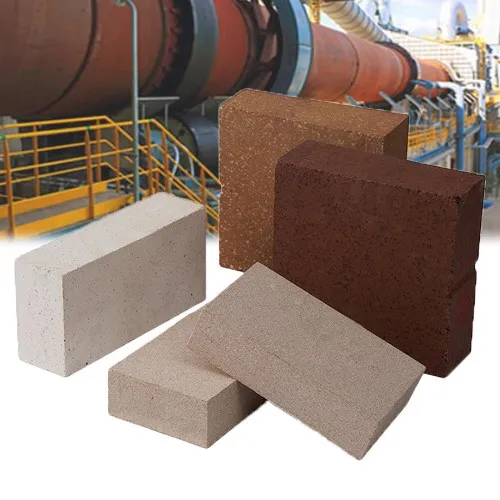
Brick Cutting Issues for Refractory Bricks of Different Materials
If jointed bricks are not considered in the design, brick cutting is required during the locking of the joints. Cutting is relatively easy for high alumina silica bricks, but is more difficult and can cause unnecessary trouble for magnesia refractory bricks, which cannot come into contact with water. Using jointed bricks securely locks the bricks, preventing sagging or gapping, and ensuring that the refractory brick lining and kiln body run on the same axis.
Key Points for Masonry Construction
1. Fitting the Brick Lining to the Shell
During masonry construction, the top of the brick lining must fit snugly against the shell, with the large surfaces of adjacent bricks in firm contact. If refractory bricks require processing, their length must be no less than 50% of the original bricks, and their thickness must be no less than 80% of the original bricks.
2. Application of Refractory Mortar
Refractory mortar must ensure that the joints between the refractory bricks are compacted. Brick joints should be tightly filled with original mortar. For areas that cannot be aligned, refractory mortar can be used for alignment. During construction, refractory mortar should be applied evenly to a thickness of 1mm. In particular, at the end of each ring of refractory bricks, the last 15-20 bricks should be left uncoated to ensure a tight seal between the bricks.
3. Application of Steel Plate
During construction, the brick-steel plate should be 1-2mm thick. The steel plate must not extend beyond the edge of the refractory alumina silica bricks, and there must be no gaps or bridging. Only one steel plate is allowed per joint.
Locking Brick Usage Guidelines
1. Locking Brick Position and Quantity
Locking bricks are typically placed between the last five or six bricks and secured with two types of interlocking bricks and the main bricks. Each ring should contain no more than four interlocking bricks, and original bricks must be used for interlocking. Interlocking bricks cannot be placed adjacent to each other. No more than four iron plates should be used for interlocking bricks, evenly distributed throughout the interlocking area. Iron plates cannot be placed adjacent to each other.
2. Staggering Between Rings
Interlocking bricks between adjacent rings should be staggered by 1-2 bricks, and the final ring should be interlocked 1-2 rings earlier.
Requirements for Using New and Old Bricks
If old and new bricks are used together, new bricks adjacent to old bricks must not be processed, and the distance between them must be greater than 198mm. If processed bricks are used, their length must not be less than 100mm, and the cutting error must not exceed 2mm. Processed bricks must be placed in the second-to-last and third-to-last rings, and the second and third rings must be staggered.
When using refractory alumina silica bricks for rotary kiln lining, interlocking bricks are critical to ensuring construction quality and extending the service life. Inserting joint bricks can effectively adjust the brick joints and avoid various problems during construction. At the same time, it ensures that the refractory brick lining and the kiln body run on the same axis, thereby improving the overall performance and service life of the rotary kiln.


