


Monolithic Refractory
Your Professional Refractory Castables manufacturer
Refractory castables refer to a mixture composed of refractory aggregates, binders and admixtures, which are mixed with water (or liquid binder) to form mud that can be constructed by pouring.Choosing the right monolithic for your primary or backup lining insulation is critical to the performance of your process. Our monolithic insulating and dense materials are offered in a wide range of engineered formulations for use as the hot face or backing linings in challenging thermal environments.
Refractory castables are composed of three parts: cementing material, aggregate and admixture, and sometimes a setting accelerator is added.
Refractory aggregate:Refractory aggregate is the main body of refractory concrete. Various refractory materials (clay, high alumina, siliceous, magnesia, etc.), calcined clinker, or various waste bricks broken to a certain extent can be used as refractory aggregate. material. The particle size of the aggregate has a great impact on the quality of the product, so in addition to certain restrictions on the size of the aggregate particles, there are also certain proportion requirements in terms of quantity.
cementing material:The cementing material plays the role of cementing and hardening, giving the product a certain strength. Can be used as cementing materials: ordinary Portland cement, alumina cement (high-selling cement), magnesia cement, water glass, phosphoric acid, etc. In order to ensure that the concrete has sufficient refractoriness (cementing material acts as a flux at high temperatures, the greater the amount, the lower the refractoriness of the concrete) and to reduce volume shrinkage during use, the amount of cementing material should be as small as possible. Generally, it is 10% to 25%, and it is hoped that the cement and aggregate will not generate too much low-melting material.
admixture:Some refractory concrete (such as phosphate refractory concrete) must also add a small amount of setting accelerator to the ingredients to accelerate the hardening and consolidation of the concrete. In order to improve the performance of refractory concrete, such as increasing the strength during heating, reducing volume shrinkage, etc., 10% to 25% of admixtures are often added.
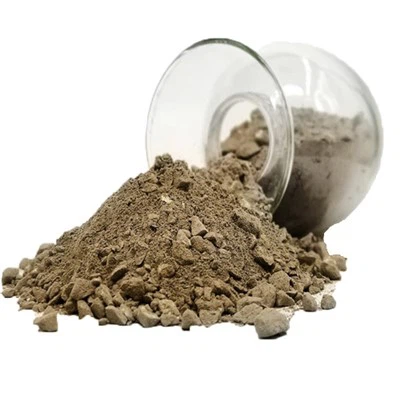
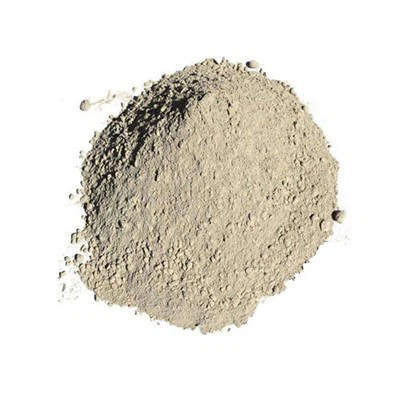
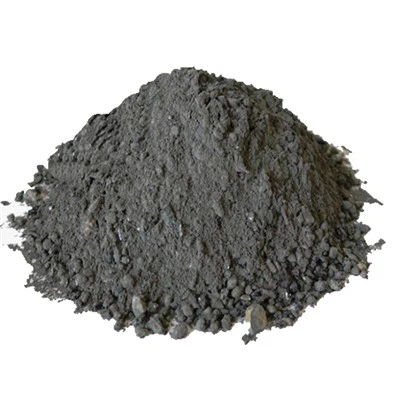
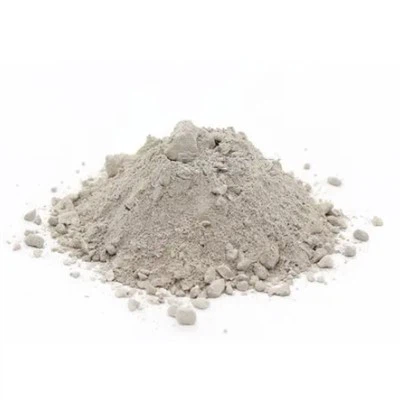

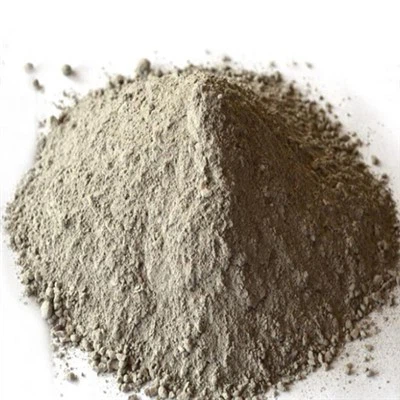


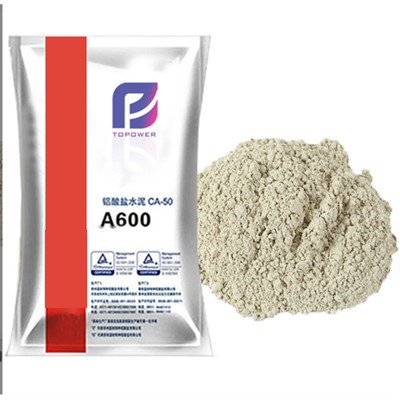
Monolithic refractory is a material applied in plastic, semi-fluid, or dry form. It has become increasingly popular due to its versatility, ease of installation, and superior thermal insulation properties. They offer advantages such as reduced installation time, improved energy efficiency, and increased resistance to chemical attacks.
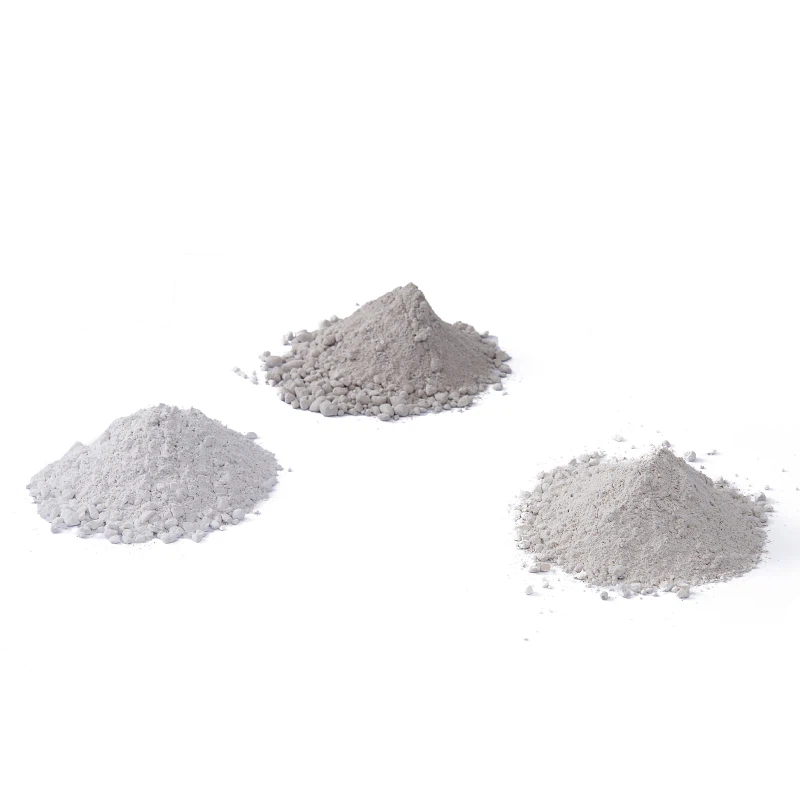
Refractory castable is a material used for lining equipment such as high-temperature industrial kilns and furnaces. It has the characteristics of high temperature stability, wear resistance, chemical corrosion resistance and impact resistance, and can withstand the test of harsh environments such as high temperature, high pressure and chemical erosion.
Features of refractory castables
High temperature resistance
Refractory castables can withstand the extremely high temperatures encountered in industrial processes such as steelmaking, cement production and petrochemical refining. They maintain mechanical strength and structural integrity even at temperatures in excess of 1000°C (1832°F) or higher
Thermal stability
Castables have excellent thermal stability, which means they can withstand rapid temperature changes without significant degradation. This property helps them resist thermal shock caused by sudden heating or cooling cycles, ensuring extended service life in demanding environments
Chemical resistance
The formula of refractory castables can resist the chemical erosion of corrosive substances, molten metal, slag and gases present in various industrial processes. They provide a barrier against chemical attack and maintain their physical integrity, preventing penetration and damage to the underlying structure
Versatility and shape adaptability
Castables have the advantage of being highly adaptable to different shapes, sizes and complex geometries. They can be applied by pouring, gunning or troweling, allowing for custom linings in furnaces, kilns, ladles and other refractory application
Low porosity and high density
Castables can be designed with low porosity to obtain high bulk density and reduce permeability. This property increases their resistance to gas and liquid penetration and increases their mechanical strength and thermal conductivity
Easy to install and repair
Refractory castables can be easily installed or repaired using simple application techniques. They can be cast or spray gunned into place, allowing for efficient lining installation, maintenance or patching
Good wear resistance
Some castables are carefully designed to have high wear resistance, making them suitable for applications in contact with abrasives or mechanical stirring
Thermal insulation properties
Certain castables are formulated to provide thermal insulation, effectively reducing heat loss and improving energy efficiency in furnaces, boilers and other thermal equipment.
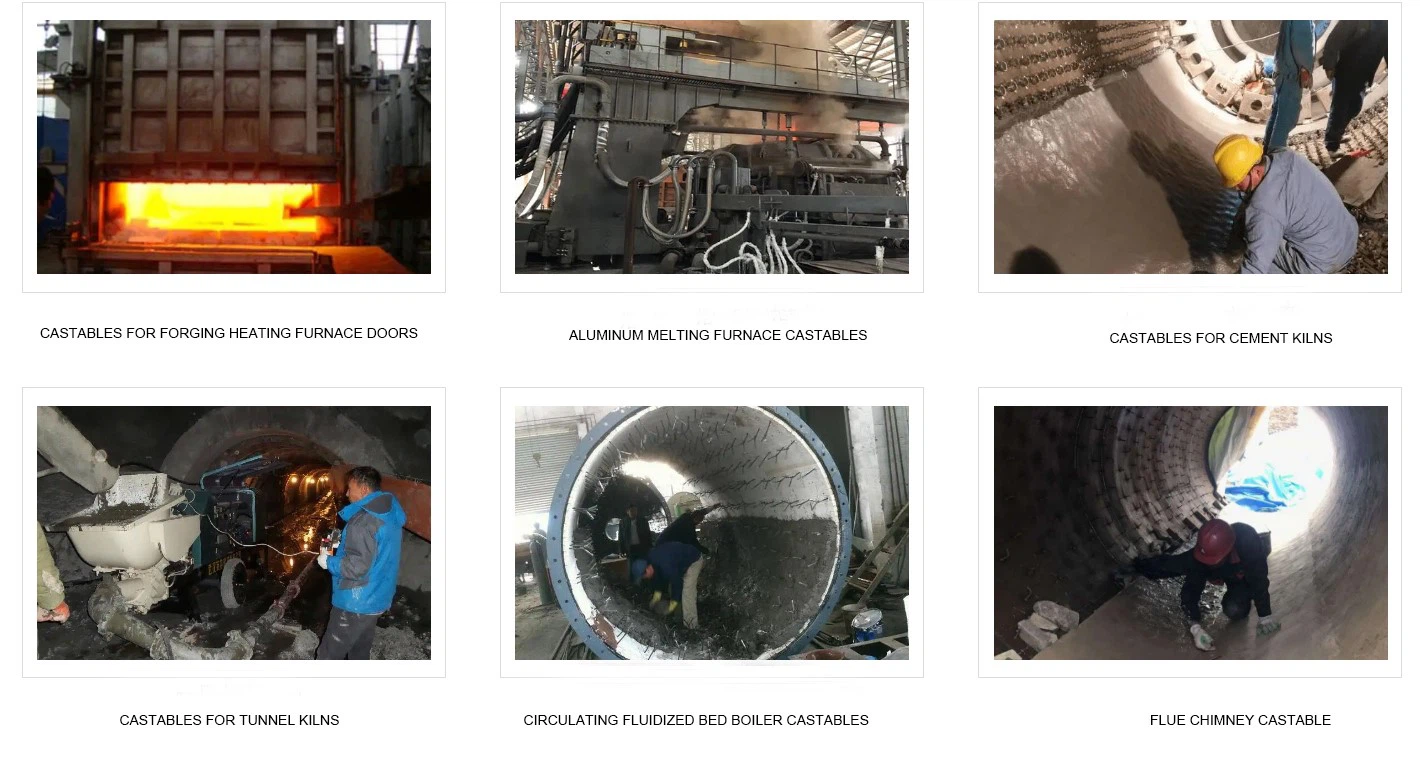
Products Application
FAQ
Q: What are refractory castables?
Q: How do you make refractory castable?
Q: What is difference between castable and refractory?
Q:Is refractory mortar castable?
Q: What is dense castable refractory?
Q: How thick should castable refractory be?
Q: Is refractory cement or mortar?
Q:What is a good refractory cement?
Q: What is low cement castable used for?
Q: What is the difference between refractory cement and regular cement?
Q:What is refractory mortar used for?