


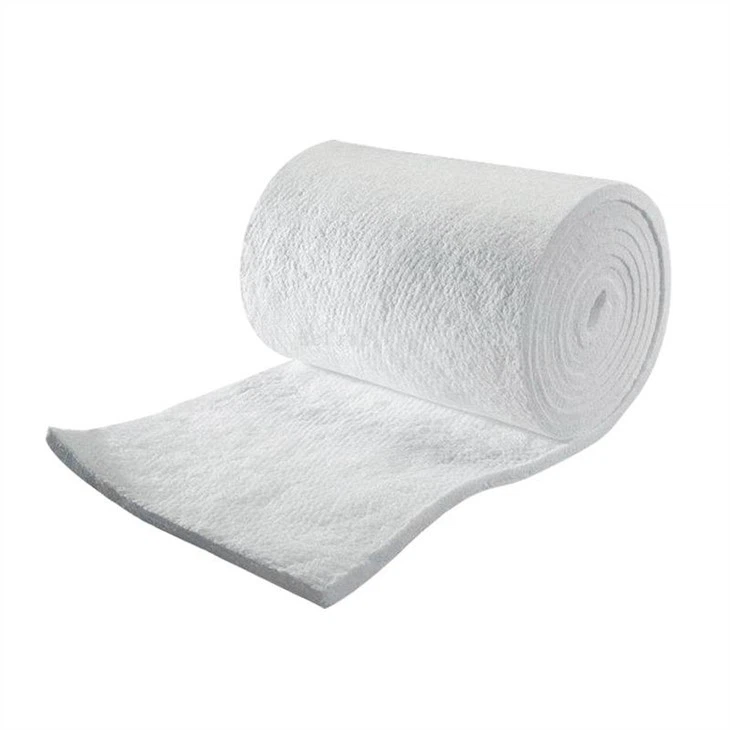
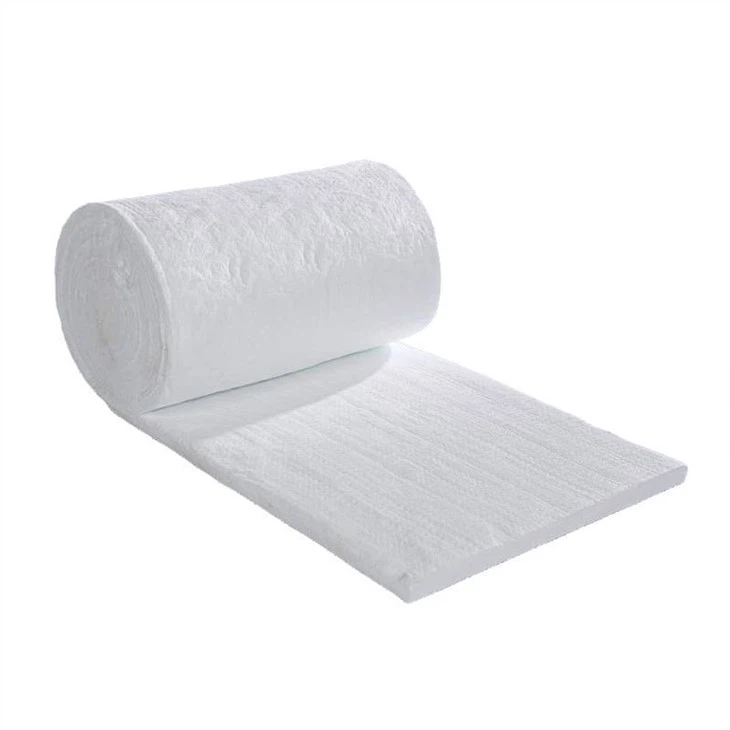
Ceramic Fiber Blanket
Our ceramic fiber blanket is a flexible, double-sided needled insulation material designed for industrial furnaces, kilns and high-temperature equipment. Available in 1260°C, 1360°C, 1430°C and 1600°C classification grades, it offers low heat storage, thermal insulation and easy installation.
We supply densities from 64 to 160 kg/m³ and thicknesses from 6 to 50 mm, depending on the selected grade. Custom roll sizes are also available. Select the appropriate blanket according to the recommended working temperature, lining structure and operating conditions.
For ceramic fiber blanket pricing and grade selection, send us your furnace operating temperature, required density, thickness, roll dimensions and order quantity. Our team will help you confirm suitable specifications and provide a quotation.
Ceramic Fiber Blanket: What It Is and How It Is Made
Ceramic fiber blanket is a flexible insulation material needled from high-purity alumina-silica fiber. Installers fit it behind dense refractories as backup insulation, wrap it around high-temperature pipes and ducts, and pack it into expansion joints. It also seals thermal gaps where a light, compliant material is needed. Topower supplies it from Shandong, China to furnace builders, refractory contractors and plant maintenance teams.
We make the blanket by double-sided needling. This interlocks the fiber layers instead of bonding them with a binder. That is why the material stays flexible after installation. It also tolerates the movement that comes with repeated heating and cooling.
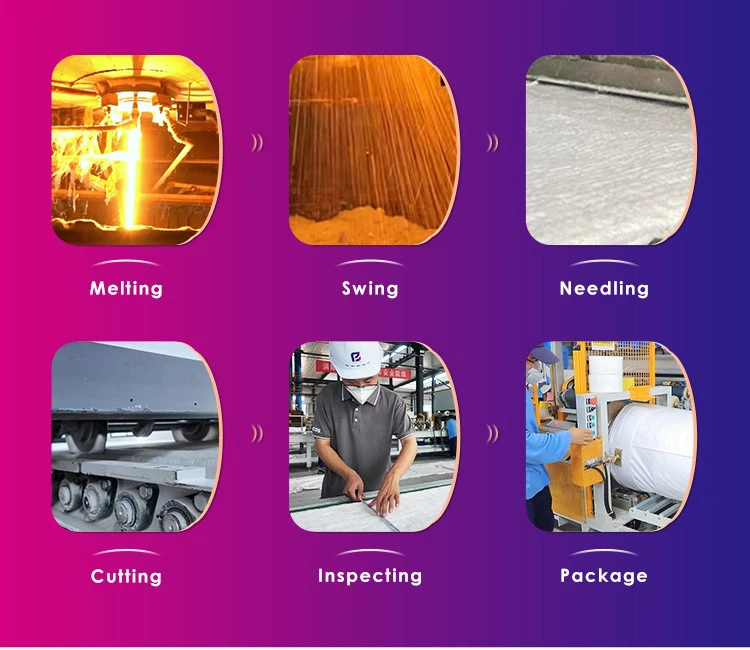
Production starts with selected high-purity raw materials. We melt them at high temperature and fiberize them into a continuous blanket. After needling, the line trims, slits and cuts the material to the ordered thickness, width and roll length. Our QC team checks every batch for density, thickness, dimensional accuracy and appearance before packing.
Grades and How to Choose the Right One
We produce five grades. They differ in classification temperature, chemistry and density.
ST BLT and GC BLT share the same 1260°C classification, with recommended working temperatures of 1050°C and 1100°C. GC BLT carries lower iron and alkali content than ST BLT. Fe2O3 is 0.5% against 1.0%, and Na2O + K2O is 0.3% against 0.5%. That makes GC the better pick where the lining sees harder service in the same temperature band.
HA BLT is classified at 1360°C with a recommended working temperature of 1200°C. Its Fe2O3 and alkali content both sit at 0.2%. That low impurity level holds linear shrinkage to -3% after 24 hours at 1250°C. Where a furnace runs continuously at 1200°C, HA BLT is the grade to specify.
HZ BLT is classified at 1430°C and contains 13-15% ZrO2. The zirconia addition is what suits it to thermal cycling and chemical attack. A straight alumina-silica blanket loses strength faster in those conditions. Recommended working temperature is 1350°C.
PC BLT is classified at 1600°C with a recommended working temperature of 1500°C. We supply the other four grades as density ranges. PC BLT comes only at fixed density: 96 or 128 kg/m³. It also has the highest tensile strength in the line, at 0.08 MPa.
Two rules apply when selecting. First, work from the recommended working temperature, not the classification temperature. The classification figure is the point the fiber structure survives, not the point to run at continuously. Second, match bulk density to the application. Inside the 64-160 kg/m³ range, higher density slightly lowers thermal conductivity and raises mechanical strength. Lower density cuts weight and heat storage. For backup insulation that carries no load, most customers use 96-128 kg/m³.
We also supply ceramic fiber board and ceramic fiber paper, for jobs that need a rigid panel or a thin sheet instead of a roll.
Physical And Chemical Indicators
|
Product Grade
|
ST BLT |
GC BLT |
HA BLT |
HZ BLT |
PC BLT |
|
| Classification Temperature |
1260 |
1260 |
1360 |
1430 |
1600 |
|
| Recommended Working Temperature |
1050 |
1100 |
1200 |
1350 |
1500 |
|
|
Bulk Density (kg/m3) |
64-160 |
64-160 |
64-160 |
64-160 |
96/128 |
|
|
@24HLinear Shrinkage after Heating |
-3 (1000℃) |
-3 (1100℃) |
-3 (1250℃) |
-3 (1350℃) |
-1 (1400℃) |
|
|
Thermal Conductivity |
0.09(400℃) 0.17(800℃) 0.32(1000℃) |
0.09(400℃) 0.17(800℃) 0.31(1000℃) |
0.09(400℃) 0.13(600℃) 0.22(1000℃) |
0.09(400℃) 0.16(600℃) 0.22(1000℃) |
0.16(600℃) 0.28(1000℃) 0.45(1400℃) |
|
|
Tensile strength (MPa) |
0.05 |
0.05 |
0.06 |
0.06 |
0.08 |
|
|
Chemical Composition
|
Al2O3 |
43 |
44 |
51 |
35 |
71 |
|
Al2O3+SiO2 |
96 |
98 |
99 |
- |
- |
|
|
ZrO2 |
- |
- |
- |
13-15 |
- |
|
|
Fe2O3 |
1.0 |
0.5 |
0.2 |
0.2 |
0.2 |
|
|
Na2O+K2O |
0.5 |
0.3 |
0.2 |
0.2 |
0.2 |
|
|
Size(mm)
|
LENGTH*WIDTH*THICKNESS |
THICKNESS 10-25
|
||||
Standard Sizes and Customization
We supply blankets in rolls, 610 mm or 1220 mm wide.
Standard roll combinations are listed as length x width x thickness: 7200 x 610/1220 x 25 mm, 3600 x 610/1220 x 50 mm, 4800 x 610/1220 x 38 mm, 7200 x 610/1220 x 6 mm, 14400 x 610/1220 x 12.5 mm and 28800 x 610/1220 x 6.38 mm. Standard thicknesses are 10 mm, 25 mm and 50 mm. Standard densities are 64, 96, 128 and 160 kg/m³. PC BLT comes in 10-25 mm thickness.
We can also produce rolls to order. That covers cut-to-width strips, custom roll lengths, and thickness and density inside the grade range. We offer OEM packing with your own label and markings. Ceramic fiber blanket rolls can also be cut to width for expansion joint packing. Send us the hot-face temperature, the equipment type and the installation method. We will recommend the grade, density and thickness instead of leaving the combination to you.
Applications
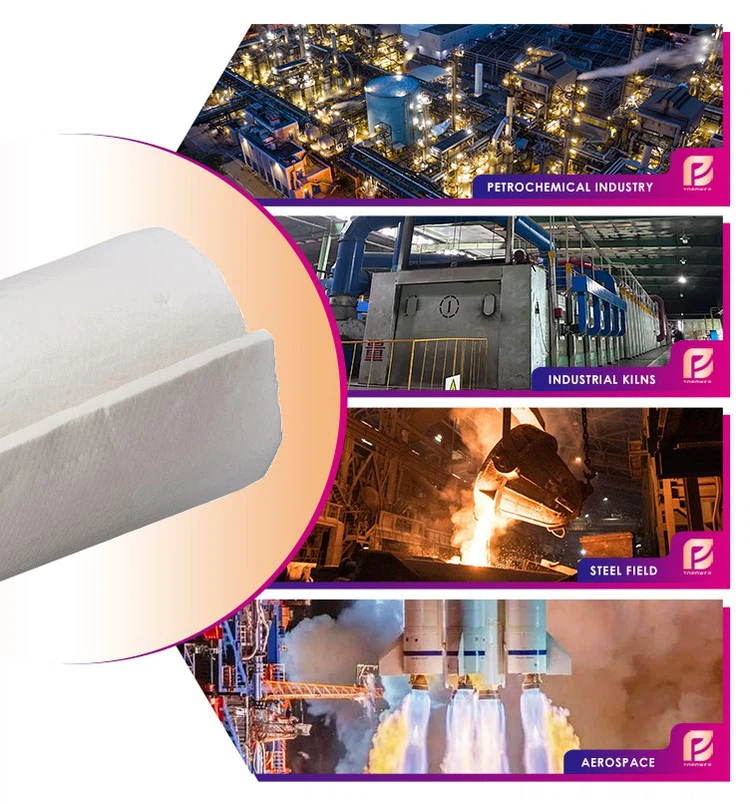
- Typical uses for a high-temperature insulation blanket:
- Industrial furnace wall and roof insulation
- Kiln lining and backup insulation
- High-temperature pipe and duct wrapping
- Expansion joints and thermal seals
- Heat treatment furnace insulation
- Petrochemical equipment insulation
- Boiler and power plant thermal insulation
- Ceramic fiber blanket covers most of these jobs. For furnace roofs and walls that need a rigid anchored lining, we supply ceramic fiber modules. Expansion joints and pipe penetrations are usually packed and sealed with ceramic fiber textiles .
Packing and Delivery
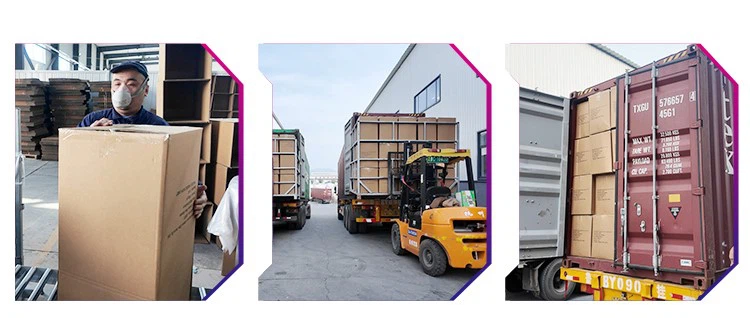
Topower is a manufacturer and supplier of refractory insulation blankets in China, and we pack for export from the start. We wind the rolls, wrap them in moisture-proof plastic film and pack them in woven bags or cartons. Every package carries the product name, temperature grade, density, thickness, size and batch number. Your team can identify the material on site without unwrapping it.
We also offer pallet packing, carton protection and OEM labels. Tell us how you are loading the container and we will confirm the packing plan with the order.
Send the grade, thickness, density and quantity you need. We will reply with the price, the specification sheet and the delivery schedule for your project.
FAQ: Ceramic Fibre Blanket Questions
1. What temperature grades are available for ceramic fiber blanket?
Common grades include 1260°C, 1360°C, 1430°C and 1600°C. Which one you need depends on the working temperature of the equipment, not on the highest figure in the table.
2. Why do some suppliers write ceramic fibre blanket?
It is the same product. Fibre is the British spelling and fiber the American one. Both appear in supplier catalogues and in customer enquiries. Topower uses both for the same needled alumina-silica blanket.
3. How does soluble fiber blanket differ from the standard ceramic blanket?
This product is the needled alumina-silica type, used for high-temperature industrial insulation. We recommend soluble fiber blanket where low bio-persistence is required, which is more common in Europe. Tell us the market you are supplying and we will confirm which one applies.
4. Which grade should I use for a furnace running at 1200°C?
Use HA BLT. It is classified at 1360°C, and its recommended working temperature is 1200°C. Its Fe2O3 and alkali content sit at 0.2%, which holds shrinkage to -3% up to 1250°C. If the lining also sees thermal cycling, step up to HZ BLT with 13-15% ZrO2.
5. How does bulk density affect performance?
Inside the 64-160 kg/m³ range, higher density slightly lowers thermal conductivity and raises mechanical strength. Lower density cuts weight and heat storage. For backup insulation that carries no load, most customers use 96-128 kg/m³.
6. Can you supply custom sizes, and do you provide samples before a bulk order?
We can produce roll width, length and thickness to order. We also cut strips for expansion joint packing.
【TO CONFIRM: sample policy - free of charge or not, sample lead time, who pays the freight. Replace this line with the company's actual policy and delete the bracket text before publishing.】
Need a grade recommendation or a price? Use the Send Inquiry form on this page with the working temperature, the equipment type and the quantity you need.
Hot Tags: Ceramic Fiber Blanket, China Ceramic Fiber Blanket manufacturers, suppliers, factory, Phlogolite Mica Plate, Rockwool Board, Cordierite Mullite Board, Ceramic Fiber Rope, 1500 Chrome Ceramic Fiber Blanket, Glass Fiber Cloth
Previous
No InformationYou Might Also Like


Send Inquiry