


Dry Vibrating Material
MOQ:5TONS
Products Description
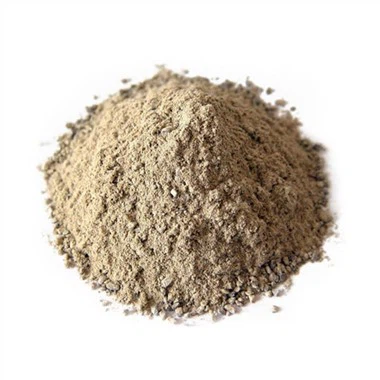
Dry vibrating materials are composed of refractory aggregates, powders, binders, sintering agents and admixtures. It is easy to flow under the action of vibration force. The powder can fill the very small pores between the particle accumulations even under the action of small vibration force, and obtain a dense body with a high filling density. In use, a layer of working surface with certain strength is formed by heating.
This structure helps to reduce the stress caused by expansion or contraction; helps to hinder the spread and extension of cracks; helps to prevent the intrusion of molten metal, and facilitates furnace dismantling and cleaning. The material is applied on-site using vibration methods. The construction is simple, the construction period is short, no maintenance and baking are required, and the temperature can be directly and rapidly raised to make the working layer sintered and put into use.
Products Categories
According to the material, the dry vibrating material is divided into carbon-containing and silicon carbide vibration materials (corundum-silicon carbide-carbon, alumina-carbon, magnesium oxide-carbon, magnesium oxide-calcium oxide-carbon, etc.), alkaline vibration materials (magnesium, magnesium aluminum), acidic vibration materials (silica sand or silica, zircon), neutral vibration materials (corundum, mullite), and reasonable particle gradation is to improve factors that affect densification and decrease the segregation of coarse particles.
For dry vibration materials, the preferred particle gradation is typically coarse, medium, and fine=20.30:30-40:3040. Its materials' corrosion resistance and thermal conductivity can be significantly enhanced by increasing their volume density. During vibration molding, the particle gradation, particle shape, and vibration conditions all affect how fluid material is.
Products Advantage
1) Resistant to molten steel and slag erosion, which greatly improves the service life of the working layer, can be poured for a long time, and reduces the consumption of refractory materials per ton of steel.
(2) During the use of the dry vibrating material, relying on the temperature gradient to gradually sinter from the working layer to the layer, a dense structure is formed on the hot surface of the working layer, which will not cause slag to penetrate into the layer. Due to the low density of the unsintered layer, it is beneficial to the heat preservation of the tundish.
(3) Slight shrinkage occurs during the sintering process, which is easy to turn over and take off the package.
(4) Convenient construction, no water construction, quick baking or direct use, no need to bake, high utilization rate, prolonging the service life of the tundish and reducing the number of spare bags.
(5) Since the dry vibration material does not contain water, it can reduce the chance of secondary oxidation of the molten steel in the tundish, reduce the hydrogen absorption of the molten steel, reduce the pollution of the molten steel, and improve the quality of the billet.
(6) Compared with spraying and coating, the use of dry vibrating materials can reduce the energy consumption of the oven, reduce labor intensity and improve labor productivity.
(7) The service life is long, generally up to 20 hours, and the highest can reach 60~70 hours, which greatly improves the labor productivity in the steelmaking process.
Products Application
The dry vibrating materials are widely used in induction furnaces, aluminum smelting furnaces, tundishes, steel electric furnaces and other equipment.
Hot Tags: dry vibrating material, China dry vibrating material manufacturers, suppliers, factory, refractory sic Castable, monolithic refractories castable, refractory Anti Skinning Castable, Alkali resistant castable, lightweight insulating castable, Castable Refractories
Previous
Electrofused AZS CastableYou Might Also Like



Send Inquiry