


Refractory Castable
Refractory Castable: What It Is and How It Is Made
Refractory castable is an unshaped refractory built from granular and powdery material. As a primary category of Monolithic Refractory, it has high fluidity and suits construction by the casting method. Topower mixes this aggregate with a high-purity Calcium Aluminate Cement binder and water, and the mix is then cast into place. It hardens without heating. Room temperature compressive strength is high because the binder works at low temperature. Refractoriness is similar to a refractory brick of the same texture. The load softening point is slightly lower than a brick of the same texture, and overall performance is better than refractory bricks. Good masonry integrity keeps a blast furnace airtight, and the lining resists machine vibration and impact better than brickwork. Binder and moisture content are higher than in other amorphous refractories, so flow is better and the material fills complex shapes. The material also takes high heat, holds up under wear, and lasts in harsh service over a long period. Different aggregate and binder combinations give different levels of strength, durability and thermal resistance.
Production runs in six steps at the Shandong, China plant. First, raw material quality control covers physical and chemical testing. Second, the plant crushes and grinds bulk raw materials. Third, operators mix raw material to the customer data sheet. The mix is packed into bags, then shipped directly to job sites. Burning occurs on site during initial furnace commissioning at 1300°C to 1800°C. Finally, the quality control department inspects finished material at random.
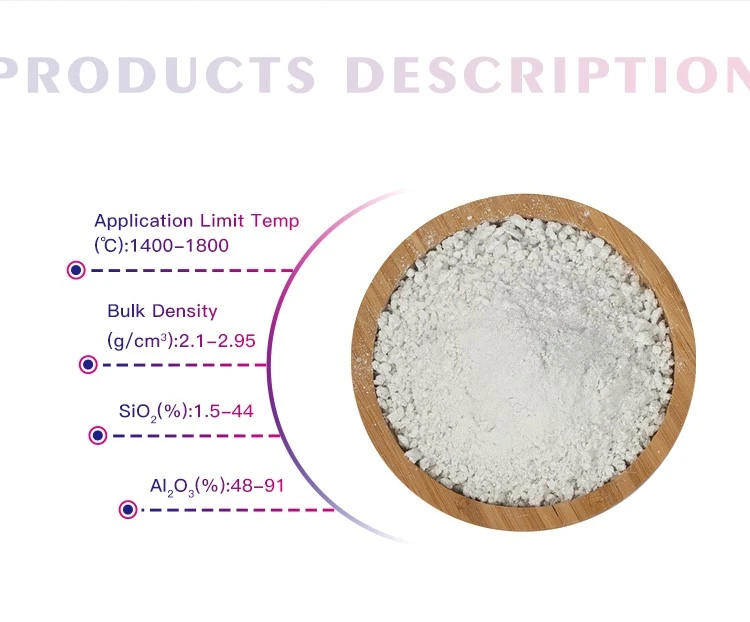
Products Physical And Chemical Indicators
| Brand Properties | CA-180S | CA-180 | CA-175 | CA-170 | CA-165 | CA-160 | CA-155 | CA-150 | CA-140 | CA-130 | |
| Application Limit Temp | 1,800 | 1,800 | 1,750 | 1,700 | 1,650 | 1,600 | 1,550 | 1,500 | 1,400 | 1,300 | |
| Bulk Density (g/cm3) | 2.9 | 2.85 | 2.8 | 2.5 | 2.3 | 2.15 | 2.1 | 2.1 | 2 | 1.9 | |
| Water Required for Casting(%) | 9-10 | 9-10 | 11-12 | 10-13 | 11-14 | 12-15 | 13-16 | 13-16 | 13-17 | 15-18 | |
| CCS/MOR(kg/m3) | 110℃x24h | 550(90) | 300(60) | 300(60) | 250(50) | 250(50) | 200(40) | 200(45) | 250(50) | 200(50) | 200(40) |
| 1,200℃x3h | 500(80) | 350(70) | 350(70) | 200(40) | 170(35) | 150(35) | 150(25) | 170(40) | 140(30) | 140(20) | |
| 1,400℃x3h | 600(100) | 500(80) | 600(100) | 500(120) | 450(80) | 400(70) | 400(70) | 320(75) | - | - | |
| Permanent Linear Change (%) | 110℃x24h | -0.03 | -0.03 | -0.06 | -0.06 | -0.06 | -0.06 | -0.06 | -0.06 | -0.06 | -0.06 |
| 1,200℃x3h | -0.1 | -0.1 | -0.15 | -0.2 | -0.2 | -0.16 | -0.3 | -0.25 | -0.3 | -0.6 | |
| 1,400℃x3h | -0.2 | -0.2 | -1 | -0.8 | -1 | -1 | -0.7 | - | - | - | |
| Thermal conductivity(W/m.k) | 400℃ | 0.95 | 0.95 | 0.92 | 0.8 | 0.72 | 0.68 | 0.68 | 0.65 | 0.6 | 0.56 |
| 1,000℃ | 1.1 | 1.05 | 1.02 | 0.9 | 0.85 | 0.88 | 0.8 | 0.76 | 0.71 | 0.68 | |
| Chemical Analysis(%) | Al2O3 | 92 | 88 | 82 | 62 | 55 | 50 | 47 | 44 | 35 | 30 |
| SiO2 | - | - | 10 | 29 | 40 | 43 | 45 | 50 | 55 | 60 | |
Grades and How to Choose the Right One
Ten grades are available: CA-180S, CA-180, CA-175, CA-170, CA-165, CA-160, CA-155, CA-150, CA-140 and CA-130. The grade number tracks the application limit temperature. CA-180S and CA-180 reach 1800°C and carry Al2O3 of 92% and 88%. CA-175 reaches 1750°C with Al2O3 of 82%. CA-170 reaches 1700°C with Al2O3 of 62%. CA-160 reaches 1600°C with Al2O3 of 50%, and CA-150 reaches 1500°C with Al2O3 of 44%. CA-130 works to 1300°C with Al2O3 of 30%. Bulk density falls from 2.9 g/cm³ at CA-180S to 1.9 g/cm³ at CA-130. Water for casting rises as the grade drops, from 9-10% at CA-180S and CA-180 to 15-18% at CA-130. Choose by furnace temperature first. Match the application limit temperature to the hottest zone, then check the chemical load in the furnace. High alumina grades suit contact with slag. For intense thermal zones, our High Alumina Castable series provides maximum refractoriness, while silica bearing grades suit lower temperature linings. For low-porosity requirements, consider our Low Cement Castable formulations. Cold crushing strength runs 550 kg/m³ at 110°C x 24h for CA-180S and drops to 200 kg/m³ for CA-130. Permanent linear change at 1200°C x 3h is -0.1% for CA-180S and -0.6% for CA-130, and at 1400°C x 3h it runs -0.2% for CA-180S and -0.8% for CA-170. Thermal conductivity at 400°C runs 0.95 W/m.k for CA-180S and falls to 0.56 W/m.k for CA-130, and at 1000°C it runs 1.1 W/m.k for CA-180S and 0.68 W/m.k for CA-130. Send the operating data sheet to Topower and the team will confirm one grade.
Standard Sizes and Customization
Refractory castable ships as granular and powdery dry mix in 25 kg moisture-proof kraft bags or 1000 kg bulk jumbo bags, not as a fixed size block. Maximum grain size is controlled from 5 mm to 8 mm depending on lining thickness requirements. The material can be cast directly into the lining, or formed into a custom Precast Block by vibration shaking and casting methods. Custom options cover aggregate and binder combinations that change strength, durability and thermal resistance. Tell the plant the lining shape and the furnace conditions, and the mix is adjusted before shipping.
Applications
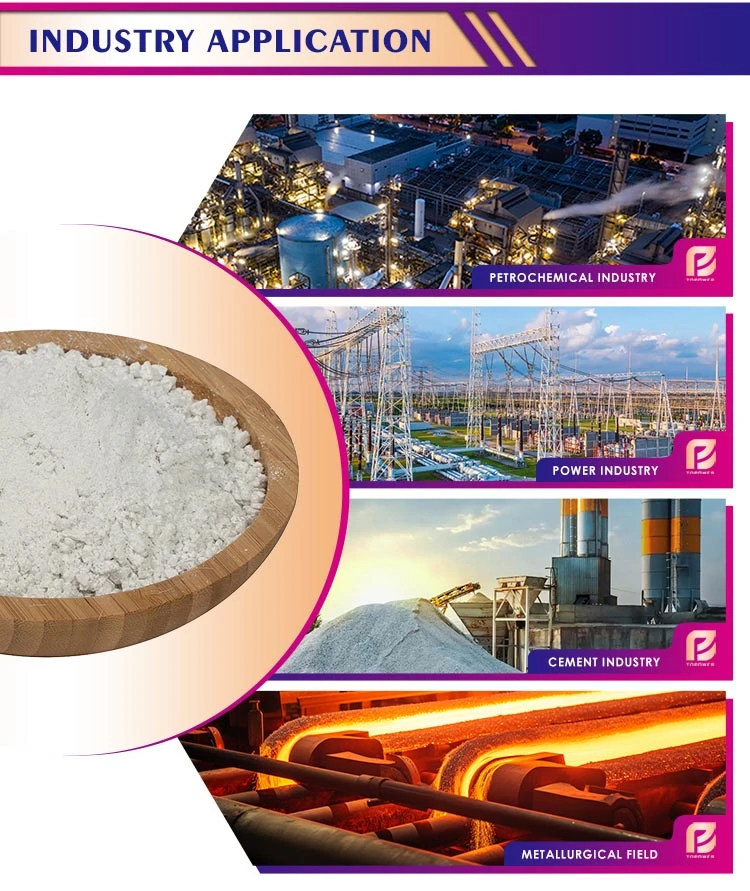
Refractory castable is the most widely produced and used unshaped refractory today:
- Linings of various industrial heating furnaces
- Integral furnace structures and burner surrounds
- Direct monolithic casting into the kiln lining
- Prefabricated blocks formed by casting
- Prefabricated shapes formed by vibration shaking
The binder and the moisture content sit above other amorphous refractories, so the mix flows farther and fits narrow sections. The plant selects the material and the binder to the conditions of use. The material forms an integral structure, so the masonry holds fewer joints than a brick wall.
Packing and Delivery
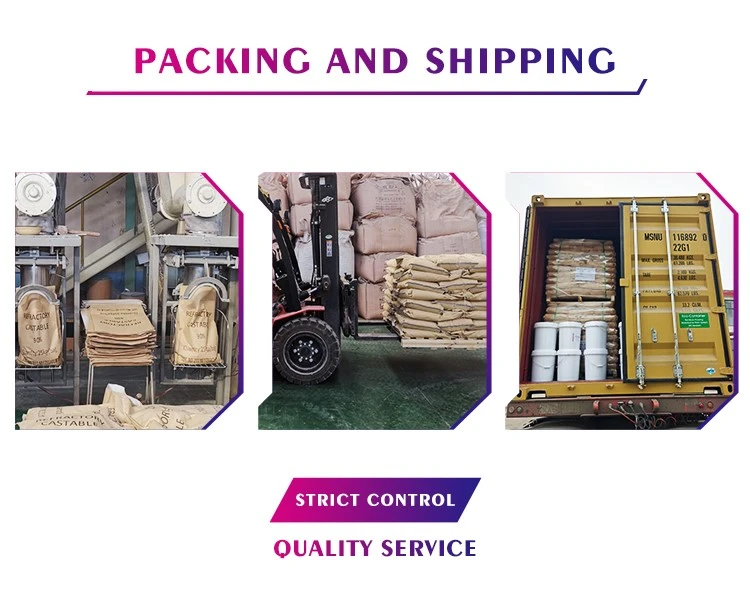
Packing follows a safety sea-exporting standard. Dispatch loads the finished packed material at the factory into a container, door to door. By sea, Topower ships in 25 kg multi-wall bags on fumigated wooden pallets wrapped in waterproof plastic film. MOQ is 5 tons.
FAQ: Refractory Castable Questions
Is the spelling catsable the same product?
Yes. Catsable is a common spelling variant, and both words name the same unshaped monolithic material.
What temperature can the material work at?
Grades run from 1300°C to 1800°C. CA-180S and CA-180 hold an application limit temperature of 1800°C, and CA-130 is rated to 1300°C.
How much water does casting need?
Water for casting runs 9-10% for CA-180S and CA-180, and 15-18% for CA-130.
What is the MOQ, and can I get a sample and a price?
MOQ is 5 tons. It ships by sea on fumigated wooden pallets with plastic strapping and stretch wrap. Send your grade, quantity, and destination port, and we will return a quotation.
Does the material need firing to harden?
No. It hardens without heating. Room temperature strength comes from the binder, so compressive strength builds at 110°C x 24h.
How does the material compare with a refractory brick?
Refractoriness is similar to a brick of the same texture. The load softening point is slightly lower. Overall performance is better than brick, and airtightness and vibration resistance are higher.
Hot Tags: Refractory Castable, China Refractory Castable manufacturers, suppliers, factory, Anti Skinning Castable cement, Alumina Magnesia Castable material, Silicon Carbide Castable refractory, Anti Skinning Castable material, Castable Refractories, alkali refractory castable
Previous
Precast BlockYou Might Also Like


Send Inquiry