


The reasons why refractory bricks can resist high temperatures can be analyzed from the following aspects:
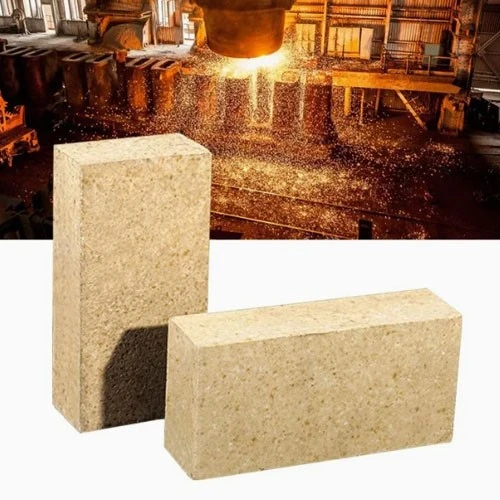
1. High refractoriness of raw minerals
The raw materials used in the production of refractory firebricks are generally natural ores, such as bauxite, silica, magnesite, etc. These raw materials themselves have high refractory resistance and are the basis for making refractories bricks.
1. Bauxite: Bauxite can be made into aluminum-silicon refractory fire bricks after processing. Its main component is alumina, with a refractory degree of up to 1780°C, strong chemical stability, and good physical properties.
2. Silica: The raw material of siliceous refractory bricks is silica, and its main component is SiO2. The higher the content, the higher the refractory degree. Silica bricks are made from natural silica as raw material, plus an appropriate amount of mineralizer, and are fired at high temperatures to have high high-temperature strength.
3. Magnesite: Magnesite is the main raw material for making magnesia bricks. Its basic component is MgO. Magnesium oxide has high refractory insulation properties and can be transformed into crystals after high-temperature burning. The refractory degree is above 2000°C.
2. Characteristics of inorganic non-metallic materials
As an inorganic non-metallic material, refractories bricks determine the level of their use from the level of raw materials. Inorganic non-metallic materials usually have the characteristics of high compressive strength, high hardness, high temperature resistance, and corrosion resistance. These properties allow refractory fire bricks to remain stable in high-temperature environments and not prone to softening, deformation or melting.
3. Influence of manufacturing process
In the manufacturing process, refractory bricks need to go through multiple links such as shaping, drying, and firing. Among them, the firing process has an important impact on the temperature resistance of refractory bricks. 1. High-temperature sintering: During the sintering process, refractory bricks need to be sintered at high temperature to form a dense structure and high mechanical strength. The higher the firing temperature and the longer the firing time, the better the temperature resistance of refractory firebricks is usually. However, excessive firing temperature and time may also cause changes in the crystal structure of refractory bricks, thus affecting their temperature resistance.
2. Manufacturing process control: The mastery and control of the manufacturing process are crucial to the temperature resistance of refractory bricks. Through reasonable process parameters and strict quality control, refractory fire bricks can be ensured to have excellent temperature resistance.
4. High-temperature treatment of the finished body The finished body has been treated at a temperature above 1500°C in a high-temperature tunnel kiln, which further improves the temperature resistance of the refractory bricks. This step makes the structure of the refractory bricks denser, making them more resistant to erosion from high-temperature environments. In summary, the reason why refractory bricks can resist high temperatures mainly relies on the high refractory resistance of raw minerals, the characteristics of inorganic non-metallic materials, the impact of the manufacturing process and the high-temperature treatment of the finished body. These factors work together to enable refractory bricks to remain stable and perform well in high-temperature environments.


