


In the past, tunnel kilns mostly had vaulted roofs or suspended flat roofs built with refractory bricks, or flat roofs built with prefabricated blocks of refractory castables. Both refractory bricks and refractory castables are heavy refractory materials. Compared with ceramic fibers, they have higher heat capacity, higher thermal conductivity, longer construction period, and more complicated maintenance. An oven is required after the construction of heavy refractory materials, and the artificial environmental factors of the oven will directly affect the service life of the tunnel. Compared to heavy refractory materials, ceramic fiber furnace linings are ready to work as soon as they are installed.
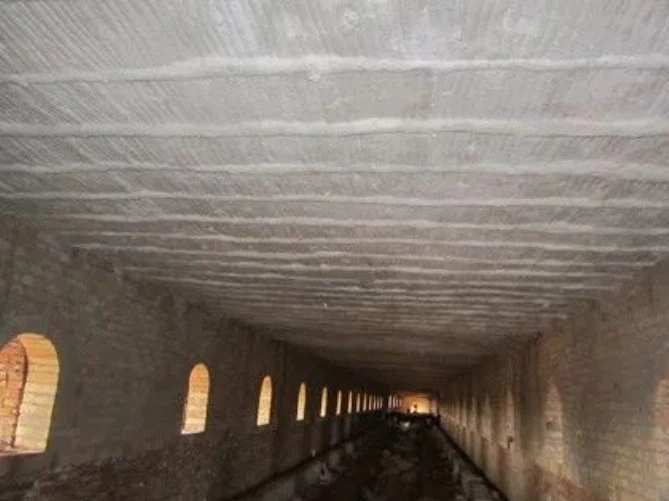
The main reasons for using ceramic fiber modules in the renovation of tunnel kiln roofs are as follows:
High-temperature insulation performance: Ceramic fiber blanket modules have excellent high-temperature insulation performance, which can effectively reduce heat conduction, prevent the high temperature at the kiln roof from affecting the surrounding environment and equipment, and improve the safety of the workplace.
Heat resistance: Ceramic fiber modules can maintain stable performance in high temperature environments and are not easy to melt or decompose, so they are suitable for high temperature resistant coverings on kiln roofs.
Lightweight materials: Ceramic fibers are relatively lightweight, reducing the load on the structure and helping to reduce the design cost of the kiln roof and support structure.
Corrosion resistance: Ceramic fiber modules have strong corrosion resistance, can be used in acidic or alkaline environments, and are suitable for different process requirements of various industrial kilns.
Easy installation: Ceramic fiber blanket modules usually have standardized sizes and connection systems, making the installation process relatively simple and the entire kiln roof can be quickly covered.
Energy Saving and Emission Reduction: By using ceramic fiber modules on the top of the kiln, energy consumption can be reduced and energy utilization improved, thereby reducing carbon emissions and environmental impact.
The roof of the tunnel kiln is changed to a complete thermal insulation construction plan of refractory fiber module composite suspension and fiber folding block "T L" composite suspension system. The furnace ceramic fiber module realizes the lightweight of the kiln wall (the weight is 1/7 of heavy refractory materials and 1/3 of lightweight insulation bricks), and has low heat storage (the weight is 1/1 of heavy refractory materials). 10), thermal shock resistance, good integrity, easy maintenance, strong furnace temperature controllability (stable quality of fired products) performance characteristics. In summary, ceramic fiber modules are widely used in the renovation of tunnel kiln roofs, helping to improve production efficiency and environmental sustainability.


