


Dead burned magnesia (DBM), also known as sintered magnesite or dead-burnt refractory magnesia, is an essential basic refractory raw material produced by calcining natural high-purity magnesite (MgCO3) in shaft or rotary kilns at ultra-high temperatures between 1600°C and 1800°C. This extreme dead-burning thermal treatment expels all carbon dioxide, eliminates residual hydration activity, and drives periclase (MgO) crystals to fully sinter and mature into an interlocking crystalline matrix with crystal grains reaching 40 to 120 microns. Classified into standardized industrial grades spanning from JDBM 90 (≥ 90.0% MgO, bulk density ≥ 3.00 g/cm³) up to JDBM 97.5 and JDBM 98 (≥ 98.0% MgO, bulk density ≥ 3.33 g/cm³), dead burned magnesia provides a fusion point above 2800°C, outstanding hot mechanical strength, and superior resistance to basic steelmaking slags and chemical iron penetration. It serves as the primary aggregate in magnesia carbon bricks, magnesia spinel refractories, ramming mixes for electric arc furnace hearths, and tundish dry vibratable linings.
Evaluating DBM grade specifications, bulk density thresholds, and the critical lime-to-silica (CaO/SiO2) ratio determines the thermodynamic stability of finished refractory linings under continuous slag exposure.

Technical Specifications: Official Grade Matrix (JDBM 90 To JDBM 98)
In basic refractory manufacturing, chemical purity and bulk density are closely correlated. Higher calcination temperatures and optimized mineral sources produce denser grains with minimized open porosity.
Below are the verified physical and chemical parameters based on official quality control standards from our factory manufacturing data:
Standard Chemical Composition and Bulk Density
Grade JDBM 98 (High-Purity Sintered Magnesia):
MgO Content: ≥ 98.00%
Bulk Density (B.D.): ≥ 3.33 g/cm³
SiO2 Content: ≤ 0.40%
CaO Content: ≤ 0.90%
Fe2O3 Content: ≤ 0.20%
Al2O3 Content: ≤ 0.15%
Loss on Ignition (LOI): ≤ 0.20%
Main Duty: Premium magnesia carbon bricks for basic oxygen furnace (BOF) slag lines and ultra-high-power ladle linings.
Grade JDBM 97.5:
MgO Content: ≥ 97.50%
Bulk Density (B.D.): ≥ 3.29 g/cm³
SiO2 Content: ≤ 0.55%
CaO Content: ≤ 1.10%
Fe2O3 Content: ≤ 0.60%
Al2O3 Content: ≤ 0.15%
Loss on Ignition (LOI): ≤ 0.20%
Main Duty: Working linings for secondary refining ladles and high-temperature rotary cement kiln transition zones.
Grade JDBM 97:
MgO Content: ≥ 97.00%
Bulk Density (B.D.): ≥ 3.27 g/cm³
SiO2 Content: ≤ 0.75%
CaO Content: ≤ 1.50%
Fe2O3 Content: ≤ 1.00%
Al2O3 Content: ≤ 0.20%
Loss on Ignition (LOI): ≤ 0.30%
Main Duty: Magnesia-spinel brick formulations, sliding gate plates, and basic gunning mix aggregates.
Grade JDBM 95:
MgO Content: ≥ 95.00%
Bulk Density (B.D.): ≥ 3.15 g/cm³
SiO2 Content: ≤ 2.00%
CaO Content: ≤ 2.00%
Fe2O3 Content: ≤ 1.50%
Al2O3 Content: ≤ 0.50%
Loss on Ignition (LOI): ≤ 0.50%
Main Duty: Electric arc furnace bottom ramming masses and standard magnesia bricks.
Grade JDBM 92:
MgO Content: ≥ 92.00%
Bulk Density (B.D.): ≥ 3.00 g/cm³
SiO2 Content: ≤ 4.00%
CaO Content: ≤ 1.80%
Fe2O3 Content: ≤ 1.50%
Al2O3 Content: ≤ 1.00%
Loss on Ignition (LOI): ≤ 0.80%
Main Duty: Intermediate furnace repair mixes, fettling grains, and basic hot spray repair compounds.
Grade JDBM 90:
MgO Content: ≥ 90.00%
Bulk Density (B.D.): ≥ 3.00 g/cm³
SiO2 Content: ≤ 4.50%
CaO Content: ≤ 3.00%
Fe2O3 Content: ≤ 1.80%
Al2O3 Content: ≤ 1.70%
Loss on Ignition (LOI): ≤ 1.00%
Main Duty: Tundish backup ramming masses, basic patching mixes, and slag splashing additives.
For operations operating under extreme thermal and slag shear stress exceeding 1750°C, refractory engineers often compare dead burned magnesia against fused magnesia (such as JWFM 98 with bulk density ≥ 3.50 g/cm³) or incorporate dense alumina silica refractory brick within non-slag transition courses.

Sintering Thermodynamics: Periclase Crystal Growth and Lime-Silica Chemistry
The physical and chemical durability of dead burned magnesia under molten steel contact depends on periclase crystal size and the mineralogy of secondary interstitial boundary phases:
Periclase (MgO) Crystal Growth: During one-step or two-step dead-burning in shaft kilns, fine raw magnesite converts to active magnesia around 700°C to 1000°C and then recrystalizes above 1600°C. Sintering causes microscopic periclase grains to coalesce into large, dense polygonal crystals. Larger periclase crystal grain size (exceeding 50 to 80 microns in grades JDBM 97 and JDBM 97.5) reduces intergranular surface area, drastically slowing chemical slag penetration along grain boundaries.
The Critical CaO/SiO2 Molar Ratio: In low-grade magnesia, silica and lime react with magnesia to form low-melting interstitial silicates such as monticellite (CaO·MgO·SiO2, melting point 1490°C) and merwinite (3CaO·MgO·2SiO2, melting point 1570°C). When the CaO/SiO2 weight ratio is adjusted to exceed 2.0, silica is consumed to form high-melting dicalcium silicate (2CaO·SiO2, melting point 2130°C). This high-melting boundary film isolates periclase grains and prevents structural softening at steelmaking temperatures.
Dead-Burning vs. Raw Hydration Resistance: Light-burned caustic magnesia (calcined at 800°C to 1000°C) reacts aggressively with atmospheric humidity to produce magnesium hydroxide Mg(OH)2. Complete dead-burning above 1700°C eliminates open micropores, achieving a closed vitrified boundary that resists ambient hydration during ocean transit and long-term storage.
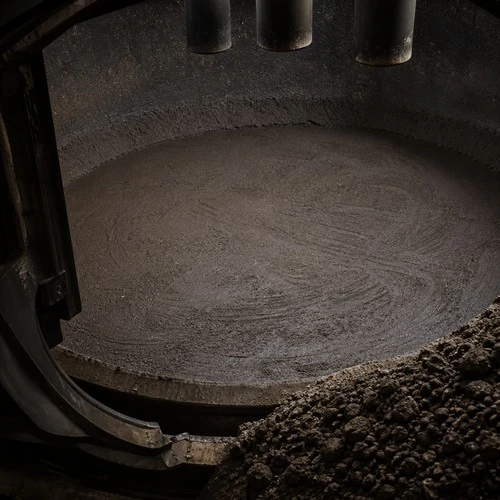
Industrial Applications Across Thermal Metal & Cement Units
Dead burned magnesia forms the chemical foundation of alkaline refractory lining technologies:
1. Steelmaking Converters and Electric Arc Furnaces (EAF)
Application: EAF bottom dry ramming materials, EAF taphole sleeves, and converter charging pads.
Why It Works: High MgO content resists iron oxide-rich basic slag (FeO-SiO2-CaO) without dissolving. In cold bottom repairs, JDBM 92 and JDBM 95 aggregate fractions sinter into a dense, monolithic layer under initial arc heating.
2. Secondary Refining Ladles and Tundishes
Application: Ladle slag line brick batching, dry tundish vibratable mixes, and well block ramming mixes.
Lining Synergy: High-purity JDBM 97.5 aggregates are bonded with flake graphite and liquid phenolic resins to manufacture high-durability MgO-C bricks that withstand calcium-treated molten steel.
3. Cement Rotary Kiln Burning Zones
Application: Raw material aggregate for magnesia alumina spinel bricks and hercynite-bonded basic refractories.
Lining Synergy: Firing DBM alongside calcined alumina generates in-situ magnesium aluminate spinel (MgAl2O4), delivering superior thermal shock resistance to withstand mechanical kiln shell ovality.
When composite kiln linings require transitions between basic and monolithic zones, engineers pair brick courses with matched monolithic refractory catsable and wear-resistant silicon carbide brick sections.
Particle Sizing, Sieve Distribution, and Sintered Fraction Customization
Industrial refractories demand tight particle size distributions to achieve maximum packing density in pressed bricks and monolithic ramming formulations:
Lump Magnesia (Run-of-Kiln): 0 to 30 mm, 10 to 50 mm, and 20 to 100 mm calcined clinker for overseas crushing and grinding plants.
Graded Coarse Aggregates: 3 to 5 mm, 1 to 3 mm, and 0.5 to 1.2 mm fractions for dry vibratable tundish mixes and porous plug well blocks.
Fine Grains and Micro-Milled Flours: 0 to 1 mm, 0 to 0.5 mm, 200 mesh (≤ 0.074 mm), and 325 mesh (≤ 0.045 mm) flours for matrix filling and basic gunning compositions.
Every batch undergoes computerized vibrating screen classification, ensuring zero cross-contamination between coarse and fine sieve fractions.
Packaging, Moisture Prevention & Ocean Logistics Standards
Dead burned magnesia is a dense, high-density bulk commodity requiring moisture-proof packaging to preserve its dead-burned surface passivity during long-distance maritime transport:
Standard Packaging: 1.0 to 1.25 metric ton heavy-duty polypropylene woven bulk bags (jumbo bags), equipped with an internal polyethylene moisture-barrier liner, four reinforced top lifting loops, and a discharge spout.
Bagged Palletized Options: 25 kg multi-ply paper bags with PE inner liners, stacked 40 bags per 1.0-ton wooden pallet, shrink-wrapped with waterproof UV hoods.
Container Payload Optimization (20GP): Dead burned magnesia is classified as heavy cargo. Standard 20-foot general containers (20GP) are loaded to maximum payload capacity (24.0 to 26.0 metric tons) to optimize ocean freight cost per ton.
Quality Documentation: Every container shipment is accompanied by a certified Mill Test Certificate (MTR), Certificate of Analysis (COA) confirming chemical breakdown and bulk density, and a Certificate of Origin.
Commercial Supply Terms:
MOQ: 20 Metric Tons (1 full 20ft container).
Production Lead Time: 7 to 10 days for standard fractional sizes; 15 days for customized mesh milling.
FOB Ports: Qingdao / Tianjin / Dalian Port, China.
Payment Terms: T/T, Irrevocable L/C at sight.
Frequently Asked Questions (FAQ)
What is the difference between dead burned magnesia (DBM) and fused magnesia (FM)?
Dead burned magnesia is produced by solid-state sintering of magnesite at 1600°C to 1800°C in vertical shaft kilns, yielding bulk densities between 3.00 and 3.33 g/cm³ and crystal sizes of 40 to 120 microns. Fused magnesia is produced by melting high-grade magnesite in an electric arc furnace above 2800°C, producing larger periclase crystals (> 600 microns) and higher bulk density (≥ 3.50 g/cm³). DBM is the cost-effective bulk workhorse for standard basic bricks, while FM is reserved for extreme wear zones.
Why is bulk density the most critical metric when purchasing DBM?
While chemical MgO percentage indicates mineral purity, bulk density reflects how thoroughly the raw magnesite was fired. Low bulk density (below 3.10 g/cm³ in high-purity grades) indicates under-firing, which leaves open microporosity that absorbs moisture and promotes early chemical attack by molten steel slag.
How do you prevent dead burned magnesia from hydrating during ocean shipping?
Topower packs DBM inside heavy-gauge polypropylene big bags fitted with sealed internal polyethylene liners. Because our dead-burning process exceeds 1700°C, active residual MgO is fully converted into inert periclase crystal phases, guaranteeing complete stability across humid tropical ocean freight routes.
Request Technical Data Sheet & Factory Direct Quotation
Topower Refractory supplies verified JDBM series dead burned magnesia to refractory producers, steel mills, and foundry contractors worldwide.
Direct Factory Inquiry Email: inquiry@topower.tech
Response Standard: Comprehensive quotation, chemical breakdown analysis, and full Technical Data Sheet (TDS) delivered within 4 business hours.


