


The glass unit kiln is a critical component in the production of glass fibers, requiring high-temperature resistance and thermal stability. The proper selection and configuration of refractory bricks in different structural sections ensure efficient operation and prolonged service life. This article outlines the key refractory firebrick arrangements in various parts of a unit kiln.
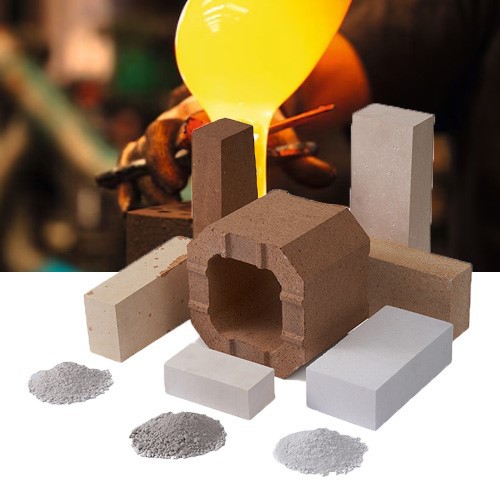
1. Melting Zone
The melting zone is exposed to the highest temperatures (up to 1600°C), demanding superior thermal and chemical resistance. High alumina refractory bricks (70-80% Al₂O₃) are commonly used due to their excellent corrosion resistance against molten glass. Zirconia-based bricks may also be applied in areas with extreme erosion.
2. Throat and Flow Channel
The throat connects the melting zone to the refining area, enduring strong glass flow erosion. Dense fused-cast AZS (alumina-zirconia-silica) bricks are preferred here for their low porosity and high wear resistance. The flow channel typically uses similar materials to maintain structural integrity under continuous glass movement.
3. Refining and Conditioning Zones
These sections operate at slightly lower temperatures but still require stable thermal performance. Silica and mullite refractory bricks are often selected for their balanced thermal shock resistance and cost-effectiveness. Insulating firebricks may be used in secondary layers to improve energy efficiency.
4. Regenerators and Checkers
Regenerators undergo cyclic heating and cooling, necessitating high thermal shock resistance. Magnesia and chrome-magnesia bricks are widely used due to their durability under fluctuating temperatures. Checker bricks, arranged in a lattice pattern, maximize heat exchange efficiency.
5. Kiln Crown and Sidewalls
The crown (roof) must withstand radiant heat and mechanical stress. High-quality silica or alumina refractory bricks with low thermal expansion are ideal. Sidewalls, exposed to moderate temperatures, often utilize fireclay bricks for economic viability while maintaining structural stability.
Proper refractory brick selection and placement are crucial for optimizing the performance and longevity of a fiberglass unit kiln. By matching material properties to operational conditions, manufacturers can enhance efficiency, reduce downtime, and extend the kiln's service life.


