


The causes and countermeasures of damage to refractory bricks for active lime rotary kilns mainly include the following aspects:
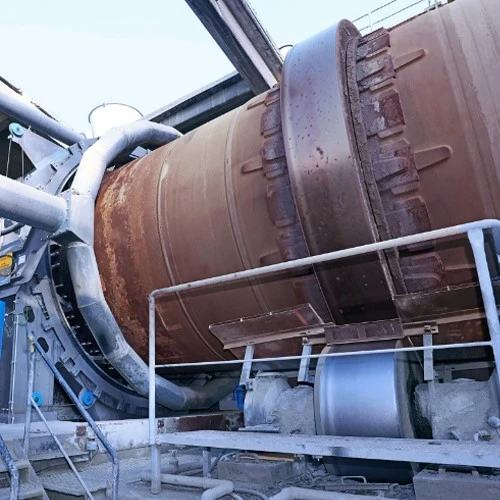
Causes of damage Unreasonable material selection: There are many types of refractory materials, and the selection needs to be matched according to the specific working conditions of the lime rotary kiln. If the quality of the selected refractory bricks is not up to standard or the type is not suitable, it is easy to cause damage. Users may not have enough understanding of the process flow of the lime kiln, and do not distinguish between the selection of refractory materials in different calcination areas, resulting in the refractory materials being easily damaged during high-temperature calcination.
Improper refractory brick masonry: When laying refractory bricks, if there is a lack of guidance from professional technicians, it may lead to errors such as insufficient expansion reservation and climbing after masonry, which will accelerate the damage of refractory materials. During the masonry process, if the "three tight fit" principle is not strictly implemented (i.e., the refractory bricks are tightly fitted to the kiln wall, the refractory bricks are tightly fitted to the refractory bricks, and the refractory bricks are tightly fitted to the insulation layer), it may also cause the refractory bricks to loosen or fall off.
Large fluctuations in system parameters: In the production of lime rotary kilns, the temperature of the calcination zone is very high. If there are defects in the coal feeding and raw material feeding systems of the decomposition furnace, resulting in large fluctuations in the coal feeding amount, the furnace temperature will also fluctuate, causing the temperature distribution in the kiln to change continuously. In the case of temperature fluctuations and lack of kiln skin protection, the thermal shock stability of the transition zone refractory bricks decreases, and fatigue damage is eventually formed.
Chemical corrosion and mechanical impact: The gas and solid materials in the rotary kiln chemically corrode the refractory materials, accelerating the wear and aging of the materials. The flow and rotation of the materials produce impact and vibration, further damaging the refractory materials.
Improper management: Management problems such as improper addition before the kiln, untimely cleaning after the kiln, and inaccurate temperature control in the kiln may also cause damage to the refractory bricks.
Countermeasures
Optimize material selection: Select the appropriate refractory brick type and material according to the specific working conditions and calcination areas of the lime rotary kiln. Give priority to refractory material manufacturers with excellent quality and high reputation.
Improve masonry quality: When laying refractory bricks, strictly implement the "three tight" principle to ensure that the refractory bricks are tightly fitted to the kiln wall and between the refractory bricks. Strengthen quality supervision and inspection during the masonry process, and promptly rectify problems found in improper masonry.
Stabilize system parameters: optimize the coal feeding and raw material feeding systems of the decomposition furnace to ensure stable coal feeding and reduce furnace temperature fluctuations. Strengthen temperature monitoring and control in the kiln to ensure uniform and stable temperature distribution.
Enhance the corrosion and impact resistance of refractory bricks: use refractory materials with corrosion and impact resistance. Fully treat the gas and solid materials generated in the kiln to reduce the degree of chemical corrosion and wear.
Strengthen equipment management: regularly maintain and overhaul the lime rotary kiln to ensure the normal operation of the equipment. Regularly inspect and maintain refractory bricks to promptly detect and replace damaged parts.
Optimize operation and management: optimize the pre-kiln addition procedure and post-kiln cleaning procedure to ensure uniform addition and timely cleaning. Strengthen operator training and management to improve operation level and sense of responsibility. In summary, by optimizing material selection, improving masonry quality, stabilizing system parameters, enhancing the corrosion and impact resistance of refractory bricks, strengthening equipment management and optimizing operation and management, the damage of refractory bricks used in active lime rotary kiln can be effectively reduced, the service life can be extended, and the continuity and stability of the production process can be ensured.


