


Selecting refractory linings for high-temperature slagging environments requires balancing thermal resistance against severe chemical dissolution. In coal water slurry gasifiers, hazardous waste incinerators, and carbon black reactors, operating temperatures regularly exceed 1500°C alongside molten acidic or basic slags. Standard high alumina materials rapidly wash out under these conditions. Specifying between pure corundum castable and chromium oxide-fortified chrome corundum castable determines whether a furnace campaign lasts months or ends in an emergency shutdown. At Topower Refractory, we engineer and supply high-purity monolithic refractory systems based on fused corundum and electrofused chromia to provide maximum slag barrier protection across critical thermal installations worldwide.
Key Technical Sourcing Facts
Commercial Grades Available: Pure Corundum series JCMC-70, JCMC-80, JCMC-90 (Al2O3 70% to 90%); Chrome Corundum series JGRCC-80 (Cr2O3 5%, Al2O3 80%) and JGRCC-85 (Cr2O3 8%, Al2O3 85%).
Bulk Density & Mechanical Strength: Bulk density 2.75 to 3.15 g/cm3; dried compressive strength (110°C x 24h) >= 90 to 100 MPa; high-temperature fired strength (1100°C x 3h) >= 110 to 120 MPa.
Service Temperatures: Maximal working temperature up to 1750°C for corundum grades and 1850°C for chromium corundum grades.
Factory Direct Sourcing: Packed in 25 kg moisture-proof paper bags or 1000 kg big bags on export pallets. Standard delivery 7 to 12 days FOB Qingdao / Tianjin.
What Is Corundum Castable and Chrome Corundum?
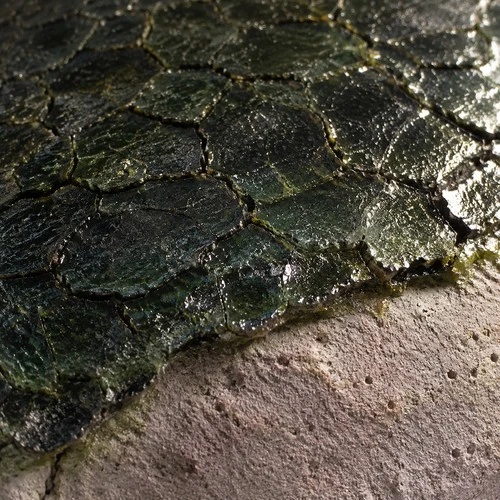
A high-performance monolithic refractory lining relies on crystalline alpha-alumina (corundum) as its foundational aggregate. Pure corundum castable is formulated by blending electrofused white corundum or brown corundum grains with tabular alumina fines and high-purity calcium aluminate cement. It delivers exceptional hardness (Mohs 9), volumetric stability, and refractoriness exceeding 1750°C.
When operating environments involve aggressive molten metal, coal ash slag, or toxic waste incinerator effluents, chromium sesquioxide (Cr2O3) is introduced. In a chrome-corundum formulation, Cr2O3 and Al2O3 form a continuous substitutional solid solution at sintering temperatures. This mineralogical bond alters the slag boundary interface: molten slag dissolving chromium oxide experiences an immediate, dramatic surge in liquid viscosity. This viscosity barrier blocks capillary slag penetration into open matrix pores, preventing structural spalling and catastrophic refractory wear.
Technical Specifications: Pure Corundum vs Chrome Corundum
To select the correct material for slag contact zones, examine the chemical thresholds and physical properties verified across our production runs:
| Technical Property / Metric | JCMC-70 (Corundum-Mullite) | JCMC-80 (Dense Corundum) | JCMC-90 (High Purity Corundum) | JGRCC-80 (Chrome Corundum) | JGRCC-85 (High Chrome Corundum) | Test Standard |
|---|---|---|---|---|---|---|
| Al2O3 Content (%) | >= 70.0 | >= 80.0 | >= 90.0 | >= 80.0 | >= 85.0 | ASTM C114 |
| Cr2O3 Content (%) | / | / | / | 4.5 - 5.5 | 7.5 - 8.5 | XRF Analysis |
| Fe2O3 Content (%) | <= 1.0 | <= 0.5 | <= 0.3 | <= 0.8 | <= 0.5 | ASTM C114 |
| Bulk Density (g/cm3) | 2.55 | 2.75 | 3.00 | 3.05 | 3.15 | ASTM C134 |
| Maximum Working Temp (°C) | 1550 | 1650 | 1750 | 1750 | 1850 | ISO 528 |
| CCS @ 110°C x 24h (MPa) | >= 90.0 | >= 100.0 | >= 110.0 | >= 100.0 | >= 100.0 | ASTM C133 |
| CCS @ 1100°C x 3h (MPa) | >= 90.0 | >= 110.0 | >= 120.0 | >= 120.0 | >= 120.0 | ASTM C133 |
| Flexural Strength @ 110°C (MPa) | >= 10.0 | >= 12.0 | >= 15.0 | >= 13.0 | >= 13.0 | ASTM C133 |
| Flexural Strength @ 1100°C (MPa) | >= 12.0 | >= 14.0 | >= 18.0 | >= 14.0 | >= 14.0 | ASTM C133 |
| Linear Change @ 1100°C x 3h (%) | +/- 0.3 | +/- 0.3 | +/- 0.3 | +/- 0.3 | +/- 0.3 | ASTM C113 |
| Linear Change @ 1500°C x 3h (%) | / | +/- 0.3 | +/- 0.3 | +/- 0.2 | +/- 0.2 | ASTM C113 |
Note: All batches are certified with full Mill Test Certificates (COA). Custom water-demand formulation is calibrated for vibration or pumpable installation.
Slag Corrosion Mechanism in Industrial Gasifiers
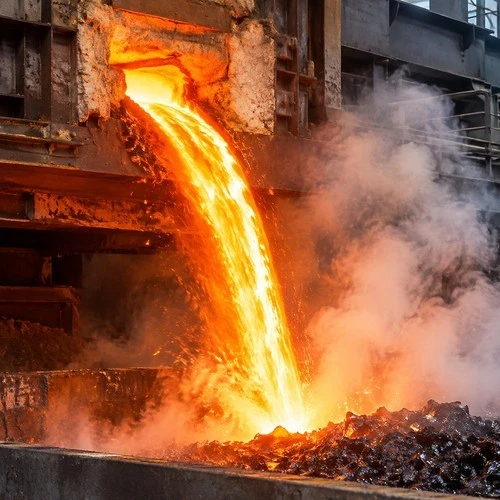
In pressurized gasification reactors, synthetic gasifiers, and incinerators, refractory linings confront molten coal slag containing SiO2, CaO, FeO, and Al2O3 alongside turbulent reducing gas flows. Understanding the corrosion mechanisms highlights why chrome corundum outperforms alternative linings:
1. Liquid Slag Dissolution and Penetration
When operating above the slag melting point (typically 1250°C to 1400°C), low-viscosity liquid slag wets standard refractory surfaces. Capillary forces draw the liquid slag deep into matrix pores. The slag dissolves primary alumina grains, forming low-melting anorthite and gehlenite liquid phases that wash away under gas turbulence.
2. The (Al,Cr)2O3 Passivation Layer
Al2O3 and Cr2O3 have identical corundum crystal structures and form a complete solid solution series across all proportions. When molten slag contacts a chrome-bearing refractory matrix, Cr2O3 dissolves into the advancing slag front. Even a small concentration of dissolved Cr2O3 significantly raises the slag liquidus temperature and increases slag viscosity by multiple orders of magnitude.
3. Spinel Phase Formation at Hot Face
Simultaneously, dissolved Cr2O3 reacts with FeO and MgO in the slag to precipitate a dense, continuous layer of iron-chromium-aluminum spinel at the immediate hot face. This inert crystalline barrier stops further slag migration into the refractory body, eliminating structural spalling caused by thermal expansion mismatch.
Industrial Application Guidelines
Selecting between pure corundum and chrome-fortified castables depends on chemical slag aggressiveness and mechanical scouring:
Where to Install Pure Corundum Castables (JCMC-80 / JCMC-90):
Petrochemical Reforming Furnaces: Secondary reformers, transfer lines, and combustion chambers where iron oxide impurities must remain below 0.3% to prevent carbon monoxide soot deposition.
Steel Ladles & Tundishes: Ladle well blocks, impact pads, and tundish weir dams exposed to molten steel velocity and severe thermal shock.
High-Temperature Burner Blocks: Burner quarls in rotary kilns and reheating furnaces operating between 1500°C and 1650°C.
Where to Install Chrome Corundum Castables (JGRCC-80 / JGRCC-85):
Coal Water Slurry Gasifiers: Burner throats, taphole surrounds, and slag pool boundaries facing high-velocity coal slag wash.
Hazardous & Chemical Waste Incinerators: Primary combustion chambers burning chlorinated wastes, alkali salts, and heavy-metal sludges.
Carbon Black Reactors: Choke sections and reaction chambers running up to 1800°C under severe scouring gas streams.
Non-Ferrous Smelting Furnaces: Copper converter slag lines and lead-zinc blast furnace tapping troughs.
Installation, Anchoring & Dry-Out Protocol
Because corundum-based refractory linings possess high thermal conductivity and density, field installation requires strict adherence to engineering standards:
Water Addition Control: Dense corundum formulations require only 4.5% to 6.5% gauging water when designed as a low cement castable. Measure water by weight rather than bucket volume. Excess gauging water leaves interconnected micro-voids, cutting slag resistance by half.
Anchor Metallurgy and Spacing: Use high-nickel alloy anchors, such as Inconel 601 or SS310S stainless steel refractory anchors, spaced 150 to 200 mm apart. Coat all anchor tips with 2 mm plastic expansion caps or wax dipping. Uncapped metallic anchors expand thermally and crack dense corundum linings during first heat-up.
High-Frequency Vibration: Consolidate using internal immersion poker vibrators operating at 50 to 100 Hz. Vibrate until air bubbles cease rising and a reflective liquid film coats the surface. Avoid over-vibrating beyond 25 seconds per insertion point to prevent coarse corundum aggregate settling.
Stepped Baking Schedule: Follow a disciplined initial heating curve: ramp at 15°C per hour to 150°C and hold for 1 hour per 25 mm thickness to purge free water; ramp to 350°C and hold for chemical crystal water release; ramp to 600°C to complete binder conversion; then climb to operating temperature at 25°C to 30°C per hour.
Packaging, Shelf Life & Sourcing
Topower Refractory manufactures high-purity monolithic refractory materials packaged for overseas container transit:
Packaging Standard: 25 kg moisture-barrier multi-ply craft paper bags with internal polyethylene liners. Bags are unitized on heat-treated fumigated pallets, shrink-wrapped, and covered with weatherproof plastic shrouds.
Bulk Packaging: 1000 kg heavy-duty UV-stabilized polypropylene super sacks with bottom discharge chutes for automated pneumatic mixers.
Shelf Life & Storage: Unopened bags stored in dry, elevated warehouse environments retain certified hydration properties for 6 to 9 months.
Quality Traceability: Every production lot is verified for chemical composition (XRF), density, and cold crushing strength. Comprehensive test certificates accompany every export bill of lading.
Transparent Sourcing: Pricing & How to Order
At Topower Refractory, we supply factory-direct refractory products engineered to your exact furnace operating parameters:
Technical RFQ Checklist
To obtain a fast, comprehensive quote within 4 hours, provide:
Material Specification: Pure Corundum (JCMC series) or Chrome Corundum (JGRCC-80 / JGRCC-85), or state your Al2O3 and Cr2O3 requirements.
Operating Parameters: Working temperature, fuel type, slag chemical analysis, and furnace atmosphere.
Required Quantity: Total tonnage (Full container load FCL is 20 to 24 metric tons per 20GP container).
Accessories Needed: Anchors (SS310S or Inconel 601), ceramic fiber backing insulation, or organic dry-out explosion-proof fibers.
Destination Port: For instant FOB Qingdao/Tianjin or CIF quote calculation.
Commercial Pricing Reference: Pure corundum formulations generally range from 550 to 850 USD per metric ton FOB China, while specialized chrome corundum castables range from 1100 to 1850 USD per metric ton depending on Cr2O3 percentage and fused raw material selection.
Direct Technical Contact: Reach our engineering team at inquiry@topower.tech for formulation consultations, lining drawings, and free 2 to 5 kg testing samples.
Frequently Asked Questions
What makes chrome corundum castable superior to pure corundum in slag contact?
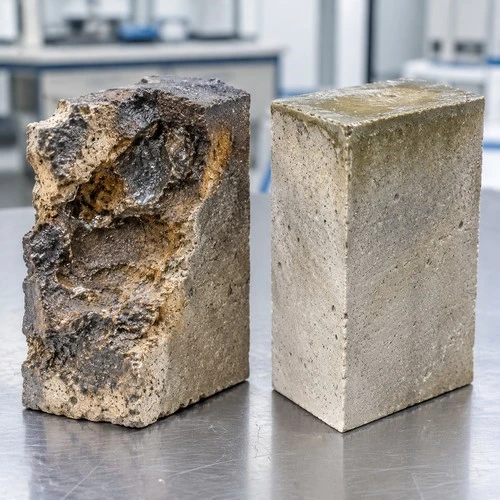
Pure corundum provides high hardness and refractoriness, but low-viscosity iron-silicate slags can still penetrate its pore structure. Introducing Cr2O3 forms an Al2O3-Cr2O3 solid solution. When molten slag dissolves chromium oxide, slag viscosity rises drastically and an iron-chrome spinel layer precipitates at the hot face, physically blocking further liquid penetration.
Can chromium-bearing monolithics be used in municipal waste incinerators?
Yes. Hazardous and municipal waste incinerators produce volatile alkali metals, chlorine, and heavy-metal acid slags. Chrome corundum castable grades (such as JGRCC-80) resist chemical attack from corrosive flue gases and molten fly ash far better than standard aluminosilicate linings.
How much water should be added when mixing dense corundum castables on-site?
Dense low-cement refractory mixes require 4.5% to 6.5% clean water by weight. Always utilize a high-shear forced-action pan mixer. Mix dry aggregate for 1 to 2 minutes, introduce 80% of the gauging water, mix for 2 minutes, then add the remaining water until the mix flows under mechanical vibration.


