


The construction of high-temperature industrial kilns is inseparable from refractory bricks. The actual refractory brick construction process must be operated by experienced and qualified construction personnel to ensure the quality and safety of the masonry. During the actual construction process What construction specifications should be followed to ensure overall quality requirements.
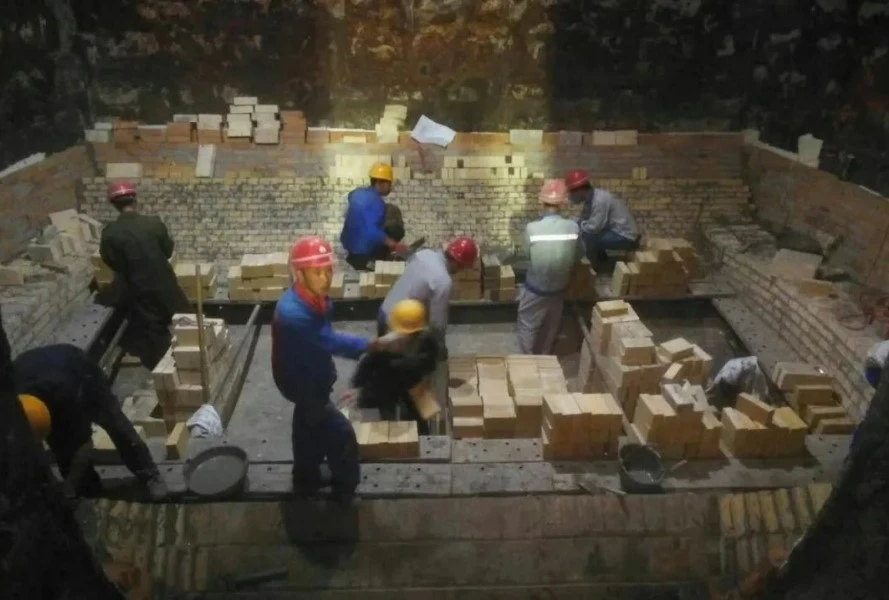
1. Before masonry, the center and elevation of the furnace must be accurately measured and placed according to the design requirements to ensure that the size and relevant height of each part of the masonry meet the requirements.
2. When building masonry, the masonry should be built with staggered joints. The joints in the brickwork should be filled with full mud and the surface should be grouted. When dry laying, in addition to filling dry refractory powder according to design requirements, it is also necessary to ensure that the filling is sufficient.
3. Do not cut or cut bricks on refractory brick masonry. Instead, use wooden hammers and rubber hammers for alignment. At the same time, after the mud has dried, the masonry must not be knocked to avoid damaging the integrity of the masonry.
4. The processed surface of the refractory bricks should avoid facing the inner surface of the furnace and furnace channels or expansion joints to avoid damage caused by thermal expansion and contraction.
5. When brick laying is interrupted or requires rework to remove bricks, stepped slanting should be used to ensure a smooth transition between demolition and re-laying.
6. For processed bricks used in refractory brick masonry, bricks with a width less than half of the brick width or a thickness less than two-thirds of the brick thickness shall not be used.
7. For combined bricks, they should be "matched and seated" according to their inner diameter, size and elevation to ensure the accuracy of size and height.
8. The flue can be constructed only when there are settlement joints between refractory bricks and the chimney or other buildings. At the same time, the settlement joints must have the function of preventing air permeability and water seepage.
9. When building the vault of the underground flue, locking bricks can only be driven in after backfilling the outside of the wall.
10. Refractory masonry and insulated masonry must be protected from moisture and kept dry during the process from construction to production.
11. During the masonry process, care must be taken to prevent the bricks from being affected by mechanical impact, extrusion force and vibration to avoid damage or loosening of the bricks.
The above are the specifications for the construction of refractory bricks in high-temperature industrial kilns. Only by following these specifications can the service life of the refractory fire bricks be extended, the working efficiency of the kiln be improved, and the safe and stable operation of the production process be ensured. At the same time, the efficiency of construction can be improved. Speed up the construction progress and avoid rework and masonry errors.


