


During kiln construction or refurbishment, substantial quantities of refractory materials are employed. These materials fall into two principal categories: preformed refractory bricks and non-preformed refractory mortars. Both types require water during installation-refractory mortar used for bedding bricks contains inherent moisture, while castable and gunned refractories necessitate deliberate addition of water during mixing and application. Consequently, newly constructed or repaired kilns initially exist in a "wet-laid" condition.
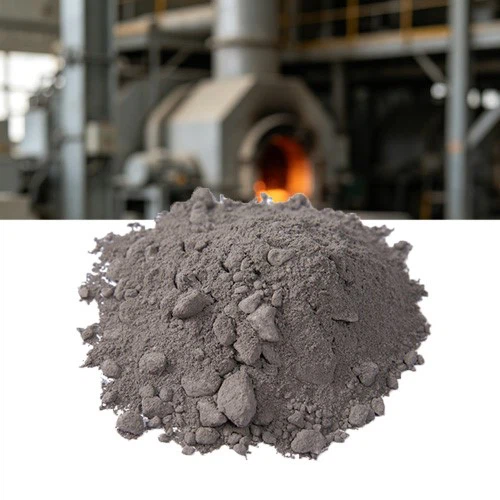
Moisture within refractory masonry exists in two distinct forms: (1) free water (also termed surface water), which is physically adsorbed or entrapped and visibly present on masonry surfaces; and (2) chemically bound water (or crystalline water), incorporated within the crystal lattice of hydrated phases formed during setting. Both forms pose significant risks to structural integrity and long-term performance; therefore, a controlled thermal drying (i.e., furnace-drying) process is mandatory prior to commissioning the kiln.
Retention of moisture in refractory linings entails three principal hazards:
First, premature heating without adequate drying may generate internal steam pressure exceeding the green strength of uncured refractory castables, resulting in cracking, spalling, or delamination of wall and roof linings.
Second, thermally induced vaporization of moisture produces reactive water vapor, inducing steep thermal gradients and promoting excessive carbon monoxide (CO) generation-both of which accelerate degradation of the refractory lining and compromise operational longevity.
Third, free water facilitates alkali migration and efflorescence ("realkali"), particularly under ambient humidity and low-temperature conditions.
The realkali phenomenon manifests as whitish, powdery deposits (often described as "bloom" or "frosting"), surface sanding, or dusting on cured refractory surfaces. It occurs predominantly during cold-weather installation when refractory mortars containing soluble alkali metal oxides (e.g., Na₂O, K₂O) react with mixing water to form alkaline hydroxides and colloidal silicates. These species migrate via capillary action to the surface, where evaporation concentrates them into loosely adherent, hygroscopic white precipitates-thereby impairing surface cohesion, abrasion resistance, and chemical stability.
Moreover, residual free water exacerbates high-temperature degradation mechanisms. Under service conditions, refractory linings are subjected to erosive attack from particulate matter, flame impingement, and corrosive gases. Although erosion alone proceeds gradually, the presence of free water intensifies this process by promoting hydrothermal reactions, accelerating phase decomposition, and facilitating microcrack propagation-ultimately reducing mechanical strength, thermal shock resistance, and overall service life.
Accordingly, furnace-drying is an indispensable step in both new kiln commissioning and refractory repair. This controlled thermal treatment serves two primary objectives: (1) progressive removal of all moisture-free and bound-via gradient-driven diffusion and surface evaporation; and (2) gradual preheating of the refractory matrix to induce beneficial phase transformations and sintering. During drying, water vapor migrates outward from the interior toward the hot surface, where it evaporates; concurrently, internal moisture continuously replenishes the evaporating front, ensuring uniform dehydration without thermal shock or structural damage.


