


What Is Acid Proof Brick?
Acid proof brick is a dense ceramic lining material designed to protect concrete, steel and masonry structures from acid corrosion. In international purchasing documents, buyers may also see similar terms such as acid resistant brick, anti acid brick, acid proof tile, chemical resistant brick or acid resistant lining brick.
These terms are closely related, but the correct selection should not depend only on the product name. Buyers need to consider the acid type, concentration, working temperature, mechanical load, installation area and mortar system. For chemical plants, fertilizer plants, pickling workshops, acid storage tanks and chimney flue systems, ordinary construction bricks cannot provide reliable corrosion protection. Acid proof brick is used as a protective lining layer to reduce acid penetration, extend equipment service life and lower maintenance cost.
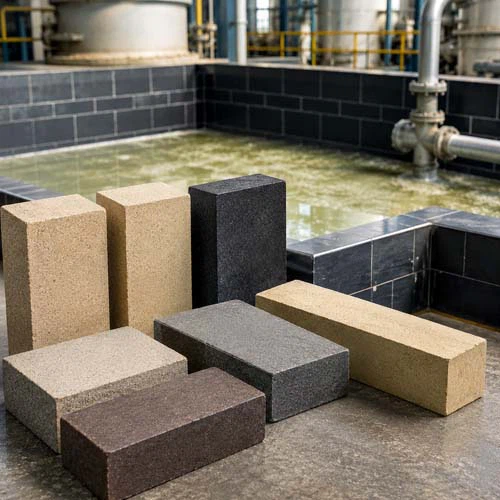
Is Acid Proof Brick the Same as Acid Resistant Brick?
In many markets, acid proof brick and acid resistant brick are used almost interchangeably. Both refer to ceramic bricks with low water absorption, high density and strong resistance to acidic media. "Acid proof" is more common in commercial product names, while "acid resistant" is often used in engineering specifications.
However, buyers should check the technical data instead of relying only on the wording. A good acid resistant brick should have suitable acid resistance, compressive strength, water absorption, dimensional accuracy and thermal stability. For some lining projects, the mortar or adhesive system is just as important as the brick itself. If the brick body is resistant but the joints are weak, acid can still penetrate the lining and damage the base structure.
Where Is Acid Proof Brick Commonly Used?
Acid proof brick is widely used in areas where acid, chemical vapor or corrosive liquid may attack the structure. Common applications include acid storage tanks, reaction vessels, pickling tanks, chemical plant floors, wastewater treatment channels, sulfuric acid systems, fertilizer plants, battery workshops and chimney lining.
For chemical plant floor lining, buyers usually require wear resistance, anti-slip surface options and stable joint filling. For tank lining, the main concern is acid penetration resistance and long-term bonding strength. For chimney and flue lining, temperature fluctuation and acid vapor corrosion should be considered together.
Different working areas may require different brick thicknesses and installation methods. A floor exposed to forklift traffic needs stronger mechanical performance, while an acid tank requires better joint sealing and immersion resistance.
How Should Buyers Select the Right Brick Grade?
The first step is to confirm the chemical environment. Sulfuric acid, hydrochloric acid, nitric acid and mixed acid systems may require different lining designs. Buyers should provide acid type, acid concentration, operating temperature and whether the lining is exposed to continuous immersion, splashing or vapor.
The second step is to check water absorption and density. Acid proof brick usually needs low water absorption because open pores may allow acid to enter the brick body. A denser structure generally improves corrosion resistance and mechanical strength.
The third step is to check strength and size tolerance. For industrial floors and loading areas, compressive strength and abrasion resistance are important. For tanks, channels and curved surfaces, accurate dimensions help reduce joint width and improve lining quality.
Why Is Mortar Selection Important?
Acid proof brick is rarely used alone. It normally works with acid resistant mortar, potassium silicate mortar, resin mortar or other chemical resistant bonding materials. The correct mortar depends on acid type, temperature, installation position and curing condition.
For example, some acid resistant mortar systems perform well in strong acid environments but may have limitations in alkali or hydrofluoric acid conditions. Resin mortar can provide excellent bonding and chemical resistance in many areas, but its temperature resistance and curing requirements should be confirmed before installation.
Buyers should ask the supplier for a complete lining recommendation instead of only purchasing bricks. A complete acid resistant lining system includes brick type, mortar type, joint width, surface preparation, curing time and inspection method.
Acid Proof Brick vs Ceramic Tile: Which Is Better?
Some buyers compare acid proof brick with ceramic tile. Acid resistant ceramic tiles can be used in light corrosion areas or decorative surfaces, but acid proof brick is usually thicker, denser and more suitable for heavy-duty industrial lining.
In chemical plants, acid tanks and pickling areas, brick thickness and joint performance are important for long-term protection. If the project involves heavy mechanical load, continuous acid contact or high temperature, acid resistant brick is usually more reliable than ordinary ceramic tile. If the area only requires easy cleaning and mild chemical resistance, acid resistant tile may be enough.
The best choice depends on the corrosion level, load condition, expected service life and project budget.
What Should Buyers Check Before Ordering?
Before ordering acid proof brick, buyers should prepare a clear technical request. Important details include brick size, thickness, quantity, acid type, acid concentration, working temperature, installation area, drawing requirement and mortar preference.
It is also useful to confirm whether special shapes are needed. For tanks, corners, drainage channels, manholes and curved surfaces, standard rectangular bricks may not be enough. Custom shaped acid proof brick can reduce cutting work, improve installation quality and make the lining more stable.
For export orders, packaging is also important. Acid resistant bricks are heavy ceramic products, so they should be packed on strong pallets with protective film and clear labels. Good packaging reduces breakage during ocean shipping and makes site handling easier.
Installation and Maintenance Tips
A successful acid proof lining depends on both material quality and installation control. The base surface should be clean, dry and strong enough. Joint width should be consistent, and the mortar should fully fill the joints. Empty joints, uneven surfaces or poor curing can reduce corrosion resistance.
After installation, the lining should be inspected before service. Common checks include joint fullness, surface flatness, hollow areas and curing condition. During operation, regular inspection helps identify cracks or damaged joints early. Small repairs can prevent larger corrosion problems.
Acid proof brick and acid resistant brick are important lining materials for chemical corrosion protection. The best choice depends on acid type, concentration, temperature, mechanical load and installation area. Buyers should compare acid resistance, water absorption, strength, size tolerance and mortar compatibility rather than selecting only by price. A complete acid proof lining system can protect industrial equipment, reduce maintenance cost and support safer long-term operation.


