


A magnesia alumina spinel brick is a high-grade basic shaped refractory manufactured from high-purity dead-burned or electro-fused magnesia co-sintered with pre-reacted or in-situ magnesium aluminate spinel (MgAl2O4, containing Al2O3 5% to 15% and MgO >= 80% to 88%), engineered to deliver refractoriness under load (RUL T0.6) above 1650°C and water-quench thermal shock resistance exceeding 15 to 25 cycles. Designed specifically to replace hazardous hexavalent-chromium-generating magnesia-chrome bricks in cement rotary kilns, spinel-toughened basic refractories provide the critical lining material for upper and lower transition zones where fluctuating thermal stresses, unstable clinker coating, and gaseous alkali-sulfur salt attacks destroy ordinary basic bricks.
While straight magnesia bricks exhibit exceptional chemical refractoriness against basic oxides, their high linear thermal expansion coefficient (14 x 10^-6 /°C) makes them prone to catastrophic structural spalling during kiln temperature swings. By introducing synthetic spinel phases with lower thermal expansion (8.0 x 10^-6 /°C), engineers introduce microscopic thermal expansion mismatch cracks that arrest crack propagation and dissipate stress. This technical guide outlines phase toughening mechanics, chemical grade specifications, cement kiln lining design, and direct sourcing protocols from our factory in China.
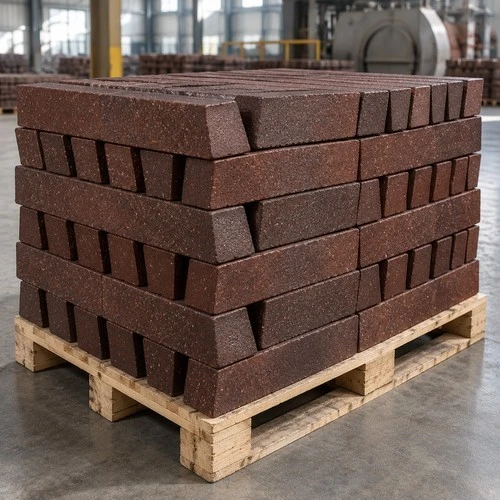
The Spinel Toughening Mechanism: Why Pure Magnesia Fails
Pure periclase (MgO) refractories suffer from structural brittleness:
Thermal Stress & Brittle Failure: When a rotary kiln experiences emergency shutdowns, raw meal feed interruptions, or burner adjustments, temperature swings generate severe shear stress in the brick working layer. In pure magnesia brick, tensile stresses propagate rapidly through the dense periclase crystal matrix, producing large macroscopic fracture planes that cause 20 to 50 mm thick slabs to spall off prematurely.
The Microcrack Energy Dissipation Principle: During high-temperature firing at 1650°C to 1750°C in industrial tunnel kilns, periclase and magnesium aluminate spinel sinter tightly together. Upon cooling, because spinel contracts significantly less than the surrounding periclase matrix, controlled microcracks form along the two-phase grain boundaries.
Arresting Crack Propagation: When mechanical or thermal stresses strike the brick in operational service, advancing cracks encounter these pre-existing boundary microcracks. The energy of the crack tip is absorbed, deflected, and dispersed through microscopic grain branching rather than uniting into a catastrophic structural shear plane. As a result, factory-engineered magnesia alumina spinel bricks routinely survive over 20 water-quench cycles (1100°C to cold water) without fracturing.
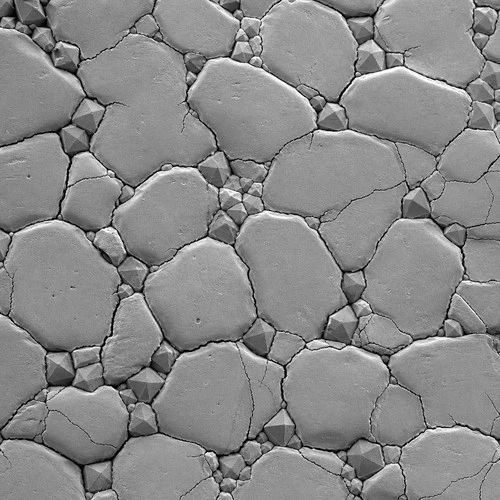
Technical Specifications: Pre-Synthesized vs. In-Situ Spinel Grades
Manufacturers formulate spinel refractories using two core metallurgical approaches: blending pre-synthesized fused/sintered spinel grain, or generating in-situ spinel during tunnel kiln firing:
1. Standard Grade for Upper Transition Zone (8% to 10% Al2O3)
MgO Content: >= 84.0%
Al2O3 Content: 8.5% to 10.5% (Pre-reacted spinel aggregates)
Fe2O3 Content: <= 1.0%
CaO Content: <= 1.5% (Strict low-lime limit to prevent liquid phases)
Bulk Density: 2.88 to 2.95 g/cm3 (ASTM C134)
Apparent Porosity: <= 16.5% (ASTM C20)
Cold Crushing Strength (CCS): >= 60.0 to 75.0 MPa (ASTM C133)
Refractoriness under Load (RUL T0.6): >= 1680°C (ASTM C16)
Thermal Shock Resistance (1100°C Water Quench): >= 20 cycles
2. High-Density Grade for Lower Transition Zone (5% to 7% Al2O3)
MgO Content: >= 87.0%
Al2O3 Content: 5.0% to 7.0%
Fe2O3 Content: <= 0.8%
Bulk Density: 2.95 to 3.02 g/cm3
Apparent Porosity: <= 15.5%
Cold Crushing Strength (CCS): >= 65.0 to 80.0 MPa
Refractoriness under Load (RUL T0.6): >= 1700°C
Thermal Shock Resistance (1100°C Water Quench): >= 15 cycles
For severe mechanical torque and heavy clinker abrasion, plants utilize pre-reacted fused magnesium aluminum spinel raw material to ensure zero unreacted free alumina remains inside the brick structure.
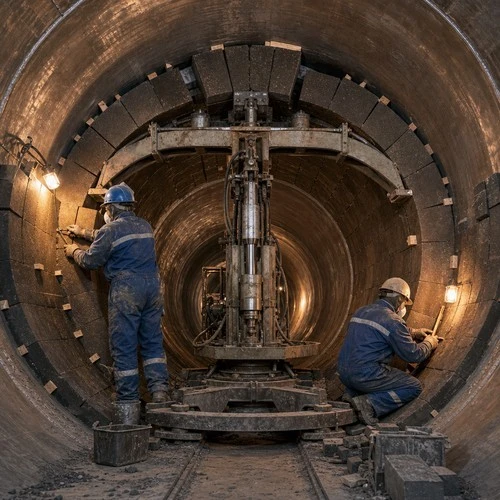
Cement Rotary Kiln Transition Zones: Operating Challenges
Modern precalciner cement kilns with production capacities of 3,000 to 10,000 metric tons per day expose refractory linings to three destructive degradation mechanisms:
1. Unstable Clinker Coating Cycling
Unlike the central burning zone where stable molten clinker adheres firmly to brick faces, the upper and lower transition zones operate at 1200°C to 1450°C. In this range, the clinker coating repeatedly sticks and peels away. When coating slabs peel off, they pull adhering brick face material with them. Spinel bricks possess high hot modulus of rupture (HMOR > 4.5 MPa at 1400°C), resisting coating shear peel.
2. Volatile Alkali & Sulfur Salt Infiltration
Secondary alternative fuels (RDF, tires, biomass) introduce high concentrations of volatile potassium (K2O), sodium (Na2O), chlorine (Cl), and sulfur (SO3) into kiln gases. These gaseous salts penetrate open pores into the 800°C to 1000°C brick interior, condensing into potassium sulfate (K2SO4) and spurrite. This alkali salt infiltration causes volumetric densification and deep spalling. Magnesia-spinel brick resists alkali-salt expansion far better than traditional magnesia refractory materials.
3. Comparison: Magnesia-Alumina Spinel vs. Magnesia-Hercynite Brick
In high-stress burning zone interfaces where rapid coating formation is essential, cement operators often evaluate magnesia hercynite brick (iron-alumina spinel FeAl2O4). Hercynite accelerates liquid-phase coating adherence, whereas magnesia-alumina spinel delivers higher refractoriness under load and lower thermal conductivity, making it the most cost-effective solution across transition zones.
Kiln Masonry, Expansion Paper & Mechanical Ring Wedging
Proper installation of basic refractories in rotary kilns prevents premature joint pinch:
Radial Expansion Allowances: Basic bricks expand significantly more than kiln shell steel. Every 1.0 to 1.5 linear meters of ring lining requires dry-laid cardboard expansion spacers (1.5 to 2.0 mm thick) or ceramic fiber paper strips that burn out cleanly upon kiln commissioning, preventing compressive crushing of brick edges.
Steel Shim Ring Wedging: Each brick ring is installed dry and locked tight using dedicated key bricks. Steel shims (1.5 to 2.0 mm cold-rolled steel plate) are driven into the closing joints using pneumatic driving hammers. At operating temperatures, these steel plates oxidize and chemically fuse with the adjacent basic bricks, creating a rigid monolithic masonry ring that eliminates brick loss during kiln rotation.
Factory Direct Quality Assurance & Sourcing Terms
Procuring magnesia alumina spinel bricks directly from certified Chinese manufacturers guarantees high periclase purity and precise dimensional accuracy:
Ultra-High Tonnage Pressing: Bricks are molded on 1600 to 2500 metric ton fully automated hydraulic presses, ensuring uniform internal bulk density and dimensional tolerances held strictly within +/- 1.0 mm for VDZ (B-series, A-series) and ISO standard rotary kiln wedge shapes.
Hydration Protection: Basic refractories are sensitive to moisture hydration (MgO + H2O -> Mg(OH)2). Every pallet is packed with desiccant packs, double-wrapped in heavy waterproof polyethylene shrink wrap, bound with high-tensile PET strapping, and mounted on fumigated ISPM 15 wooden export pallets.
Commercial Terms & Lead Times: Minimum order quantity (MOQ) is 10 metric tons for standard shapes and 20 metric tons for complete kiln ring profiles. Standard production lead time is 12 to 18 working days FOB Qingdao Port.
To submit rotary kiln diameter profiles, request official test certificates (MTC), or obtain direct export pricing, contact our engineering team at inquiry@topower.tech.


