


A microporous board is an ultra-high-performance rigid thermal insulation panel manufactured from compacted fumed silica nanoparticles (80% to 90% SiO2), infrared opacifiers, and structural reinforcing fibers, engineered to achieve thermal conductivity as low as 0.020 W/(m·K) at 200°C and 0.028 W/(m·K) at 800°C. By engineering internal pore sizes (average diameter 20 nanometers) smaller than the mean free path of still air molecules (approximately 68 nanometers), microporous panels virtually eliminate gaseous convection and conduction, delivering three to five times the thermal efficiency of conventional ceramic fiber blanket or calcium silicate board.
In modern thermal processing, heavy multi-layer refractory linings steal valuable interior chamber volume, reduce vessel capacity, and cause excessive exterior shell temperatures. For space-constrained installations such as steel ladles, aluminum transfer launders, fuel cells, and petrochemical cracking reactors, high-density microporous panels allow engineers to slash insulation thickness from 75 mm down to 15 mm while maintaining cold-face shell temperatures below 250°C. This technical guide outlines nanoporous heat-transfer physics, temperature classifications, space-saving design rules, and direct factory procurement specifications from China.

The Nanoporous Physics: Defeating Gas Convection, Conduction & Radiation
Conventional thermal insulators rely on entrapping stagnant air within coarse pores (typically measuring 1 to 100 microns). At elevated temperatures, gas molecules vibrate and collide within these large voids, accelerating heat conduction. A factory-engineered microporous board suppresses all three modes of thermal transfer through engineered nanotechnology:
The Knudsen Effect (Eliminating Gas Conduction): The mean free path of air molecules at atmospheric pressure is 68 nanometers, decreasing further at high temperatures. Because the nanopores within compressed fumed silica measure only 10 to 30 nanometers, air molecules collide with pore cell walls rather than with each other. This eliminates gaseous conduction and convection, driving gas-phase thermal conductivity below that of still, unconfined air.
Solid Conduction Minimization: The panel core consists of amorphous fumed silica spheres point-contacted in a three-dimensional skeletal chain. Because the physical contact area between spheres is minuscule, the path for solid thermal conduction is extraordinarily tortuous, creating high thermal resistance.
Infrared Opacification (Blocking Radiative Heat): Above 500°C, radiant heat transfer escalates exponentially (governed by the Stefan-Boltzmann T^4 law). Microporous panels incorporate finely milled mineral opacifiers such as rutile titanium dioxide (TiO2) or silicon carbide (SiC) to absorb, scatter, and reflect infrared radiation wavelengths between 1.5 and 8 microns.
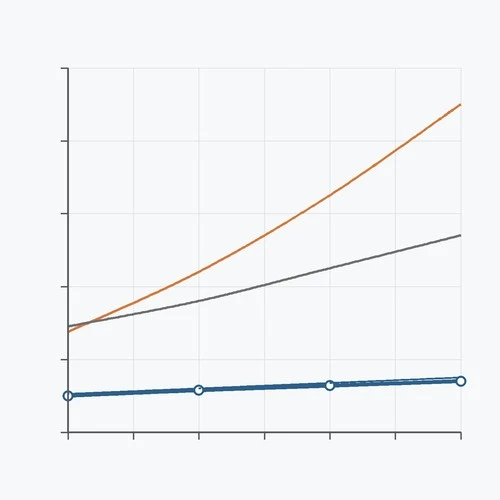
Technical Specifications: 950°C Standard vs. 1050°C High-Temp Grades
Industrial microporous panels are manufactured in distinct density and temperature formulations to match specific furnace backing zones:
1. Standard Grade (950°C Maximum Temperature)
Continuous Operating Limit: Up to 900°C
Core Composition: Fumed silica 80% to 85%, Opacifiers 12% to 15%, Organic & Inorganic Fibers 3% to 5%
Bulk Density: 280 to 320 kg/m3
Thermal Conductivity at 200°C: 0.020 W/(m·K) (ASTM C177)
Thermal Conductivity at 400°C: 0.023 W/(m·K)
Thermal Conductivity at 800°C: 0.028 W/(m·K)
Cold Compressive Strength (at 10% deformation): >= 0.35 MPa (ASTM C165)
Permanent Linear Shrinkage (24h soak at 900°C): <= 1.0%
2. High-Temperature Grade (1050°C Maximum Temperature)
Continuous Operating Limit: Up to 1000°C
Core Composition: High-purity fumed silica with advanced zircon/silicon carbide opacifiers
Bulk Density: 300 to 360 kg/m3
Thermal Conductivity at 400°C: 0.024 W/(m·K)
Thermal Conductivity at 800°C: 0.030 W/(m·K)
Cold Compressive Strength (at 10% deformation): >= 0.45 MPa
Permanent Linear Shrinkage (24h soak at 1000°C): <= 1.5%
For applications requiring moisture or abrasion resistance, panels are encapsulated in woven fiberglass fabric, water-resistant aluminum foil, or high-purity nano microporous insulation plate coverings.
Space-Constrained Industrial Applications
1. Steel Ladles & Tundishes (Expanding Hot Metal Capacity)
Traditional steel ladles use 50 to 65 mm of insulating firebrick or fiberboard behind safety lining bricks to keep outer steel shell temperatures below 300°C. Replacing this thick layer with 10 mm to 15 mm of high-density microporous panels saves 40 mm of radial wall thickness. Across a 150-ton teeming ladle, this reclaimed volume increases molten steel payload by 4 to 8 metric tons per heat while simultaneously dropping steel shell temperatures by 30°C to 50°C, drastically extending shell fatigue life.
2. Aluminum Melting Launder Systems & Holding Furnaces
In molten aluminum transfer launders and degassing boxes, molten metal temperature loss during transport leads to premature freeze-ups and oxide inclusions. Backing the dense refractory castable lining with 10 mm of flexible microporous insulation reduces overall launder dimensions while keeping metal temperature drops within 2°C per meter of transfer length.
3. Industrial Kilns, Reformers & Glass Forehearths
In petrochemical cracking heaters and glass tank forehearths, microporous panels replace bulky multi-layer ceramic fiber blanket for furnace lining backup layers, minimizing furnace footprint in tight refinery structural steel bays.
Material Selection: Microporous Board vs. Calcium Silicate Board
When space is unrestricted, standard calcium silicate board provides an economical backup solution. However, when shell clearance is strictly limited (< 30 mm) and energy reduction is critical, microporous board is indispensable: 10 mm of microporous board provides the identical thermal insulation barrier of 40 mm of calcium silicate or 50 mm of high-density ceramic fiber.
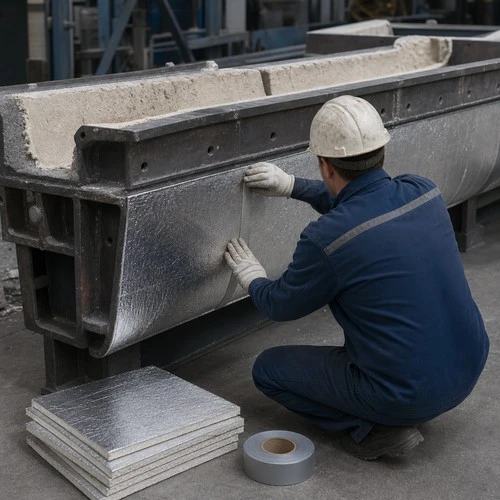
Installation Protocol: Handling, Cutting & Moisture Protection
To preserve the nanoporous integrity of the panels during installation:
Strict Moisture Protection: Microporous cores are hydrophilic unless treated. Exposure to liquid water causes capillary tension that collapses nanopores, increasing thermal conductivity. Panels must be kept completely dry and installed behind cured, dry working refractories. For castable backup installations, always specify fully encapsulated aluminum-foil or plastic-wrapped panels to prevent water absorption from wet castables.
Cutting & Fitting: Panels are easily cut using standard utility knives, drywall saws, or band saws. When cutting unencapsulated boards, reseal raw cut edges using high-temperature aluminum or fiberglass adhesive tape to prevent core dusting during handling.
Staggered Joint Masonry: Install boards in multiple thin layers (e.g., two 10 mm layers rather than one 20 mm board) with staggered joints to eliminate direct thermal bridge radiation through seam gaps.
Factory Direct Sourcing, Packaging & Commercial Terms
Procuring microporous insulation panels directly from certified Chinese manufacturers guarantees certified thermal conductivity verification:
Factory Quality Assurance: Every production batch is tested for thermal conductivity using calibrated guarded hot plate apparatus per ASTM C177 / ISO 8302. Density and compressive displacement are certified on every export batch.
Standard Dimensions & Thicknesses: Standard panel dimensions are 500x500 mm, 1000x500 mm, and 610x500 mm, with precision thicknesses of 5 mm, 10 mm, 15 mm, 20 mm, 25 mm, and 50 mm. Custom CNC machined radius panels and 3D pre-curved segments are manufactured to client blueprints.
Commercial Terms: Minimum order quantity (MOQ) is 50 square meters for standard encapsulated sizes. Production lead time is 7 to 12 working days FOB Qingdao. All panels are packed in double-wall export cartons with corner protectors, vacuum-sealed in plastic inner bags, and strapped securely onto fumigated wooden pallets.
To request official thermal calculation models, third-party thermal conductivity test reports, or an engineering quotation, contact our technical team at inquiry@topower.tech.


