


A mullite insulating fire brick (IFB) is a high-purity lightweight refractory brick synthesized from fused or sintered mullite, classified under ASTM C155 into temperature grades from JM23 (1260°C / 2300°F) to JM28 (1540°C / 2800°F) and JM30 (1650°C / 3000°F). Engineered with an interlocking needle-like mullite crystal structure (3Al2O3·2SiO2), this specialized mullite fire brick delivers an optimal balance of low bulk density (0.60 to 1.00 g/cm³), exceptionally low thermal conductivity (0.22 to 0.40 W/m·K at 600°C), and reliable cold crushing strength (1.2 to 3.5 MPa). Unlike conventional fireclay insulation, mullite insulating bricks exhibit superior hot-load bearing capacity, minimal creep deformation, and strong resistance to reducing atmospheres containing hydrogen and carbon monoxide. Consequently, they serve as the industry benchmark for hot-face working linings and backup insulation in petrochemical cracking furnaces, ceramic roller kilns, and metallurgical heat-treatment equipment.
Selecting the right grade among JM23, JM26, and JM28 governs furnace thermal efficiency and prevents premature spalling during frequent thermal cycling.
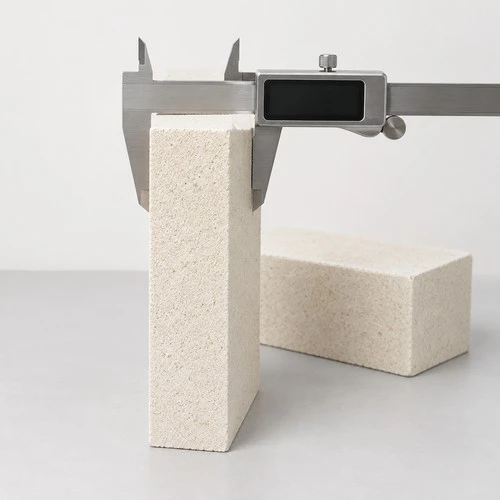
Technical Specifications: Grade Breakdown (JM23, JM26, JM28)
Industrial furnace operators must distinguish practical continuous service limits from maximum classification ratings. In continuous firing operations, operating temperatures are held 50°C to 100°C below ASTM classification limits to prevent microstructural shrinkage.
Below are the verified physical and chemical specifications from our standard production runs:
1. JM23 (ASTM Class 23)
Classification Temperature: 1260°C (2300°F)
Continuous Service Limit: 1200°C
Bulk Density: 0.60 to 0.65 g/cm³
Al2O3 Content: 38% to 42%
Fe2O3 Content: ≤ 0.8%
Cold Crushing Strength (CCS): ≥ 1.2 MPa
Thermal Conductivity (at 400°C): 0.22 W/m·K
Reheating Linear Change (24h at 1230°C): ≤ -0.4%
Typical Application: Secondary backup insulation in high-temperature kilns and hot-face linings in low-temperature annealing furnaces.
2. JM26 (ASTM Class 26)
Classification Temperature: 1430°C (2600°F)
Continuous Service Limit: 1350°C
Bulk Density: 0.75 to 0.82 g/cm³
Al2O3 Content: 56% to 60%
Fe2O3 Content: ≤ 0.6%
Cold Crushing Strength (CCS): ≥ 1.8 MPa
Thermal Conductivity (at 600°C): 0.28 W/m·K
Reheating Linear Change (24h at 1400°C): ≤ -0.3%
Typical Application: Direct hot-face refractory lining in ceramic tunnel kilns, shuttle kilns, and petrochemical cracking heaters.
3. JM28 (ASTM Class 28)
Classification Temperature: 1540°C (2800°F)
Continuous Service Limit: 1450°C
Bulk Density: 0.88 to 0.95 g/cm³
Al2O3 Content: 68% to 72%
Fe2O3 Content: ≤ 0.5%
Cold Crushing Strength (CCS): ≥ 2.5 MPa
Thermal Conductivity (at 800°C): 0.35 W/m·K
Reheating Linear Change (24h at 1510°C): ≤ -0.2%
Typical Application: Working furnace linings subject to mechanical vibration, rapid thermal cycling, or hydrogen-rich atmospheres.
In extreme operating environments exceeding 1500°C with severe slag splashing or high gas velocity, engineers specify alumina bubble brick or dense high-alumina masonry rather than standard lightweight firebrick.
Engineering Advantages of the Mullite Crystal Phase
Why do engineering procurement teams invest in synthetic mullite insulating fire brick rather than standard insulating fireclay products? The performance difference stems directly from mineral phase chemistry:
High Creep Resistance Under Hot Load: Standard fireclay insulation contains 15% to 25% low-melting vitreous phase that softens above 1100°C, causing furnace roof arches to sag. Conversely, JM26 and JM28 grades are formulated from high-purity synthetic mullite grains. Their needle-shaped interlocking crystal network creates a rigid framework that resists deformation under continuous compression at 1350°C.
Minimal Thermal Expansion and Linear Reversibility: Mullite exhibits a low coefficient of thermal expansion (4.5 to 5.3 x 10^-6 /°C between 20°C and 1000°C). This predictable thermal expansion curve prevents sudden volume changes, eliminating structural spalling across rapid heating and shutdown cycles.
Chemical Stability in Reducing Atmospheres (H2 and CO): Free iron oxide (Fe2O3) in refractory linings catalyzes carbon monoxide breakdown (2CO -> C + CO2), causing carbon deposition, internal bursting, and refractory dusting. Our mullite fire brick maintains Fe2O3 under 0.6%, preventing disintegration in synthetic gas reformers and atmosphere heat-treating furnaces.
Machinability for Tight Masonry Construction: Every brick is fired in computerized tunnel kilns and precision-machined on automated diamond milling lines. This process achieves dimensional tolerances within ± 1.0 mm, enabling ultra-thin mortar joints (≤ 1.5 mm) that eliminate thermal short-circuit paths.
Industrial Application Matrix
Furnace designers select specific JM grades based on operating atmosphere, mechanical stress, and thermal profile:
1. Petrochemical and Chemical Process Heaters
Equipment: Ethylene cracking furnaces, ammonia secondary reformers, hydrogen generation units.
Lining Strategy: JM26 or JM28 as the hot face, backed by resilient ceramic fibre blanket and calcium silicate boards.
Benefit: Endures exposure to process gases containing steam and trace sulfur without crumbling or dusting.
2. Ceramic and Sanitaryware Firing Kilns
Equipment: Roller hearth kilns, shuttle kilns, and sanitaryware tunnel kilns operating between 1200°C and 1350°C.
Lining Strategy: Standard 230 x 114 x 65 mm (9 x 4.5 x 2.5 inch) JM23 JM26 insulating firebrick installed on kiln side walls and suspended flat roofs.
Benefit: Low thermal mass reduces heat storage during intermittent kiln cycles, cutting fuel usage by 18% to 28% compared to heavy dense refractory walls.
3. Steel and Metallurgical Reheating Furnaces
Equipment: Billet heat treatment lines, bright annealing furnaces, and rotary forging furnaces.
Lining Strategy: Composite insulation walls combining a JM28 working face with lightweight backup insulation. In burner ports prone to high mechanical vibration, precast burner tiles or specialized refractory catsable components are installed alongside the brickwork.
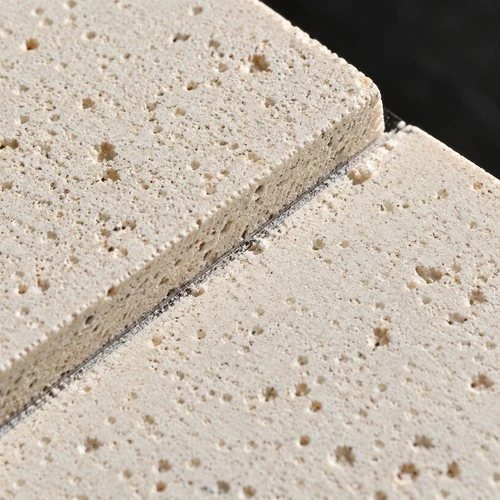
Installation, Mortar Matching, and Expansion Joint Rules
A refractory lining performs only as well as its mortar joints. Using an incompatible bonding mortar creates open joints, gas leaks, and localized overheating:
Mortar Chemical Compatibility: Always install JM23 and JM26 bricks with high-alumina, air-setting mullite mortar. The Al2O3 percentage in the mortar must equal or exceed that of the brick to prevent low-melting eutectic phases at operating temperatures.
Joint Thickness Rule: Maintain brick joints between 1.0 mm and 1.5 mm using a dipped-and-tapped technique. Mortar joints thicker than 3.0 mm experience excessive shrinkage, opening direct flame channels toward the furnace shell.
Expansion Relief Joint Design: Position 6 mm to 8 mm expansion joints every 2.0 to 2.5 meters of continuous wall span. Fill every expansion gap with resilient ceramic fiber strips pre-compressed by 20% to accommodate reversible thermal growth.
Factory Quality Control and Procurement Guidelines
When ordering container loads of mullite insulating fire brick, commercial buyers should verify three essential manufacturing benchmarks:
Bulk Density Uniformity: In a 50,000-piece production batch, density variance must stay within ± 0.03 g/cm³. High density elevates heat loss, while low density compromises mechanical durability during sea transit.
Cold Crushing Strength Testing: We perform batch compression tests (ISO 8895 / ASTM C93) on 10 random samples per 10,000 units to guarantee reliable load-bearing capacity for multi-course wall stacking.
Seaworthy Export Packing: Porous bricks require robust protective packaging. We crate our export bricks with corner edge protectors, heavy shrink-wrap film, and IPPC-stamped fumigated wooden pallets with foam interleaving to prevent corner breakage.
Commercial Supply Terms:
MOQ: 5 Pallets (approx. 2,500 standard straight bricks) or full 20ft container (approx. 18,000 to 21,000 pieces).
Available Sizes: 230 x 114 x 65 mm, 230 x 114 x 76 mm, side arch, end arch, and custom CNC-machined shapes.
Lead Time: 7 to 12 days for standard sizes in stock; 20 to 25 days for custom shapes.
FOB Port: Qingdao / Tianjin Port, China.
Documentation: Mill Test Certificate, Certificate of Analysis (COA), and MSDS provided with every shipment.
Frequently Asked Questions (FAQ)
Can JM23 or JM26 mullite insulating fire brick be exposed directly to flame?
Yes, JM26, JM28, and JM30 bricks are engineered for direct hot-face exposure in clean combustion atmospheres fueled by natural gas, LPG, or electric heating elements. However, if the fuel contains heavy oil with high vanadium and sodium content, or if molten slag wash is present, dense alumina refractory brick must be specified for the working face instead.
What is the primary difference between JM23 and JM26?
JM23 features 38% to 42% Al2O3 with a maximum continuous service limit of 1200°C and a density near 0.62 g/cm³, focusing on maximum thermal insulation. JM26 elevates Al2O3 content to 56% to 60%, handles continuous temperatures up to 1350°C, and provides higher mechanical strength (1.8 MPa vs 1.2 MPa) for direct hot-face duty.
How are mullite insulating fire bricks cut or modified on site?
Thanks to their controlled porosity, mullite bricks can be readily cut, drilled, or notched on site using standard masonry saws or high-speed carbide tooling. For burner ports, sight glass blocks, and thermocouple sleeves, we supply factory pre-machined assemblies to save on-site labor and eliminate dust.
Request Technical Data Sheet & Factory Quotation
Topower Refractory manufactures ASTM-compliant JM series mullite insulating fire brick solutions for petrochemical plants, ceramic kiln manufacturers, and industrial furnace builders worldwide.
Direct Factory Inquiry Email: inquiry@topower.tech
Response Standard: Comprehensive quotation and full Technical Data Sheet (TDS) delivered within 4 business hours.


