


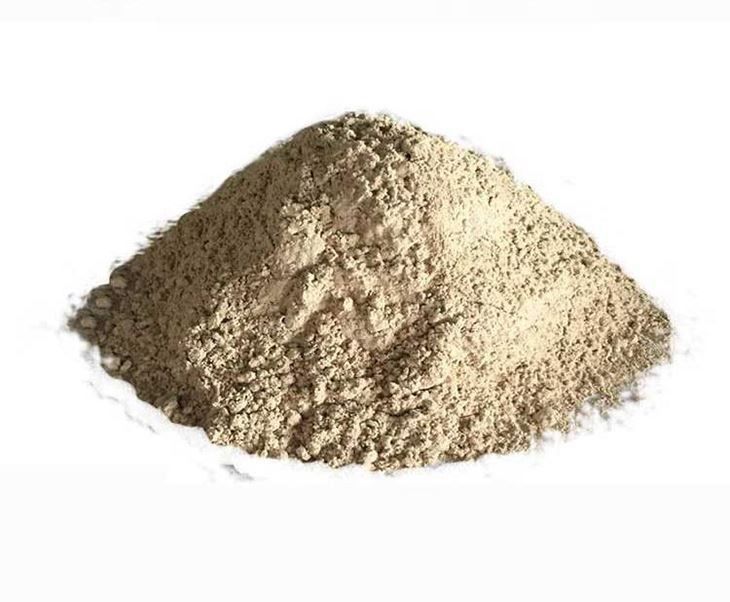
The proportion of monolithic refractories in the entire refractory is increasing, and the largest increase is castable, which is mainly due to the development of low-cement and ultra-low-cement combined castable technology. Usually, low cement refractory castables with aluminate cement as binder are used. In this product, a considerable part of the products are prone to some damage on the surface of the green body during the maintenance process after construction, which may cause surface damage. Pulverization and spalling, in severe cases, will directly lead to the loss of bonding strength of the green body and the pulverization and collapse.
Low-cement refractory castables are a big loss, especially for large castable prefabricated blocks. For example, the surface pulverization of blast furnace iron ditch and slag ditch prefabricated blocks is particularly serious. Therefore, in view of this phenomenon, the damage mechanism is investigated. Analyzed and developed practical methods and countermeasures to avoid or mitigate surface damage.
Usually in the natural curing process after production, within 24h is the natural reaction exhaust stage, the green body is slightly hot, and the surface is slowly hardened. After 3 to 5 days of placement, the surface will appear peeling. There are white fine particles around, press gently with hands to find that the surface 3~5mm has become soft, and gradually pulverized and peeled off, and some even reach 10~15mm, which will inevitably affect the structural strength of the product, resulting in a greatly reduced product life and even can not be used. The reasons are analyzed as follows:
1. Surface pulverization caused by “alkali impurities”
The main refractory raw materials, cement and sodium salt admixtures all contain soluble sodium. In low-grade refractory raw materials, the content of alkali metal impurities is often relatively high, and the admixture will also introduce sodium ions. With the increase of cement, the alkalinity of the system increases, and at the same time, relatively more hydrated mineral phases are generated, and a series of reactions occur in the presence of these soluble alkalis. When the soluble alkali is dissociated by water, it reacts with carbon dioxide in the air to produce carbonate, and at the same time the cement is hydrated, and the two will continue to react. Continue to break down calcification. As long as there is cement hydration product, the above reaction will be carried out in a cycle, and the product will be continuously decomposed, and the body will be damaged from the outside to the inside. The presence of soluble alkali increases the solubility of CO2, which is an important prerequisite for the rapid reaction. The higher the alkalinity of the system, the more hydrated mineral phases, and the more favorable the reaction is to proceed.
2. Ambient temperature and humidity for maintenance
After the castable is cast and formed, the curing temperature is usually 15-20 °C. In order to increase the curing strength, the large prefabricated block will enter the low-temperature kiln for curing at 30-35 °C. After observation, the increase of the curing temperature can strengthen the green body. The strength and service life of the green body, and the phenomenon of pulverization on the surface of the green body is correspondingly reduced. It can be seen that the temperature and humidity of the green body maintenance environment are a major factor in the damage. Generally speaking, the higher the humidity, the easier it is to wet the pores in the its body, and the dissociation of the soluble alkali is easier under humid conditions.
3. The influence of the density of the green body
The density of the green body is also an important factor that causes the surface of it to be pulverized. When the density of the green body is low, the porosity increases, and the water and carbon dioxide in the air can more easily diffuse into the green body, causing damage to the body. The reaction occurs, causing the green body to be decomposed and pulverized from the outside to the inside.
4. Control of construction environment
Enhance early strength In order to reduce and reduce the contact degree between the surface and the air, the method of surface covering is adopted to close the surface pores, and try to isolate the diffusion of carbon dioxide and water vapor into its body, thereby preventing the damage reaction. At the same time, in order to dry the green body as soon as possible, the thermal insulation of the workshop is strengthened, and if necessary, the green body is put into a low-temperature kiln to be dried and then demolded, so that the green body can be hardened within the optimal curing period of 36h to ensure the strength of the casting body. .
Through the above analysis of the reasons for the damage to the surface of the precast block body of low-cement refractory castables, according to the corresponding solutions and tests in production, obvious results have been achieved. At the same time, the amount of water added during construction was reduced by 2%, which increased the strength by nearly 10MPa, which played a good role in improving the service life of the prefabricated block.


