


An acid proof brick (also known as an acid resistant brick) is a dense, vitrified ceramic refractory masonry unit engineered from high-purity silica (SiO2 ≥ 70%) and alumina (Al2O3 ≥ 20%) raw materials, fired under high temperatures to achieve exceptional chemical inertness and low water absorption (≤ 1.5%). Governed internationally by ASTM C279 and DIN 28062, acid proof bricks deliver an acid solubility resistance rating exceeding 99.8% against concentrated inorganic acids (including sulfuric, hydrochloric, nitric, and phosphoric acids, excluding hydrofluoric acid). With bulk densities typically between 2.20 and 2.40 g/cm³ and cold crushing strength exceeding 60 MPa, these specialized bricks protect structural concrete and carbon steel shells against chemical corrosion, thermal cycling, and mechanical erosion in flue gas desulfurization (FGD) chimneys, sulfuric acid absorption towers, and chemical pickling tanks.
Specifying the correct ASTM C279 class and compatible bonding mortar is the defining factor that determines whether an industrial masonry lining lasts 15 years or fails from acid permeation within 18 months.
Technical Specifications: ASTM C279 Standards & Classifications
ASTM C279 standardizes chemical-resistant masonry into three distinct categories based on sulfuric acid resistance, cold crushing strength, and water absorption:
1. ASTM C279 Type I (High Chemical Resistance, Low Absorption)
Typical Water Absorption (Boiling 2h): ≤ 1.5%
Cold Crushing Strength (CCS): ≥ 70 MPa (10,150 psi)
Modulus of Rupture (MOR): ≥ 15 MPa
Sulfuric Acid Solubility Loss (ASTM C279 Test): ≤ 8.0% (Factory actual average: 2.1% to 3.8%)
Maximum Service Temperature: 450°C to 500°C
Primary Application: Acid storage tanks, fertilizer reaction vessels, chemical process floors, and autoclave linings where maximum liquid impermeability is required.
2. ASTM C279 Type II (Thermal Shock & Acid Resistance)
Typical Water Absorption: 2.0% to 4.0%
Cold Crushing Strength (CCS): ≥ 55 MPa (7,980 psi)
Modulus of Rupture (MOR): ≥ 12 MPa
Acid Solubility Loss: ≤ 10.0%
Maximum Service Temperature: 600°C to 800°C
Primary Application: Wet FGD flue gas ducts, power plant chimney stack liners, and thermal incinerator exhaust ducts experiencing moderate thermal fluctuation.
3. ASTM C279 Type III (Thermal Shock Resistant)
Typical Water Absorption: 4.0% to 6.0%
Cold Crushing Strength (CCS): ≥ 40 MPa (5,800 psi)
Modulus of Rupture (MOR): ≥ 9 MPa
Primary Application: Rapid cycling chemical combustion chambers where sudden temperature swings occur alongside corrosive sulfur dioxide gases.
For extreme high-temperature industrial environments exceeding 1000°C where severe mechanical abrasion coexists with chemical gas attack, engineers transition to silicon carbide brick or dense alumina refractories.
Chemical Resistance Mechanisms: Why Acid Proof Brick Outperforms Standard Fireclay
Standard fireclay brick contains unbound iron oxide, free calcium, and high porosity (18% to 24%). When exposed to hot sulfuric or hydrochloric acid, acid molecules penetrate the porous matrix, dissolving iron compounds and calcium aluminate binders, leading to rapid disintegration.
Acid proof bricks eliminate this vulnerability through controlled mineralogy:
Vitrified Quartz-Mullite Skeleton: During firing at 1250°C to 1320°C, high-grade quartz and feldspar fuse into a dense microcrystalline quartz-mullite network embedded within an impermeable silicate glass matrix. This closed-pore structure blocks acid penetration into the interior of the brick.
Near-Zero Active Iron Content: Iron oxide (Fe2O3) is strictly limited to below 1.2%. Because iron reacts aggressively with sulfuric acid to produce iron sulfates that swell and crack masonry, low iron content guarantees chemical stability across pH 0 to 6.
Impermeability to Wet Acid Vapors: With water absorption below 1.5%, capillary suction is virtually eliminated. This prevents acid vapor migration behind the brick lining toward the structural concrete or steel shell.
Honest Engineering Limitation: Acid proof brick is virtually impervious to all organic and mineral acids, with two critical exceptions: hydrofluoric acid (HF), which dissolves silica, and boiling concentrated alkaline solutions (pH > 12), which etch silicate glass. For alkaline environments, basic magnesia bricks must be deployed instead.
Flue Gas Desulfurization (FGD) and Chimney Stack Lining Engineering
Wet FGD scrubbers present one of the harshest operating environments in industrial engineering. After flue gas passes through limestone scrubbers, the gas temperature drops into the acid dew point range (45°C to 90°C), while gas velocity reaches 15 to 25 m/s:
The Acid Dew Point Dilemma: Sulfur dioxide (SO2) and sulfur trioxide (SO3) condense into highly corrosive dilute sulfuric acid droplets. Dilute sulfuric acid is often more corrosive to metals and concrete than 98% concentrated acid.
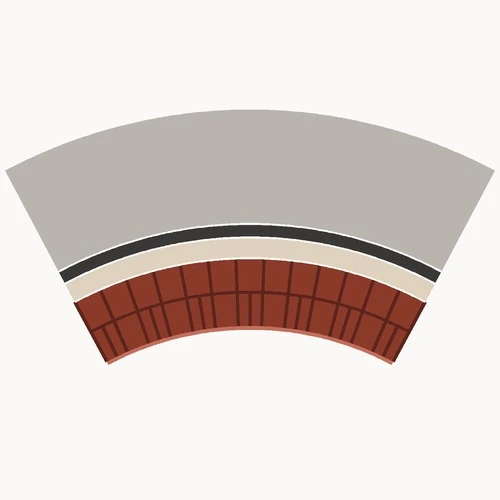
Dual-Barrier Lining Construction: A typical FGD chimney lining consists of a steel or concrete outer column, an elastomeric or asphalt-polyurea waterproofing membrane, followed by a 65 mm or 114 mm thick course of acid proof bricks set in potassium silicate mortar.
Aerodynamic Resistance: The glazed or semi-glazed face of our extruded acid proof bricks minimizes gas drag and resists erosion from airborne fly ash particles.
In adjacent dry boiler ductwork where temperatures fluctuate rapidly above 900°C, composite designs combine acid resistant brickwork with backup ceramic fibre blanket insulation to manage thermal expansion.
Mortar Selection: Matching Chemical Mortar to Acid Exposure
A chemical-resistant brick lining is only as durable as its mortar joints. Using standard refractory cement in an acid environment will cause total joint dissolution within days.
Industrial installations require specialized chemical bonding mortars:
Potassium Silicate Mortar (Inorganic):
Temperature Range: Up to 900°C
Chemical Resistance: Outstanding resistance to all concentrations of sulfuric, nitric, and hydrochloric acids.
Key Feature: Does not produce surface efflorescence like sodium silicate mortars. Mandatory for chimney stacks and hot gas ducts.
Vinyl Ester and Epoxy Resin Mortars (Organic):
Temperature Range: Up to 120°C (Vinyl Ester) or 80°C (Epoxy)
Chemical Resistance: Exceptional resistance to alternating acid-alkali conditions and wet chemical immersion.
Key Feature: Impermeable to liquid hydrostatic pressure; the industry standard for chemical plant flooring and acid pickling basins.
Application Joint Rule: Brick-to-brick mortar joints must be held strictly between 2.0 mm and 3.0 mm. Every joint must be 100% filled using full-bed buttering techniques to prevent hollow pockets where acid condensate can pool.
For standard high-temperature furnace areas outside acid wash zones, conventional refractory mortar provides an economical bonding solution.
Factory Production Benchmarks & Procurement Guidelines
When ordering export quantities of acid resistant bricks, commercial procurement managers should enforce rigorous quality verification:
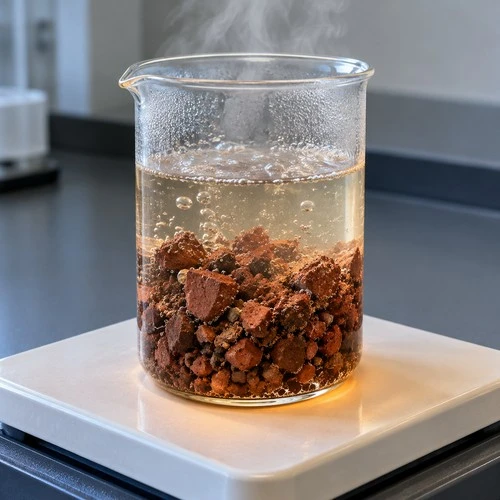
Acid Solubility Testing (ASTM C279): We boil crushed 4.75 mm brick particles in 1:1 sulfuric acid for 48 hours to confirm that total solubility loss remains well below the ASTM 8.0% threshold (our typical production runs test between 2.0% and 3.5%).
Dimensional Tolerances: Using automated hydraulic pressing and tunnel kiln firing, our standard bricks achieve dimensional tolerances of ± 1.5 mm on length and width, and ± 1.0 mm on thickness, drastically reducing on-site joint grinding.
Seaworthy Packaging: Export shipments are packed on heavy-duty, fumigated wooden pallets (ISPM 15 compliant), banded with high-tensile steel straps, and wrapped in UV-resistant waterproof polyethylene stretch hoods to prevent moisture uptake prior to installation.
Commercial Terms:
MOQ: 10 Tons (approx. 3,500 standard straight bricks) or full 20ft container (approx. 24 to 26 metric tons / 8,000 to 9,000 bricks).
Standard Brick Dimensions: 230 x 114 x 65 mm (9 x 4.5 x 2.5 inch), 230 x 114 x 76 mm, side arch, radial wedge bricks for circular chimney linings, and custom tongue-and-groove shapes.
Standard Lead Time: 10 to 15 days for in-stock standard sizes; 25 days for custom radius chimney bricks.
FOB Ports: Qingdao / Tianjin / Lianyungang, China.
Documentation Provided: Mill Test Certificate, ASTM C279 Independent Lab Test Report, MSDS, and Certificate of Origin (CO).
Frequently Asked Questions (FAQ)
Can acid proof brick be used as a direct firebrick inside a high-temperature furnace?
No. While acid proof bricks withstand temperatures up to 450°C to 600°C (Type I/II), they are vitrified with minimal porosity. If exposed to direct flames above 1000°C or severe thermal shock, their dense structure cannot accommodate rapid crystal expansion and will crack. For high-temperature furnaces without acid condensation, alumina silica refractory brick or monolithic refractory catsable must be specified.
What is the difference between acid resistant brick and regular red clay building brick?
Building bricks have high water absorption (12% to 20%), high iron content, and low compressive strength (15 to 25 MPa). When exposed to industrial acids, building bricks disintegrate rapidly. Acid proof bricks are formulated with high-purity silicates, fully vitrified (water absorption ≤ 1.5%), and achieve crushing strengths above 60 to 70 MPa, resisting acid dissolution completely.
How do you line a circular chimney or vessel with acid resistant bricks?
Circular linings should not be constructed with straight rectangular bricks cut on site, as cut joints produce wedge gaps prone to acid leakage. We manufacture custom radial wedge and arch bricks (e.g., standard key bricks and wedge shapes) that form a true curvature with uniform 2 mm mortar joints throughout the 360-degree circumference.
Request Technical Data Sheet & Factory Direct Quotation
Topower Refractory supplies ASTM C279 compliant acid proof bricks and matched potassium silicate mortars to power plants, smelters, and chemical processing facilities worldwide.
Direct Factory Inquiry Email: inquiry@topower.tech
Response Commitment: Formal quotation, acid solubility test certificates, and complete installation guidance delivered within 4 business hours.


