


In modern electronic ceramics, powder metallurgy, and high-growth lithium-ion battery precursor manufacturing, the thermal carrier tray is as critical as the furnace atmosphere itself. During high-temperature calcination of lithium iron phosphate (LFP) and high-nickel ternary cathode materials (NCM/NCA), the product relies completely on high-performance ceramic saggers to hold reactive powders through roller hearth kilns and pusher plate furnaces. However, process engineers frequently encounter premature cracking, thermal shock warping, or worst of all, refractory surface flaking that contaminates battery-grade materials with fatal iron impurities. Engineering dependable ceramic saggers requires pairing optimal mineral matrices-primarily cordierite-mullite and corundum-mullite-with tight iron control and thermal expansion management. At Topower Refractory, we engineer and manufacture specialized kiln furniture and industrial ceramic saggers designed to extend campaign cycle life and protect product purity worldwide.
Key Technical Sourcing Facts
Standard Industrial Product Lines: Topower TP-CMS Series (Cordierite-Mullite Saggers: TP-CMS/55 and TP-CMS/65 for LFP calcination), TP-GYS Series (Corundum-Mullite Saggers: TP-GYS/85 and TP-GYS/95 for high-nickel NCM), and high-purity quartz trays (TP-QZS/99).
Chemical Purity & Low Contamination: Al2O3 content engineered from 45% up to 92%; strict iron limits with Fe2O3 <= 0.15% to 0.20% on ternary grades to prevent battery cell micro-short circuits.
Thermal Shock & Mechanical Strength: Bulk density of 2.1 to 2.85 g/cm3; cold crushing strength from >= 40 MPa to >= 90 MPa; hot modulus of rupture (M.O.R) >= 15 MPa at 1250°C; low linear thermal expansion coefficient of 2.2 x 10^-6 K^-1.
Standard Automated Geometries: Precision molded for robotic destacking, including standard dimensions of 320 x 320 x 75 mm, 320 x 320 x 100 mm, and 330 x 330 x 120 mm with reinforced stacking rims. Shipped palletized in moisture-sealed export containers within 10 to 15 days FOB Qingdao / Tianjin.
Why Kiln Furniture Quality Dictates Sintering Yield
In continuous pusher plate kilns operating at 800°C to 1300°C, industrial ceramic saggers must endure severe thermal and chemical stresses:
Repetitive Rapid Thermal Cycling: Saggers travel through preheating, soaking, and cooling zones every 12 to 24 hours. Uneven heating rates across the sagger sidewalls induce severe thermal gradient stresses that lead to corner edge micro-fissures.
Volatile Alkali & Lithium Vapor Corrosion: During cathode synthesis, free lithium salts (LiOH and Li2CO3) volatilize. Lithium vapor attacks silica-rich glass phases, causing chemical swelling, surface glazing, and structural peeling.
Automated Mechanical Handling Impact: High-throughput battery plants utilize high-speed robotic grippers to invert, dump, and brush saggers. High edge toughness and compressive strength are required to avoid mechanical rim chipping.
Technical Specifications: Topower Ceramic Saggers & Batts
Evaluating chemical and physical parameters ensures process engineers select the proper sagger formulation for their specific powder chemistry:
| Technical Parameter / Property | TP-CMS/65 (Cordierite Mullite) | TP-CMS/55 (Standard Cordierite) | TP-GYS/95 (Corundum Mullite) | TP-GYS/85 (High-Strength Mullite) | Test Standard |
|---|---|---|---|---|---|
| Al2O3 Content (%) | 55.0 - 65.0 | 45.0 - 55.0 | 90.0 - 92.0 | 82.0 - 85.0 | ASTM C114 |
| SiO2 Content (%) | 25.0 - 35.0 | 35.0 - 47.0 | 6.0 - 8.0 | 15.0 - 17.0 | ASTM C114 |
| Fe2O3 Content (%) | <= 1.0 | <= 1.2 | < 0.15 | < 0.20 | XRF Analysis |
| Apparent Porosity (%) | 20.0 - 23.0 | 22.0 - 25.0 | <= 18.0 | <= 19.0 | ASTM C20 |
| Bulk Density (g/cm3) | 2.20 - 2.50 | 2.10 - 2.30 | 2.80 - 2.85 | 2.70 - 2.75 | ASTM C134 |
| Cold Crushing Strength (MPa) | >= 40.0 | >= 40.0 | >= 90.0 | >= 75.0 | ISO 10059 |
| Hot Modulus of Rupture (1250°C) | >= 15.0 MPa | >= 12.0 MPa | >= 25.0 MPa | >= 20.0 MPa | ASTM C583 |
| Max Service Temperature (°C) | 1450 | 1350 | 1750 | 1700 | In-House Standard |
| Thermal Expansion (20-1000°C) | 2.2 x 10^-6 K^-1 | 2.5 x 10^-6 K^-1 | 5.8 x 10^-6 K^-1 | 5.2 x 10^-6 K^-1 | Dilatometry |
Note: In addition to saggers, cordierite-mullite pusher plates, batts, and support pillars are manufactured with precision ground flatness within 0.5 mm to ensure smooth automated roller travel.
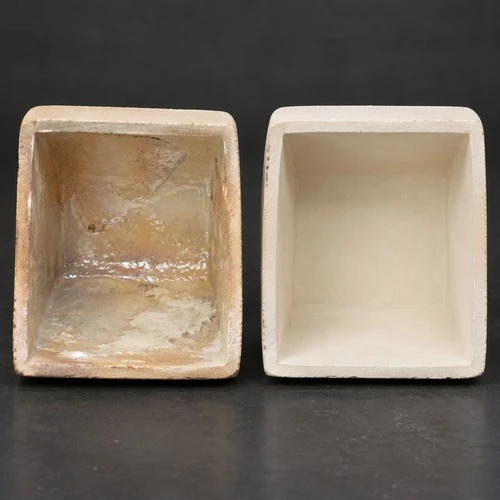
Cordierite-Mullite vs Corundum-Mullite: Material Selection
Selecting between cordierite and corundum matrices depends directly on operating temperature and chemical aggressiveness:
1. Cordierite-Mullite Saggers (TP-CMS Series)
Mineral Synergy: Blends synthetic cordierite (2MgO·2Al2O3·5SiO2) with refractory mullite needles (3Al2O3·2SiO2).
Thermal Shock Supremacy: Cordierite features an exceptionally low coefficient of thermal expansion (2.2 x 10^-6 K^-1). When rapid temperature swings occur, thermal expansion stresses remain minimal, preventing catastrophic body fractures.
Primary Applications: Lithium iron phosphate (LFP) sintering (650°C to 800°C), magnetic ferrite calcination, and sanitaryware kiln furniture where thermal cycling life is the main metric.
2. Corundum-Mullite Saggers (TP-GYS Series)
High Chemical Purity: Formulated with high-grade fused white corundum and synthetic mullite, elevating Al2O3 above 90% while reducing free silica.
Corrosion Resistance: High-nickel ternary cathode precursors (NCM 622, 811) release volatile LiOH that violently corrodes cordierite saggers. Dense corundum matrices resist aggressive lithium penetration while maintaining superior structural load resistance up to 1750°C.
Primary Applications: Ternary NCM/NCA synthesis, electronic titanate ceramics, and technical alumina firing.
Kiln System Integration: Complete Furniture Configurations
Maximizing thermal efficiency in continuous industrial kilns requires coordinating ceramic saggers with adjacent refractory elements:
Support Batts and Pusher Plates: High-strength cordierite-mullite plates provide rigid platforms that glide over ceramic rollers without warping under heavy multi-tier sagger stacks.
Roller Kiln Wall Linings: Kiln walls and roofs backed with lightweight insulating fire brick and high-temperature corundum castable retain heat while maintaining a clean, dust-free firing atmosphere.
Sub-Hearth Thermal Barriers: Utilizing thin ceramic fiber paper underneath kiln furniture pillars absorbs localized thermal expansion mismatches and prevents track jamming.
Anti-Contamination Rules for Battery Cathode Sintering
Cathode active materials demand rigorous quality control from production ceramic saggers:
Iron Particle Control: Even microscopic iron flecks (> 10 ppm) settling into lithium battery powder cause dendritic growth that leads to internal battery cell short-circuits. Topower ternary saggers undergo electromagnetic de-ironing of raw materials to guarantee Fe2O3 < 0.15%.
Dense Non-Flaking Surface Glazing: Proprietary micro-coating technologies or precision surface vitrification prevent raw refractory grains from shedding during pneumatic powder unloading.
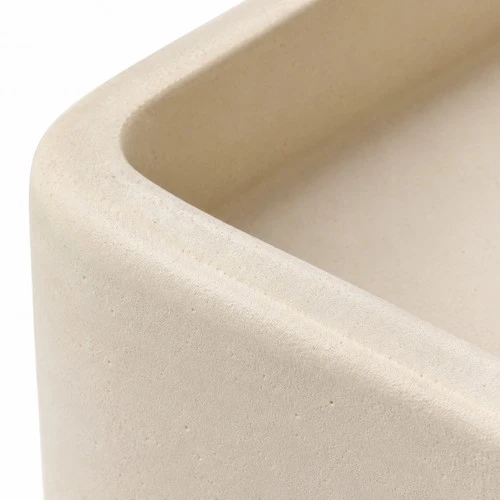
Corner Stress-Relief Radii: Saggers are engineered with generous internal and external corner radii (R >= 8 mm) to eliminate localized stress risers where thermal cracks typically initiate.
Packaging, Storage & Export Logistics
Topower Refractory ships engineered kiln furniture fully protected against impact and maritime humidity:
Shock-Absorbing Pallet Packaging: Saggers are nested with high-density expanded foam spacers between tiers, strapped to solid ISPM-15 fumigated wooden pallets, and wrapped in heavy stretch hoods.
Pallet Dimensions & Capacity: Standard 1100 x 1100 mm pallets accommodate 80 to 120 saggers depending on height, keeping total pallet weight below 1200 kg for easy warehouse forklift handling.
Container Loading: A standard 20GP container carries approximately 18 to 22 metric tons (16 to 18 pallets) secured with reinforced dunnage air bags to prevent shifting during ocean transit. Lead time is 10 to 15 days FOB Qingdao / Tianjin.
Transparent Sourcing: Pricing & How to Order
Topower Refractory supplies custom-engineered ceramic saggers and cordierite-mullite kiln furniture directly to battery material manufacturers, electronic ceramic producers, and industrial kiln constructors:
Technical RFQ Checklist
To receive an engineered proposal and formal quote within 4 hours, provide:
Material Being Calcined: Cathode type (LFP, NCM, NCA), synthetic graphite, or electronic ceramics.
Operating Thermal Profile: Maximum firing temperature, heating ramp rate, soak time, and furnace type (roller hearth or pusher plate).
Dimensions & Geometry: Length x width x height (standard 320x320x100 mm or custom blueprints), including open-cell or solid bottom configurations.
Order Volume: Required piece count (minimum trial order 1 pallet / approx. 100 pieces; full container orders typically 1800 to 2400 pieces).
Destination Port: For instant FOB Qingdao/Tianjin or CIF maritime logistics calculations.
Commercial Pricing Reference: Standard cordierite-mullite saggers (TP-CMS series) typically range from 8 to 16 USD per piece FOB China depending on dimensions and wall thickness, while specialized high-purity corundum-mullite saggers (TP-GYS series for high-nickel ternary calcination) range from 18 to 32 USD per piece based on Al2O3 purity and anti-sticking surface treatments.
Direct Engineering Support: Contact our technical ceramics team directly at inquiry@topower.tech to review sagger blueprints, request finite element thermal stress modeling, or arrange trial batch testing.
Frequently Asked Questions
What causes industrial ceramic saggers to crack during firing campaigns?
Sagger cracking primarily results from thermal shock fatigue caused by steep temperature differentials between the sagger perimeter and center, especially during rapid entry and exit cycles. Choosing cordierite formulations with low thermal expansion coefficients (2.2 x 10^-6 K^-1) significantly reduces thermal stress cracking.
How many thermal cycles can a cordierite-mullite sagger achieve?
Depending on kiln ramp rates, powder loading weight, and chemical atmosphere, quality cordierite-mullite saggers in LFP calcination typically achieve between 40 and 80 firing cycles, while non-corrosive electronic ceramic firing cycles can exceed 100 cycles under controlled cooling.
Can cordierite saggers be used for high-nickel NCM ternary materials?
Generally no. High-nickel ternary materials generate aggressive lithium hydroxide vapors that react with cordierite's silica phase below 800°C, causing surface swelling and flaking. High-nickel NCM production requires corundum-mullite saggers (Al2O3 >= 90%) or specialized synthetic spinel-coated trays.


