


Magnesia brick is an important refractory material widely used in various high-temperature industrial furnaces. Its raw materials and production process play a vital role in ensuring the quality and performance of magnesite bricks.
The raw materials used in magnesite refractory bricks mainly include magnesite, dolomite and seawater magnesia. These raw materials are rich in magnesium oxide (MgO), which is the main chemical component in making magnesia bricks. Among them, magnesite is the most commonly used raw material. It has high magnesium oxide content, good crystallization, high temperature stability and corrosion resistance.
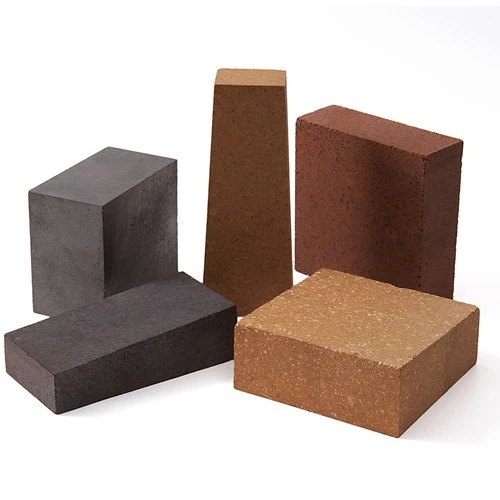
What is the production process of magnesia bricks?
In terms of production technology, the manufacturing process of magnesia fire bricks mainly includes steps such as crushing, batching, mixing, shaping and firing. First of all, the magnesia used to produce magnesia refractory bricks is mainly natural magnesia. The MgO content in magnesia is between 89% and 98%.
The magnesia lump ore with MgO content greater than 46.0% is used, mixed with solid fuel blocks, and calcined in a shaft kiln to produce magnesia with a MgO content of 89% to 92%; Lightly burned, then finely ground, mixed with water, pressed into balls, mixed with solid fuel blocks and calcined in a vertical kiln to produce magnesia. The MgO content is about 95%, also known as mid-grade magnesia. Use magnesia with a MgO content greater than 47%. After light burning, fine grinding, dry briquetting, and ultra-high temperature oil kiln calcination, the magnesia produced has an MgO content of 96.5% to 98%, which is called high-purity magnesia. The raw materials are crushed and screened for better mixing and shaping.
Next, ingredients and mixing are carried out according to the required ingredient ratios of the brick, The mixed materials are pressed by a forming machine to form a magnesia brick body with a certain shape and size. Finally, the green body is placed in a high-temperature furnace for firing to achieve the required physical and chemical properties.
During the firing process, the temperature and time need to be strictly controlled to ensure the degree of sintering and the formation of the crystal structure of the magnesia bricks. In addition, attention needs to be paid to the control of the atmosphere in the furnace to avoid the impact of oxidation or reduction reactions on the performance of magnesite refractory bricks.


