


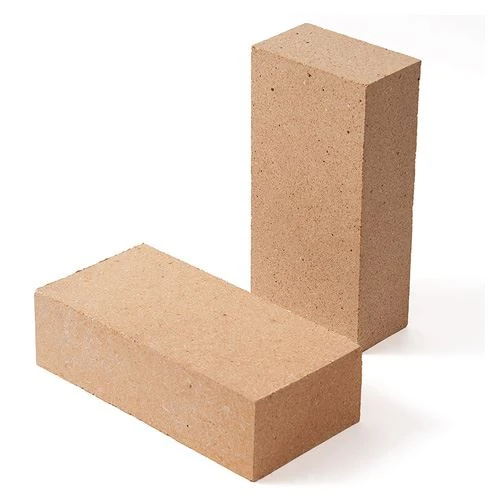

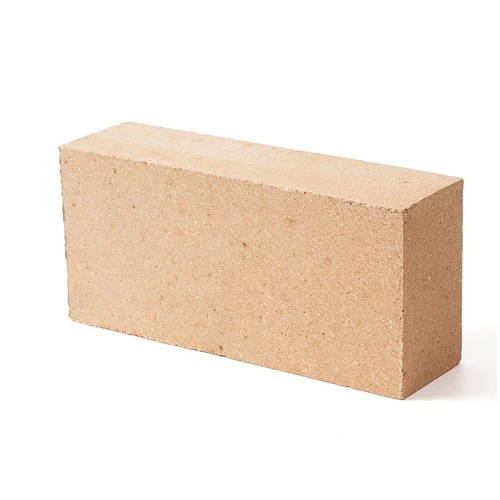
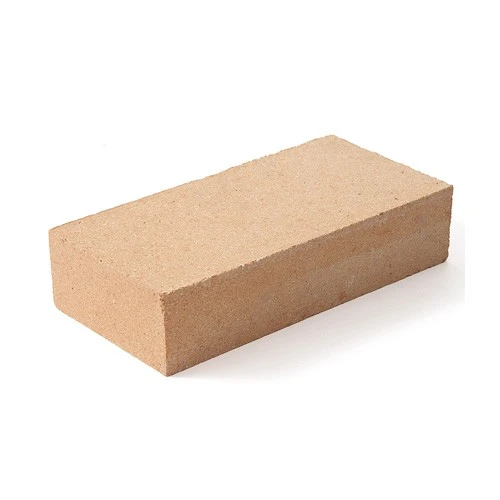
Low Porosity Clay Bricks
Low Porosity Clay Bricks (Dense Fireclay Bricks)
Standard fireclay bricks feature high open porosity (22% to 26%), which allows molten slag, volatile alkalis, and fluxing agents to penetrate deep into the brick matrix, causing rapid spalling and structural collapse. Low porosity clay bricks solve this premature wear. Manufactured from high-grade calcined flint chamotte and synthetic mullite bonded under high-tonnage hydraulic presses, they compress apparent porosity down to strictly 12% to 17%.
With bulk densities reaching 2.25 to 2.40 g/cm³ and cold crushing strength exceeding 50 to 70 MPa, our dense fireclay bricks double the mechanical service life of standard firebricks. They withstand severe alkali vapors, carbon monoxide disintegration, and thermal shock in hot blast stoves, blast furnace checkerworks, glass regenerators, and lime shaft kilns.

Technical Data Sheet (TDS) & Physical Properties
We inspect every kiln lot for apparent porosity, bulk density, refractoriness under load (RUL), and permanent linear change. Below are our verified factory specifications for our specialized dense DN-series and heavy-duty JC-series fireclay bricks:
| Property / Grade | DN-12 | DN-14 | DN-17 | JC-40 | JC-30 |
|---|---|---|---|---|---|
| Apparent Porosity (%) | ≤ 13.0 | ≤ 14.0 | ≤ 17.0 | ≤ 14.0 | ≤ 15.0 |
| Bulk Density (g/cm³) | ≥ 2.40 | ≥ 2.34 | ≥ 2.25 | ≥ 2.32 | ≥ 2.26 |
| Cold Crushing Strength / CCS (MPa) | ≥ 70.0 | ≥ 65.0 | ≥ 50.0 | ≥ 70.0 | ≥ 50.0 |
| Refractoriness under Load / RUL @0.2MPa (°C) | ≥ 1500 | ≥ 1470 | ≥ 1430 | ≥ 1300 | ≥ 1250 |
| Refractoriness (SK / Seger Cone) | 35 | 34 | 34 | 34 | 30 |
| Reheating Linear Change @1350°C×2h (%) | ± 0.1 | ± 0.2 | ± 0.2 | ± 0.3 | ± 0.3 |
| Thermal Expansion @1000°C (%) | ≤ 0.50 | ≤ 0.60 | ≤ 0.60 | ≤ 0.60 | ≤ 0.60 |
| Chemical Composition: Al₂O₃ (%) | ≥ 45.0 | ≥ 45.0 | ≥ 42.0 | ≥ 40.0 | ≥ 30.0 |
| Chemical Composition: Fe₂O₃ (%) | ≤ 1.3 | ≤ 1.5 | ≤ 1.7 | ≤ 1.8 | ≤ 2.0 |
Standard Brick Shapes & Precision Grinding
Bricks are pressed in precision steel dies and fired at temperatures above 1400°C:
Standard Straight Brick (T-3): 230 × 114 × 65 mm (approx. 3.7 – 4.0 kg/brick)
Checker Bricks for Stoves: Multi-hole hexagonal and round flue checker bricks for blast furnace hot blast stoves.
Universal Arch & Wedge Shapes: T-19, T-20, T-38, T-39 end/side wedges for curved combustion chambers.
Large Pre-assembled Blocks: Burner throat tiles, sight hole blocks, and feeder channel blocks manufactured to engineering drawings.
Key Performance Advantages over Standard Fireclay Bricks
Low Slag Permeability: Porosity below 14% prevents liquid metallurgical slag, glass flux, and clinker dust from infiltrating capillary pores, stopping structural spalling.
High Refractoriness Under Load (RUL): Holds 0.2 MPa loads up to 1470°C–1500°C without softening, whereas standard fireclay begins subsiding at 1300°C.
Low Iron Matrix (Fe₂O₃ ≤ 1.3%): Clean alumina-silica raw materials prevent catalytic carbon deposition and disintegration in reducing CO-rich gas atmospheres.
High Thermal Shock Resistance: Withstands rapid temperature cycling without micro-cracking, maintaining tight brick-to-brick contact throughout production campaigns.
Honest Operating Limitation: Low porosity clay bricks contain 42% to 45% Al₂O₃. While highly resistant to abrasion and thermal shock, they cannot handle continuous molten iron contact above 1550°C. For intense metal impact zones, combine with high alumina brick or corundum blocks.
Heavy-Duty Industrial Applications
Iron & Steel Hot Blast Stoves: Middle and upper checker chambers, combustion well walls, and dome linings where thermal efficiency and creep resistance are critical.
Blast Furnace & Ladle Backing: Safety linings for torpedo cars, transfer ladles, and blast furnace shaft bottoms behind low cement castable .
Glass Melting Furnaces: Regenerator chamber wall courses, flue canal linings, and rider arches exposed to continuous chemical batch carryover.
Cement & Lime Rotary Kilns: Preheating zones, calcining zones, and tertiary air ducts where alkali salt vapors degrade standard refractory linings.
Municipal Solid Waste Incinerators: Grate furnace lower sidewalls subjected to heavy fly ash abrasion and thermal cycling.
Refractory Masonry & Joint Matching Protocol
A dense brick wall fails prematurely if laid with inferior, porous mortar.
Always lay low porosity clay bricks with matching high-alumina, phosphate-bonded, or air-setting refractory mortar containing fine chamotte flour. Maintain mortar joint thickness below 1.5 mm to prevent slag penetration through brick seams. Behind the dense working lining, install high-efficiency ceramic fiber blanket or calcium silicate board rigid to keep steel shell temperatures below 80°C.
How to Order: Pricing, MOQ & Packaging Terms
We pack all export shipments on fumigated wooden pallets, interlaid with corrugated paper between courses and secured with high-tensile plastic strapping and weather-proof stretch film.
Minimum Order Quantity (MOQ): 1 full pallet (approx. 500 – 600 standard bricks, ~2.0 – 2.2 metric tons). Full container loads (FCL 20–25 tons) receive tier discounts.
Reference Price Range: $0.55 – $1.20 per brick FOB Qingdao (depending on porosity grade: DN-12, DN-14, or standard DN-17).
Production & Delivery Lead Time:
Standard 230 × 114 × 65 mm (DN-14/17): 30,000 bricks in factory stock, dispatches within 5–7 working days.
Checker bricks or custom wedge shapes: 15–20 working days.
Sample Service: 1–2 full test bricks provided free of charge for density, porosity, and dimension inspection (client covers express courier freight).
Payment Terms: T/T (30% deposit, balance against Bill of Lading copy) or 100% sight L/C.
Loading Port: Qingdao Port, China.
Quality Testing Standards & Compliance
Manufacturing Standards: Tested in strict accordance with ASTM C27 (Fireclay Refractory Brick Classification), ASTM C20 (Apparent Porosity & Bulk Density), and ISO 5014.
Quality Verification: Every production batch includes a comprehensive factory Mill Test Certificate (MTC) detailing bulk density, water absorption, cold crushing strength, and RUL test curves.
Request Technical Support & Quotation in 4 Hours
Need assistance selecting between DN-12 and DN-17 for your hot blast stove relining? Send your furnace operating temperature, gas chemistry, and required brick shapes to our engineering desk.
Email: inquiry@topower.tech
Response Commitment: Factory-direct pricing and technical recommendations delivered within 4 hours.
Hot Tags: Low Porosity Clay Bricks, China Low Porosity Clay Bricks manufacturers, suppliers, factory, alumina block material firebrick, fire brick fire resistant, fire brick fire-resistant, Chrome Corundum refractory fire Brick, High alumina anchoring refractory brick, Fused Alumina Brick
Previous
SK34 FirebrickYou Might Also Like


Send Inquiry