


Ceramic fiber paper is a lightweight insulation and sealing material widely used in furnaces, thermal equipment, gasket systems, and industrial heat barriers. For B2B buyers, one of the most common questions is how ceramic fiber paper compares with soluble fiber paper. Although both materials are used for high-temperature insulation, they differ in fiber composition, temperature grade, handling properties, and purchasing focus.
Topower refractory explains the difference between ceramic fiber paper and soluble fiber paper, outlines the key specifications buyers should confirm before RFQ, and shows how to choose the right supplier for industrial projects.
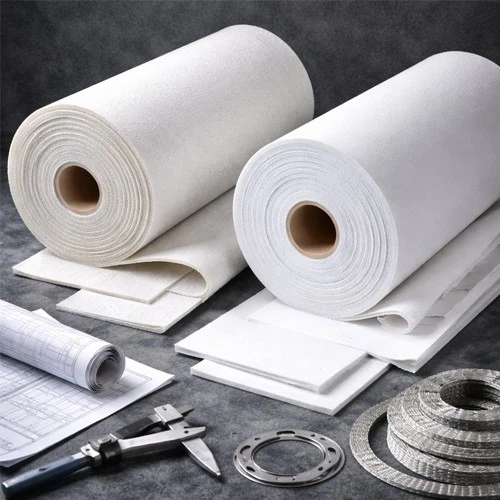
What Is Ceramic Fiber Paper?
Ceramic fiber paper is a thin, flexible refractory insulation product made from ceramic fiber bulk with binders and selected additives. It is manufactured into uniform rolls or sheets and is widely used where heat resistance, dimensional consistency, and easy conversion are required.
Main raw materials and manufacturing process
Ceramic fiber paper is commonly produced from alumino-silicate ceramic fibers. The material is processed through pulping, vacuum forming, drying, and finishing, which creates a lightweight paper structure with smooth surface quality and controlled thickness. Organic binder is typically used to improve handling strength during cutting, packing, and installation.
Common temperature grades and thickness range
Ceramic fiber paper is available in multiple temperature grades and thicknesses for different industrial uses. Thin grades are often selected for sealing and gasket applications, while thicker paper is used as a thermal barrier or backup insulation layer. For industrial buyers, thickness consistency and roll uniformity are usually more important than nominal thickness alone.
Typical uses in sealing, backup insulation, and thermal barriers
Ceramic fiber paper is widely used in furnace door seals, expansion joints, thermal wrapping, appliance insulation, and hot-face backup systems. It is also commonly used together with Ceramic Fiber Blanket and Ceramic Fiber Board when a project requires layered insulation design with better heat control and easy installation.
What Is Soluble Fiber Paper?
Soluble fiber paper is a flexible high-temperature paper made from low-bio-persistent alkaline earth silicate fiber. It is designed for applications where buyers require a lighter insulation paper with specific material compliance or project-based fiber preferences.
How soluble fiber differs from traditional ceramic fiber
The key difference lies in the fiber system. Traditional ceramic fiber paper is based on alumino-silicate refractory fiber, while soluble fiber paper uses a different low-bio-persistent formulation. For buyers, this affects product specification, temperature suitability, and end-use selection.
Why some buyers prefer low-bio-persistent fiber
Some industrial buyers select soluble fiber paper because their customers or internal procurement standards specify low-bio-persistent insulation materials. In these cases, soluble fiber paper becomes a practical option for thermal barriers, appliance insulation, and selected sealing structures.
Common industrial applications
Soluble fiber paper is commonly used in appliance insulation, expansion compensation layers, light industrial thermal barriers, and specific sealing points in metallurgy and petrochemical systems. It is also often sourced together with Soluble Fiber Board or soluble fiber module products when the project requires a matching low-bio-persistent insulation solution.
Ceramic Fiber Paper vs Soluble Fiber Paper
Choosing between ceramic fiber paper and soluble fiber paper depends on operating temperature, material requirements, and end-use environment.
Temperature resistance
Ceramic fiber paper is generally selected for higher temperature refractory applications. Soluble fiber paper is more often used in projects with lower operating temperature requirements and defined material selection standards.
Flexibility and handling
Both materials offer good flexibility and are easy to cut into strips, sheets, and gasket forms. However, buyers should pay attention to roll uniformity, tearing resistance, and whether the paper remains stable during slitting, die-cutting, or wrapping.
Mechanical strength and edge integrity
A high-quality ceramic fiber paper roll should have clean edges, consistent thickness, and low dust loss. Soluble fiber paper should also provide good tensile strength and stable edge condition, especially when it will be converted into custom sealing parts or laminated structures.
Suitable application environments
Ceramic fiber paper is suitable for furnaces, kilns, industrial refractory systems, and high-temperature equipment insulation. Soluble fiber paper is more suitable for controlled industrial applications where low-bio-persistent fiber is requested for sealing, wrapping, or thermal isolation.
Cost and purchasing considerations
B2B buyers should compare more than the roll price alone. Actual purchasing value depends on thickness tolerance, usable width, roll length, packing quality, conversion loss, and performance consistency. Lower pricing does not necessarily mean lower total cost if the paper performs poorly during cutting or installation.
Key Specifications Buyers Should Confirm Before RFQ
Before sending an inquiry, buyers should confirm the following technical details to avoid mismatch between quotation and actual project demand.
Thickness, density, and roll size
Thickness affects sealing compression, thermal resistance, and fit accuracy. Density influences handling and durability. Roll width and roll length affect freight efficiency and downstream conversion.
Organic binder content
Binder content influences installation feel, surface strength, and smoke-off behavior during first heating. This is especially important for gasket and appliance insulation applications.
Tensile strength and shrinkage
Tensile strength affects converting performance, especially for die-cut parts and narrow strip use. Shrinkage data helps buyers assess dimensional stability under actual service temperature.
Surface quality and shot content
Smooth surface quality supports better sealing performance and cleaner conversion. Lower shot content is often preferred where buyers need more uniform contact surface and improved finish.
How To Choose a Ceramic Fiber Paper Supplier
Manufacturer vs trader
A ceramic fiber paper manufacturer usually provides better control over production tolerance, custom width, OEM cutting, and packaging consistency. A trader may support mixed sourcing, but direct factory communication is often more efficient when technical requirements are detailed.
Sample policy, MOQ, and lead time
A professional supplier should support sample evaluation, explain MOQ clearly, and provide realistic lead time for regular and custom orders. These are basic indicators of supply reliability in B2B export business.
Test reports and export packaging
Good suppliers should be able to provide product documentation and export-friendly packaging solutions. This is particularly important for paper rolls, because improper packing can affect shape, edge quality, and final usability.
OEM cutting and custom width options
For buyers who need slit rolls, gasket strips, punched parts, or special width paper, OEM converting capability is an important advantage. It helps reduce downstream labor and improves procurement efficiency.


