


In industrial furnace construction, masons frequently repeat an industry truth: a refractory brick wall is only as durable as its mortar joints. Whether lining a blast furnace hot blast stove, a cement preheater tower, or a ceramic tunnel kiln, the joint mortar represents the primary barrier against high-velocity hot gases, slag penetration, and thermal shear. However, field failures frequently trace back to improper mortar selection-such as using heat-setting slurries in low-temperature ductwork where ceramic bonding never develops, or improperly gauging water ratios. Selecting the correct refractory mortar for kilns requires understanding the fundamental divide between chemical air-setting mortars and thermal ceramic-setting mortars, alongside rigorous joint thickness control below 1.5 mm. At Topower Refractory, we formulate and manufacture complete MA, MH, and MI series refractory mortars tailored to match your specific brick chemistry and operational thermal profile.
Key Technical Sourcing Facts
Standard Industrial Product Lines: Topower MA Series (Air-setting high-alumina and fireclay mortars, MA-28 to MA-39), MH Series (Heat-setting high-refractoriness ceramic slurries, MH-32 to MH-40), and MI Series (Specialized lightweight insulating brick mortars).
Bonding Mechanisms: Chemical air-setting binders (inorganic silicates and polyphosphates generating cold shear bond > 10 to 15 kg/cm2 at 105°C) versus ceramic heat-setting binders (relying on solid-state thermal sintering above 900°C to 1200°C).
Tight Particle Granulometry: 100% passing 1.0 mm mesh (-1.0 mm), with 40% to 55% passing superfine 0.074 mm (200 mesh) to ensure smooth troweling and joint fullness >= 95%.
Packaging & Export Logistics: Shipped in 25 kg moisture-barrier multi-ply kraft paper bags or plastic pails (ready-to-use wet slurry). Standard 20GP container carries 22 to 24 metric tons palletized with shrink hood weatherproofing.
Air-Setting vs Heat-Setting: Core Bonding Mechanisms
Selecting between air-setting and heat-setting refractory mortar for kilns dictates how your masonry develops mechanical strength throughout its heating campaign:
1. Air-Setting Refractory Mortar (Chemical Bonding)
Chemical Formulation: Blended with finely milled refractory grog, plastic fireclay, and soluble chemical binders such as sodium silicate, potassium silicate, or aluminum phosphate.
Curing Mechanism: Sets at ambient room temperature through chemical polymerization and moisture evaporation. Upon drying at 105°C for 24 hours, it develops a rigid structural bond holding bricks firmly in place before the furnace is ever fired.
Best Operating Zones: Furnace door frames, burner surrounds, suspension arches, and low-temperature flue gas ducting where operating temperatures (300°C to 800°C) remain insufficient to sinter heat-setting mortars.
2. Heat-Setting Refractory Mortar (Ceramic Sintering)
Ceramic Formulation: Composed purely of high-purity refractory powder and plastic ball clay without chemical setting additives.
Curing Mechanism: Remains soft and unbonded at room temperature. Structural bonding only occurs when the furnace reaches its ceramic sintering threshold (typically above 950°C to 1100°C), triggering solid-state mineral diffusion that fuses the mortar directly with adjacent brick faces.
Best Operating Zones: Continuous high-temperature zones such as glass regenerators, steel ladles, and rotary kiln burning zones where operating heat exceeds 1200°C and thermal flexibility during initial warm-up is advantageous.
Technical Specifications: Topower MA & MH Refractory Mortar Series
Evaluating chemical composition, refractoriness, and bonding strength ensures optimal compatibility with your furnace brickwork:
| Technical Parameter / Property | MA-39 (High-Alumina Air-Set) | MA-36 (Medium-Alumina Air-Set) | MH-40 (Super-Duty Heat-Set) | MH-36 (Standard Heat-Set) | Test Standard |
|---|---|---|---|---|---|
| Refractoriness (SK / Orton Cone) | SK 39 (>= 1850°C) | SK 36 (>= 1790°C) | SK 40 (>= 1880°C) | SK 36 (>= 1790°C) | ISO 528 |
| Al2O3 Content (%) | >= 80.0 | >= 55.0 | >= 90.0 | >= 54.0 | ASTM C114 |
| Fe2O3 Content (%) | <= 1.5 | <= 2.0 | <= 1.0 | <= 1.8 | ASTM C114 |
| Grain Size (-1.0 mm Passing) | 100% | 100% | 100% | 100% | ASTM C92 |
| Grain Size (-0.074 mm Passing) | >= 55% | >= 40% | >= 50% | >= 45% | ASTM C92 |
| Bonding Strength @ 105°C x 24h | >= 15 kg/cm2 | >= 15 kg/cm2 | Air-Dry Weak | Air-Dry Weak | In-House Standard |
| Setting Time (Minutes) | 3 - 5 min | 3 - 5 min | 1 - 3 min | 1 - 3 min | ASTM C401 |
| Recommended Brick Matching | High Alumina Brick & Corundum | Fire Clay Brick | Corundum & Spinel Bricks | High-Alumina & Andalusite | Brick Compatibility |
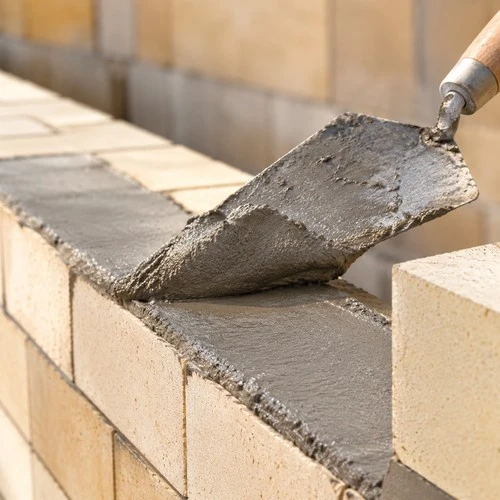
Why Joint Thickness Must Stay Below 1.5 mm
In refractory brick construction, thick mortar joints are the leading cause of premature lining failure:
Slag and Chemical Ingress: Refractory mortar inherently exhibits higher apparent porosity (18% to 26%) than dense pre-fired refractory bricks (12% to 18%). When joints exceed 2.0 mm, molten slag and corrosive alkalis rapidly channel through the joint, eroding bricks from their mortar interfaces.
Thermal Shrinkage & Gas Channeling: Mortar loses mechanical moisture and undergoes sintering shrinkage during initial firings. Thick joints shrink proportionally more, creating micro-fissures where high-pressure flame gases bypass the refractory face.
Strict Joint Categories:
Class I Critical Masonry (< 1.0 mm): Glass furnace crowns, blast furnace hearth walls, and vacuum degassing ladles.
Class II Standard Masonry (< 1.5 mm): Reheating furnace sidewalls, cement preheaters, and boiler combustion chambers.
Class III Insulating Masonry (2.0 to 3.0 mm): Outer backup layers composed of insulating fire brick.
Chemical Matching: The Rule of Equal Mineralogy
A catastrophic jobsite error is using incompatible refractory mortar for kilns with mismatched brick chemistry:
Alumina-Silica Systems: Always pair high-alumina bricks (65% to 80% Al2O3) with MA-37 or MA-39 mortar. Applying low-alumina clay mortar creates a low-melting eutectic interface at 1545°C, causing joint melting and brick slippage.
Silica Brick Masonry: When laying silica refractory brick, never use alumina-bearing mortars. Even 1% alumina contamination acts as a potent flux that destroys the load-bearing capacity of silica crowns. Silica masonry requires specialized high-silica slurries (SiO2 >= 92% to 95%).
Basic Brick Masonry: Magnesia and magnesia-carbon bricks must be laid with specialized anhydrous magnesite mortar or dry-laid with thin metal expansion plates to prevent hydration.
On-Site Mixing, Water Ratios and Troweling Workmanship
Field performance depends on proper jobsite preparation:
Water Addition Standards: Clean potable water must be measured precisely (typically 25% to 32% by weight depending on application method).
Troweling Consistency (Heavy Slurry): 25% to 28% water for spreading with a mason's trowel.
Dipping Consistency (Fluid Slurry): 30% to 35% water for dipping brick faces directly into slurry troughs, ensuring a uniform 1.0 mm film upon pressing.
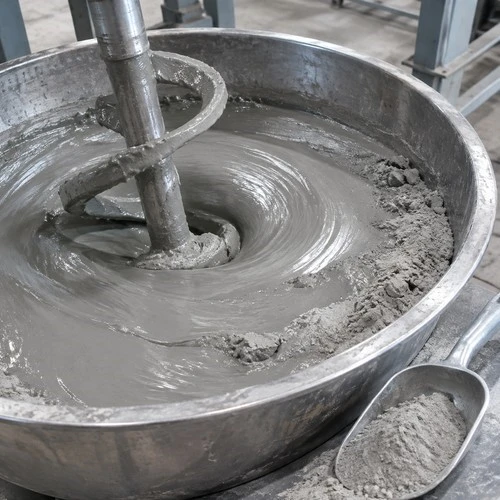
Mixing Discipline: Mix with a mechanical paddle mixer for 3 to 5 minutes to fully activate plastic clay and dispersion agents.
No Retempering Rule: Air-setting mortars that have begun their chemical set in the mortar pan must never be retempered with added water. Adding water destroys the chemical silicate matrix, reducing bonded shear strength by over 60%
Packaging, Shelf Life & Sourcing Logistics
Proper storage ensures chemical binders remain active during export transit:
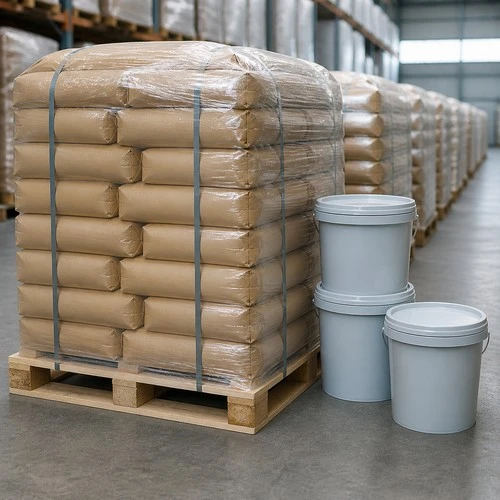
Dry Premix Bags: Packed in 25 kg poly-lined moisture-proof paper bags. Shelf life is 12 months when stored in dry, covered warehouses.
Wet Ready-to-Use Pails: Premixed with calibrated liquid binders and packed in sealed 25 kg plastic buckets, eliminating jobsite water errors and dust exposure.
Export Palletizing: 1000 kg per wooden pallet, stretch-wrapped with weather-resistant plastic hoods to protect against ocean container condensation.
Transparent Sourcing: Pricing & How to Order
Topower Refractory supplies high-specification refractory mortar for kilns directly to international furnace builders, cement plants, and steel mills:
Technical RFQ Checklist
To obtain itemized pricing and delivery schedules within 4 hours, provide:
Refractory Brick Specification: Brick chemical composition (Al2O3 and SiO2 percentages) and brick dimensions.
Mortar Setting Type: Air-setting (MA series) or heat-setting (MH series).
Packaging Preference: 25 kg dry premix bags or ready-to-use wet slurry pails.
Order Volume: Required metric tons (typical usage is 50 to 70 kg of mortar per metric ton of standard 230x114x65 mm refractory bricks; minimum order 1 pallet / 1 metric ton).
Destination Port: For instant FOB Qingdao/Tianjin or CIF freight calculations.
Commercial Pricing Reference: Standard high-duty fireclay mortars typically range from 220 to 380 USD per metric ton FOB China in container quantities. Premium high-alumina chemical air-setting mortars (MA-38 and MA-39 with Al2O3 >= 72% to 80%) range from 450 to 680 USD per metric ton depending on binder package and packaging format.
Direct Engineering Support: Contact our refractory materials team at inquiry@topower.tech to review brick joint layouts or request project mortar consumption calculations.
Frequently Asked Questions
What happens if heat-setting refractory mortar for kilns is used in a low-temperature furnace?
If operating temperatures remain below the ceramic sintering threshold (under 900°C), heat-setting mortar will never form a ceramic bond. The mortar remains as dry unbonded powder, allowing furnace vibration or gas pressure to blow the joint loose and compromise lining stability.
What is the typical mortar consumption per 1000 refractory bricks?
For standard refractory bricks measuring 230 x 114 x 65 mm laid with a target joint thickness of 1.5 mm, estimated mortar consumption is approximately 50 to 60 kg per metric ton of brickwork (or roughly 180 to 220 kg per 1000 standard bricks).
Can water be added to air-setting mortar after it begins to stiffen?
No. Once the chemical binder in an air-setting mortar begins to crosslink and stiffen, adding water (retempering) breaks the polymer chains permanently. The resulting cured joint will be chalky, brittle, and incapable of resisting kiln gas scouring.


