


Semi Silica Bricks
Key Specifications:
- Refractoriness Under Load (0.2 MPa): 1350°C - 1420°C
- Bulk Density: 2.10 - 2.25 g/cm³ | Cold Crushing Strength (CCS): ≥35 - 45 MPa
- Permanent Linear Change (1350°C x 2h): +0.1% to +0.5% (slight micro-expansion prevents joint leakage)
- Standard Dimensions: Standard T-3 (230x114x65mm), Wedge Series (T-19/T-20/T-38/T-39), and custom arch shapes
Commercial Terms:
- MOQ: 1 Pallet (~500-600 pcs, 2.0-2.2 MT) | FOB Qingdao Price: USD 0.65 - 1.45 / pc
- Typical Lead Time: 5-7 days for standard straight bricks (30,000 pcs in stock); 15-20 days for custom wedge/arch shapes
- Factory Direct Supply from ISO 9001:2015 Certified Plant | Third-party inspection (SGS/TUV) supported
- Inquiries: inquiry@topower.tech | Technical sales team replies within 4 hours
Semi-Silica Bricks (1350°C-1420°C RUL) - tprefractory Direct
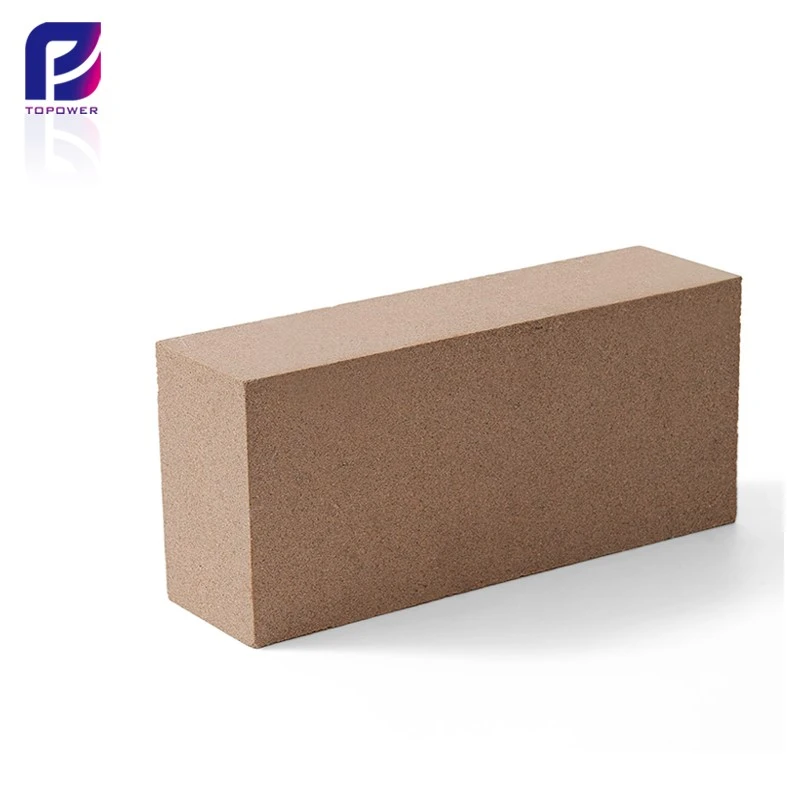
Semi-silica bricks are specialized alumina-silicate refractory bricks containing 18% to 28% Al₂O₃ and 70% to 78% SiO₂. Manufactured from selected calcined quartz raw materials and high-grade plastic refractory clay, they bridge the operational performance gap between conventional fireclay bricks and pure silica bricks.
Their defining operational advantage is high-temperature micro-expansion (+0.1% to +0.5% at 1350°C). Unlike conventional fireclay bricks that shrink under prolonged thermal loads, semi-silica bricks expand slightly at working temperatures. This micro-expansion tightly locks mortar joints, preventing acid gas leakage, molten slag penetration, and structural mortar loss in furnace crowns, blast furnace hot blast stove checker chambers, and steel reheating furnace hearths.
Technical Specifications & Typical Properties
tprefractory manufactures semi-silica refractory bricks in two standard industrial grades (SSB-18 and SSB-25) to satisfy diverse load and thermal requirements.
| Technical Parameter / Property | SSB-18 (General Grade) | SSB-25 (High-Duty Grade) | Test Standard |
|---|---|---|---|
| Al₂O₃ Content (%) | 18.0 – 22.0 | 25.0 – 28.0 | ASTM C573 / ISO 12677 |
| SiO₂ Content (%) | 72.0 – 78.0 | 68.0 – 72.0 | ASTM C573 / ISO 12677 |
| Fe₂O₃ Content (%) | ≤ 1.8 | ≤ 1.5 | ASTM C573 |
| Refractoriness (SK / Pyrometric Cone) | SK 31 (1690°C) | SK 32 (1710°C) | ISO 528 / ASTM C24 |
| Refractoriness Under Load (0.2 MPa, T0.6) | ≥ 1350°C | ≥ 1420°C | ASTM C16 / ISO 1893 |
| Bulk Density (g/cm³) | 2.10 – 2.15 | 2.18 – 2.25 | ASTM C20 / ISO 5017 |
| Apparent Porosity (%) | 22.0 – 24.0 | 20.0 – 22.0 | ASTM C20 / ISO 5017 |
| Cold Crushing Strength (CCS, MPa) | ≥ 35.0 | ≥ 45.0 | ASTM C133 / ISO 10059-1 |
| Permanent Linear Change (1350°C × 2h, %) | +0.1 to +0.4 | +0.2 to +0.5 | ASTM C113 / ISO 2478 |
| Thermal Shock Resistance (1100°C Water Quench) | ≥ 20 Cycles | ≥ 25 Cycles | Water Quench Method |
Core Operational Advantages
Zero Shrinkage Joint Integrity: Standard fireclay brick linings shrink over time, leaving gap openings for corrosive flue gas. Semi-silica bricks exhibit stable, controlled secondary expansion (+0.1% to +0.5%), creating self-sealing tight masonry joints that eliminate structural collapse risks. To ensure high-strength bonding matching the brick body, pair masonry with wet-bonding mortars utilizing pure Refractory Mortar Binder (CA-50 or CA-70) for quick hydraulic set and zero low-temperature mortar dropout.
Superior Acid Slag & Glaze Resistance: High silica content forms a highly viscous siliceous protective glaze layer when reacting with acid metallurgical slag and fuel ash. This viscous layer acts as an impervious barrier against slag penetration.
Creep Resistance Below Load Limit: Below their load softening point (1350°C–1420°C), semi-silica bricks show minimal structural deformation under continuous mechanical compression.
Thermal Shock Stability Above 600°C: Unlike pure silica bricks (which suffer violent volumetric swings during low-temperature quartz inversions), the clay bonding matrix in semi-silica bricks buffers quartz expansion, delivering excellent thermal shock resistance above 600°C.
Cost-Efficiency: Provides near-silica brick volume stability and acid resistance at significantly lower raw material and firing costs.
Service Limitations & Engineering Notes
Honest engineering boundaries protect furnace campaigns:
Alkali & Basic Slag Attack: Semi-silica bricks are acidic refractory materials. Do not use them in direct contact with high-calcium basic slag (CaO/SiO₂ > 1.2), molten iron with high FeO, or intense alkaline vapors (Na₂O/K₂O). Basic media dissolves the silica skeleton, forming low-melting phases. For basic environments, select High Alumina Bricks instead.
- **Low-Temperature Heating Schedule**: Below 300°C, quartz within the brick undergoes polymorphic volume transitions. Ensure the initial dry-out heating rate between 100°C and 300°C is controlled at ≤15°C–20°C/hour to avoid micro-cracking.
Standard Dimensions & Available Shapes
We manufacture straight, wedge, and custom interlocking shapes with strict dimensional tolerances (±1.0 mm on straight dimensions):
Straight Bricks: T-3 standard series (230 × 114 × 65 mm), large straights (230 × 114 × 75 mm, 300 × 150 × 65 mm).
Arch / Wedge Bricks: T-19, T-20, T-38, T-39 standard end/side wedges for cylindrical furnace arches and hot blast stove domes.
Checker Bricks: Multi-hole regenerative checker bricks for thermal heat recovery systems.
Custom Engineered Blocks: Specialized runner bricks, burner blocks, and skewed arch feet fabricated according to customer technical drawings.
Industrial Applications
Blast Furnace Hot Blast Stoves: Applied in middle and upper checker chambers, combustion chamber walls, and dome arches where thermal cycling and acid dust are present. In composite lining designs, brick arches are frequently paired with joint-free Low Cement Castables around burner ports to eliminate joint displacement. - **Steel Reheating & Soaking Pits**: Used in reheating furnace roofs, soaking pit walls, and hearth sub-layers requiring resistance to iron oxide scale and mechanical vibration. Monolithic transitions between brickwork and skids are typically reinforced with vibration-cast Low Cement Castables.
Waste Incineration & Biomass Boilers: Resistant to acid flue gas components (HCl, SOx) in secondary combustion chambers and flue ducts.
Non-Ferrous Metallurgical Furnaces: Flues and reverberatory furnace roofs for copper, lead, and zinc smelting.
Coke Oven Regenerator Divisions: Regenerator walls and partition checker chambers operating below 1350°C.
Commercial Supply & Ordering Information
-MOQ: 1 Standard Pallet (approx. 500–600 pcs, 2.0–2.2 metric tons). Sample orders accepted for evaluation.
Price Range: USD $0.65 – $1.45 / piece (FOB Qingdao), depending on Al₂O₃ grade, dimensions, and purchase volume.
Lead Time:
- Standard T-3 bricks: In stock (typically 20,000–30,000 pcs in Qingdao warehouse), ready to dispatch in 5–7 days.
- Custom wedge or engineered arch blocks: 15–20 days for tooling, pressing, and kiln firing.
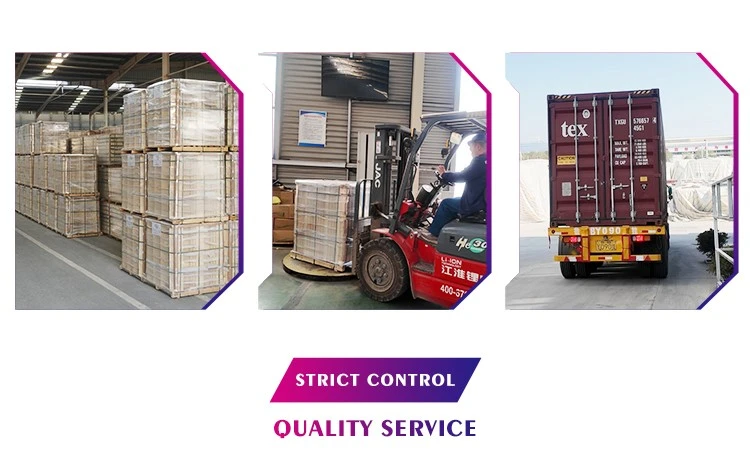
- Packaging: Export-grade fumigated wooden pallets, wrapped in high-strength shrink film with reinforced corner protectors and steel strapping (20–22 MT per 20ft container).
- Payment Terms: T/T (30% deposit, 70% against Bill of Lading copy) or 100% Irrevocable L/C at sight.
- Quality Assurance: ISO 9001:2015 certified production. Factory inspection test certificate (COA) supplied with every lot. SGS, TUV, and BV third-party inspections supported.
- Free Sample Policy: 1–2 pieces free of charge for laboratory testing; customer covers courier freight.
For direct factory quotations, technical data sheets, or lining drawings, contact our technical sales team at inquiry@topower.tech (4-hour response time guaranteed).
Hot Tags: semi silica bricks, China semi silica bricks manufacturers, suppliers, factory, Corundum Brick, fire resistant cement furnace silica bricks, a Alumina Brick, refractory fire bricks for pizza ovens, Zero-Expansion Silica Brick, Refractory corundum mullite bricks
Previous
Zero Expansion Silica BrickNext
SK34 FirebrickYou Might Also Like


Send Inquiry