


In the formulation of high-performance refractories-including steel ladle castables, purge plugs, slide gate plates, and petrochemical reactor linings-selecting the optimal synthetic corundum aggregate defines lining campaign life. For refractory engineers, the choice frequently narrows down to two high-purity synthetic corundum materials: tabular alumina and white fused alumina (WFA). While both raw materials provide exceptional chemical purity with aluminum oxide contents exceeding 99%, their fundamental production pathways-rapid thermal sintering versus electric arc melting-produce completely distinct crystal morphologies and pore distributions. Choosing between tabular alumina and fused corundum determines whether your refractory lining survives extreme thermal shock and molten slag penetration. At Topower Refractory, we supply premium-grade sintered corundum and white fused alumina aggregates directly from our production base in Shandong, China.
Key Technical Sourcing Facts
Standard Industrial Product Lines: Topower JTA Series (Sintered Tabular Alumina: JTA Aggregate and JTA Fine) and JWFA Series (White Fused Alumina: JWFA Aggregate and JWFA Fine).
High Chemical Purity: Both grades achieve high alumina purity (Al2O3 >= 99.5% for JTA and 99.2% to 99.4% for JWFA); tightly controlled impurities with SiO2 <= 0.09% to 0.15%, Na2O <= 0.30% to 0.40%, and magnetic iron Fe <= 0.02%.
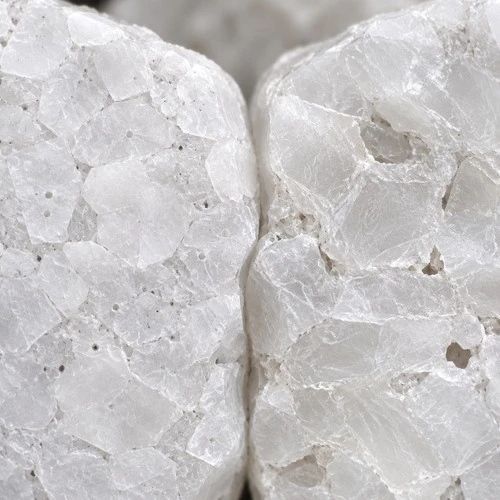
Microstructure and Pore Network: Sintered corundum features well-developed hexagonal tabular alpha-alumina crystals (40 to 200 microns) packed with microscopic closed pores, whereas fused corundum possesses a dense crystalline matrix with inter-crystalline open boundaries.
Manufacturing Pathways: Sintering vs Electric Arc Fusion
The physical distinctions between these two corundum aggregates originate in their thermal synthesis:
1. Tabular Alumina Synthesis (Sintered Corundum)
This high-purity sintered corundum is produced through the rapid sintering of calcined alumina balls in high-temperature vertical shaft kilns at temperatures exceeding 1800°C to 1900°C, slightly below the 2050°C melting point of pure alumina. The process uses no chemical fluxes or crystallization additives like MgO or B2O3. Rapid recrystallization forms large, flat, tablet-like alpha-alumina crystal plates. As the crystals grow rapidly, they trap spherical micro-pores within the crystal lattice, generating an internal closed-pore network.
2. White Fused Alumina Synthesis (Electro-Fused Corundum)
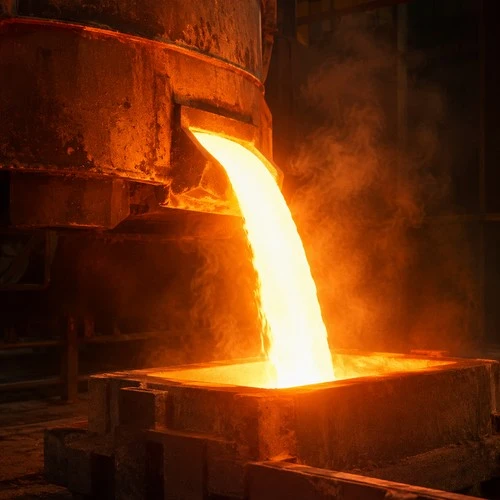
White fused alumina is manufactured by melting high-purity calcined alumina powder in electric arc furnaces (EAF) at temperatures above 2050°C. Once fully liquefied, the molten bath slowly cools and solidifies into massive ingots before mechanical crushing and magnetic separation. This slow cooling promotes large crystal growth; however, shrinkage during solidification concentrates residual pores along crystal boundaries as open fissures.
Technical Specifications: Topower JTA vs JWFA Data Sheet
Evaluating verified chemical and physical properties illustrates the specific structural advantages of each corundum grade:
| Technical Parameter / Property | JTA Aggregate (Tabular Alumina) | JTA Fine (Tabular Flour) | JWFA Aggregate (White Fused) | JWFA Fine (Fused Flour) | Test Standard |
|---|---|---|---|---|---|
| Al2O3 Content (%) | >= 99.5 | >= 99.5 | 99.4 | 99.2 | ASTM C114 |
| SiO2 Content (%) | <= 0.09 | <= 0.15 | 0.08 | 0.10 | ASTM C114 |
| Na2O Content (%) | <= 0.40 | <= 0.40 | 0.30 | 0.35 | ASTM C114 |
| Fe2O3 Content (%) | / | / | 0.08 | 0.10 | XRF Analysis |
| Magnetic Fe (%) | <= 0.02 | <= 0.02 | / | / | Magnetic Extraction |
| Bulk Density (g/cm3) | >= 3.50 | / | 3.65 | 3.65 | ASTM C134 |
| Apparent Porosity (%) | <= 5.0 | / | <= 4.0 | / | ASTM C20 |
| Water Absorption (%) | <= 1.5 | / | <= 1.2 | / | ASTM C20 |
| Standard Grain Fractions | 3-6mm, 1-3mm, 0-1mm | 200 mesh, 325 mesh | 3-6mm, 1-3mm, 0-1mm | 200 mesh, 325 mesh | Sieve Analysis |
Closed Porosity vs Open Porosity: Thermal Shock Mechanics
The most decisive engineering metric separating these two raw materials is the configuration of their internal porosity:
1. The Closed-Pore Advantage of Tabular Alumina
In this specialized sintered material, most internal pores are completely sealed spherical cavities (closed porosity typically 2% to 3%, with apparent open porosity held <= 5.0%).
Stress Relaxation: When refractory castables experience severe thermal downshocks-such as liquid steel tapping at 1600°C into a cold ladle-these spherical closed pores act as natural micro-crack arrestors. Thermal shock cracks blunt and terminate against closed pore walls rather than propagating through aggregate grains.
Corrosion & Slag Barrier: Because the pores are sealed inside alpha-alumina crystals, aggressive steelmaking slags and liquid fluxes cannot penetrate into the grains, maintaining aggregate volume stability.
2. The High Density and Hardness of White Fused Alumina
White fused alumina features higher bulk density (3.65 g/cm3) and extreme Mohs hardness (rating 9.0). However, its porosity primarily consists of inter-crystalline micro-fissures along grain boundaries. Under steep thermal cycling, micro-cracks easily link along these boundary planes, leading to grain cleavage and surface spalling. Consequently, WFA is better suited for continuous steady-state abrasion resistance rather than cyclic thermal shock applications.
Application Matrix: Steelmaking, Petrochemicals & Kilns
Refractory manufacturers utilize tabular alumina and white fused alumina across tailored industrial zones:
Steel Ladle Well Blocks & Purge Plugs: Gas purging plugs endure extreme thermal cycling as cold argon gas injects through 1600°C molten steel. Premium formulations rely exclusively on sintered corundum aggregates combined with reactive alumina and calcium aluminate cement to eliminate thermal cracking.
Continuous Casting Flow Control: Slide gate plates, submerged entry nozzles, and ladle shrouds utilize coarse sintered alpha-alumina matrices bonded with carbon and antioxidants to resist rapid thermal shock and liquid steel washing.
Petrochemical Secondary Reformers: In ammonia and hydrogen synthesis reactors operating in reducing, high-pressure hydrogen atmospheres, pure sintered corundum linings resist silica volatilization and maintain thermal integrity.
High-Wear Castable Linings: For blast furnace iron troughs and cement preheater elbows, dense corundum castable formulations blend white fused alumina aggregates to provide extreme resistance to high-velocity particle scouring.
Refractory Mortar and Matrix Formulations: Combining fine 325 mesh sintered corundum flours with plastic fireclays forms high-adhesion refractory mortar capable of holding dense alumina brick joints tight under continuous thermal load.
Energy Footprint, Sourcing Economics & Cost Dynamics
Understanding international procurement cost dynamics allows refractories producers to optimize recipe economics:
Electrical Melting vs Natural Gas Sintering: White fused alumina is an electricity-intensive product, consuming approximately 2500 to 3000 kWh per metric ton in electric arc furnaces. Sintered corundum processing utilizes rapid gas-fired vertical shaft kilns, offering a lower direct carbon footprint and insulation against local industrial electricity tariff spikes.
Batch Consistency & Alkali Homogeneity: Because fused corundum cools slowly over several days in large ingots, sodium oxide (Na2O) tends to migrate and concentrate near the upper ingot core as beta-alumina (Na2O·11Al2O3). Sintered corundum undergoes rapid uniform firing, ensuring consistent soda distribution (<= 0.40% Na2O) throughout all batch fractions.
Packaging, Granulometry & Export Logistics
Topower Refractory exports high-purity synthetic corundum aggregates with full moisture and contamination defense:
Precision Grading & Sieve Control: All fractions (3-6 mm, 1-3 mm, 0-1 mm, and 200/325 mesh fines) undergo multi-deck vibrating sieving and double magnetic separation to guarantee magnetic iron <= 0.02%.
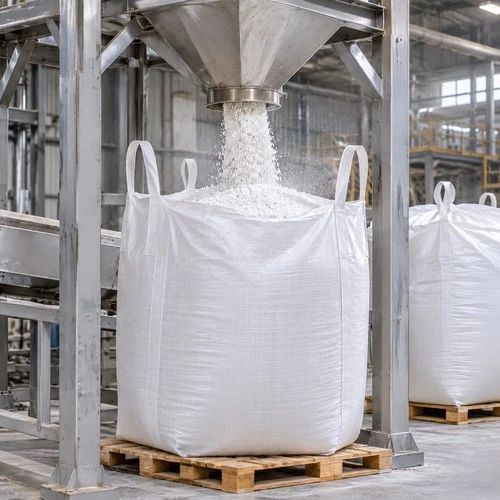
Seaworthy Packaging Options: Packed in 25 kg poly-lined multi-wall paper bags or heavy-duty 1000 kg / 1250 kg woven polypropylene bulk bags (Jumbo bags) with moisture-proof inner liners.
Container Loading: Standard 20GP containers carry 20 to 24 metric tons palletized and stretch-wrapped with weather-resistant plastic shrouds. Lead time is 10 to 15 days FOB Qingdao / Tianjin.
Transparent Sourcing: Pricing & How to Order
Topower Refractory supplies certified tabular alumina and fused corundum raw materials directly to refractory manufacturers, foundries, and thermal engineering contractors:
Technical RFQ Checklist
To obtain an itemized commercial quotation and formal specification sheet within 4 hours, provide:
Raw Material Selection: Sintered corundum (JTA series) or white fused alumina (JWFA series).
Particle Size Distribution: Coarse aggregate fraction (3-6 mm, 1-3 mm, 0-1 mm) or fine flour mesh (200 mesh, 325 mesh).
Packaging Requirements: 25 kg bags on pallets or 1.0 to 1.25 metric ton bulk big bags.
Order Volume: Required metric tons (minimum trial order 1 pallet / 1 metric ton; full container load FCL is 20 to 24 metric tons).
Destination Port: For instant FOB Qingdao/Tianjin or CIF maritime shipping calculations.
Commercial Pricing Reference: High-purity sintered corundum typically ranges from 780 to 980 USD per metric ton FOB China depending on grain fraction and packaging format, while standard refractory-grade white fused alumina ranges from 680 to 860 USD per metric ton based on alumina purity and sizing complexity.
Direct Engineering Support: Contact our technical minerals team at inquiry@topower.tech to request certified test sheets, PSD sieving distribution curves, or complimentary laboratory trial samples.
Frequently Asked Questions
Why does tabular alumina offer superior thermal shock resistance compared to white fused alumina?
Sintered tabular corundum features a unique hexagonal crystal structure containing numerous microscopic closed pores (20 to 40 microns). These internal spherical pores arrest and dissipate thermal micro-cracks during rapid heating and cooling cycles, whereas cracks propagate rapidly along the open crystal boundaries of white fused alumina.
Can white fused alumina replace tabular alumina in steel ladle purging plugs?
Generally no. In steel ladle purging plugs and slide gate plates, the refractory undergoes catastrophic thermal downshocks as cold purging gas injects directly into liquid steel. Fused alumina tends to spall under these extreme cycling gradients, while sintered corundum maintains volume stability and structural integrity.
What is the role of Na2O impurities in high-alumina corundum aggregates?
Sodium oxide reacts with alumina at high temperatures to form beta-alumina (Na2O·11Al2O3). Beta-alumina possesses lower mechanical strength, higher thermal expansion, and reduced refractoriness under load. Topower strictly controls Na2O <= 0.40% across all sintered corundum lots to preserve high-temperature load-bearing performance.


